Voyager 1 Nears Historic One-Light-Day Distance Milestone From Earth
Nearly five decades after its 1977 launch, NASA's Voyager 1 spacecraft will reach a distance of more than 16 billion miles on November 18.
EXECUTIVE BRIEF // KEY TAKEAWAYS
Nearly five decades after its 1977 launch, NASA's Voyager 1 spacecraft will reach a distance of more than 16 billion miles on November 18.
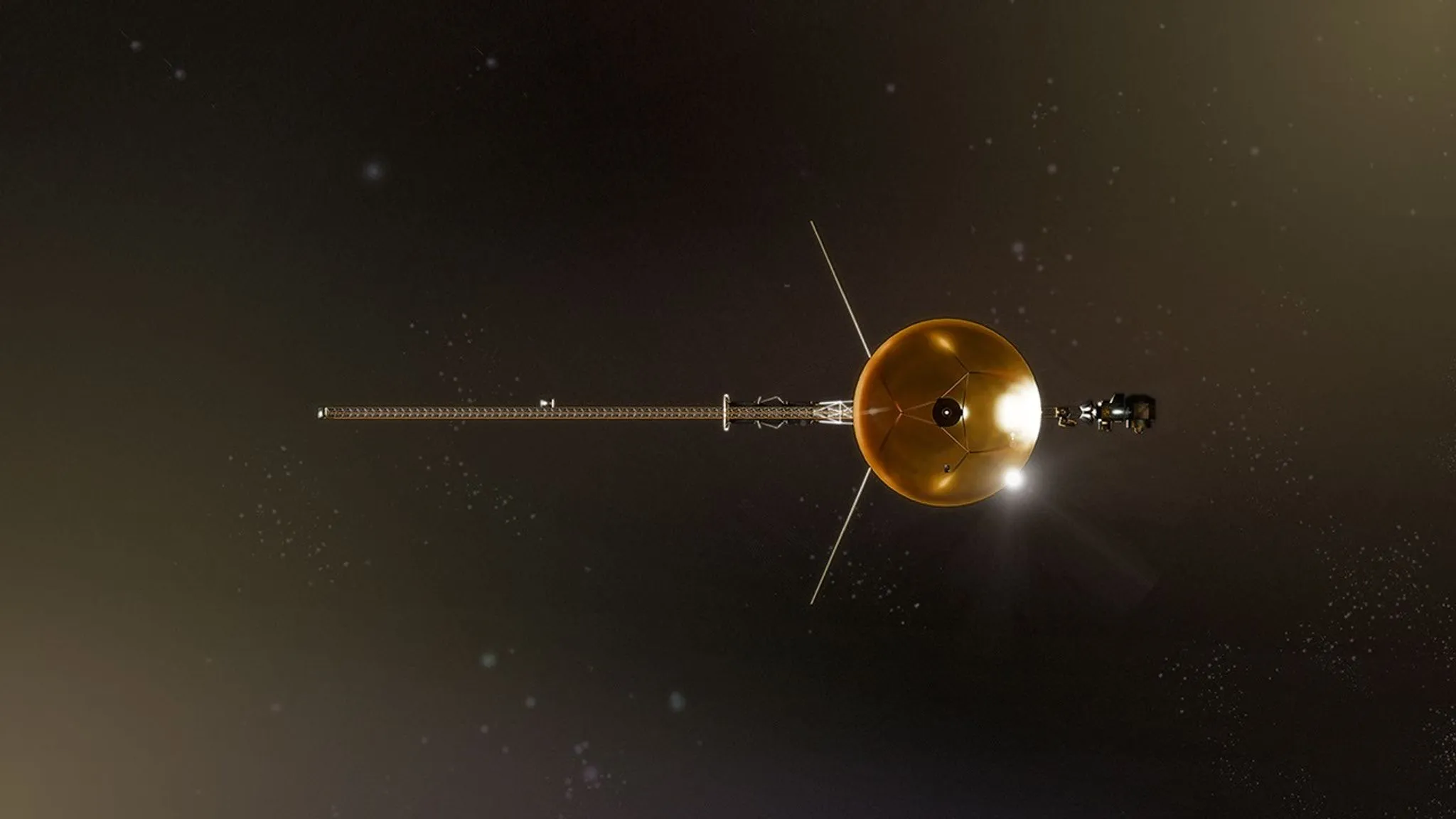
NASA has announced public and media activities to mark a historic milestone in deep-space exploration, as the Voyager 1 spacecraft prepares to cross a distance of one light-day from Earth on Wednesday, Nov. 18. According to NASA News Releases, the probe—launched nearly 50 years ago in 1977—will reach a separation of more than 16 billion miles (25.9 billion kilometers) from its home planet, cementing its standing as the most distant human-made object in existence.
Reaching the one-light-day threshold represents a defining benchmark for aerospace engineering, deep-space telecommunications, and autonomous spacecraft operations. At this distance, electromagnetic signals and light traveling at universal speed limits require a full 24 hours to traverse the expanse between ground stations on Earth and the spacecraft, resulting in a 48-hour round-trip communication cycle that tests the outer boundaries of telemetry infrastructure.
Fifty Years of Deep-Space Endurance
Dispatched into space in 1977, Voyager 1 has operated for nearly half a century, far exceeding its initial mission parameters to become humanity's farthest operational outpost. As documented in the official release by NASA News Releases, the agency is organizing public and media outreach initiatives to highlight the spacecraft's journey as it crosses the 16-billion-mile (25.9-billion-kilometer) frontier on Nov. 18.
The longevity of a spacecraft designed with 1970s-era computing and radio-frequency hardware underscores the resilience of legacy aerospace architectures. Operating in the harsh environment of interstellar space, Voyager 1 continues to serve as a foundational reference point for long-duration mission planning, hardware redundancy, and deep-space navigation standards across international space agencies and commercial aerospace contractors.
Operational Realities of a 24-Hour Signal Delay
The transition to a one-light-day separation introduces distinct operational and technological parameters for mission controllers. When light or radio-frequency transmissions from Earth require a full 24 hours to reach the spacecraft, real-time command and control is physically impossible. Any diagnostic command transmitted from terrestrial tracking networks requires a full day to arrive at Voyager 1, and confirmation of execution requires an additional 24 hours to return to Earth.
Beyond the temporal latency, maintaining signal lock across more than 25.9 billion kilometers demands extreme sensitivity from ground-based receiving arrays. As radio signals propagate across billions of miles, signal strength diminishes according to the inverse-square law, requiring high-gain terrestrial antennas and advanced digital signal processing to distinguish spacecraft telemetry from cosmic background noise. The ability to sustain contact at this scale validates the foundational physics and engineering protocols that underpin modern interplanetary communication networks.
Strategic Outlook for Interstellar Exploration
As NASA highlights Voyager 1's upcoming Nov. 18 milestone through media and public activities, the event serves both as a historical commemoration and a technical baseline for future frontier missions. The operational lessons gathered over nearly five decades of continuous flight directly inform the design of next-generation deep-space probes, autonomous fault-protection software, and long-life power systems required for outer-heliosphere and interstellar research.
Looking ahead, the one-light-day marker establishes a permanent benchmark in the annals of spaceflight. While newer spacecraft benefit from modern propulsion and solid-state electronics, Voyager 1's trajectory ensures it will remain the primary vanguard of human engineering at the 16-billion-mile frontier for decades to come, providing aerospace researchers and the public with an enduring measure of humanity's reach into the cosmos.