US Midterm Voters Curb AI Data Center Boom as States Eye Stricter Rules
Following sweeping ballot measures across 10 states, incoming governors and lawmakers gain broad authority to regulate hyperscale AI data center expansion.
EXECUTIVE BRIEF // KEY TAKEAWAYS
Following sweeping ballot measures across 10 states, incoming governors and lawmakers gain broad authority to regulate hyperscale AI data center expansion.
United States voters and incoming lawmakers delivered a decisive regulatory challenge to the artificial intelligence infrastructure sector during the recent midterm elections, approving ballot measures across 10 states to restrict rapid data center construction. According to environmental law organization Earthjustice, newly elected governors who support development moratoria will soon oversee jurisdictions encompassing 41 percent of the nation's planned data center projects. The electoral outcome signals a structural shift from unbridled hyperscale expansion toward mandatory public oversight, grid accountability, and local permitting reform.
For global technology enterprises and institutional infrastructure investors, the electoral backlash introduces substantial permitting friction and capital expenditure risks across key North American compute corridors. As hyperscalers race to secure gigawatt-scale power capacity for generative AI workloads, state and municipal authorities are moving to dismantle the confidentiality agreements, tax subsidies, and segmented permitting strategies that previously accelerated facility deployments. The resulting regulatory environment is poised to lengthen development timelines and increase compliance costs for cloud and AI operators.
Voter Backlash Targets Industry Permitting Practices
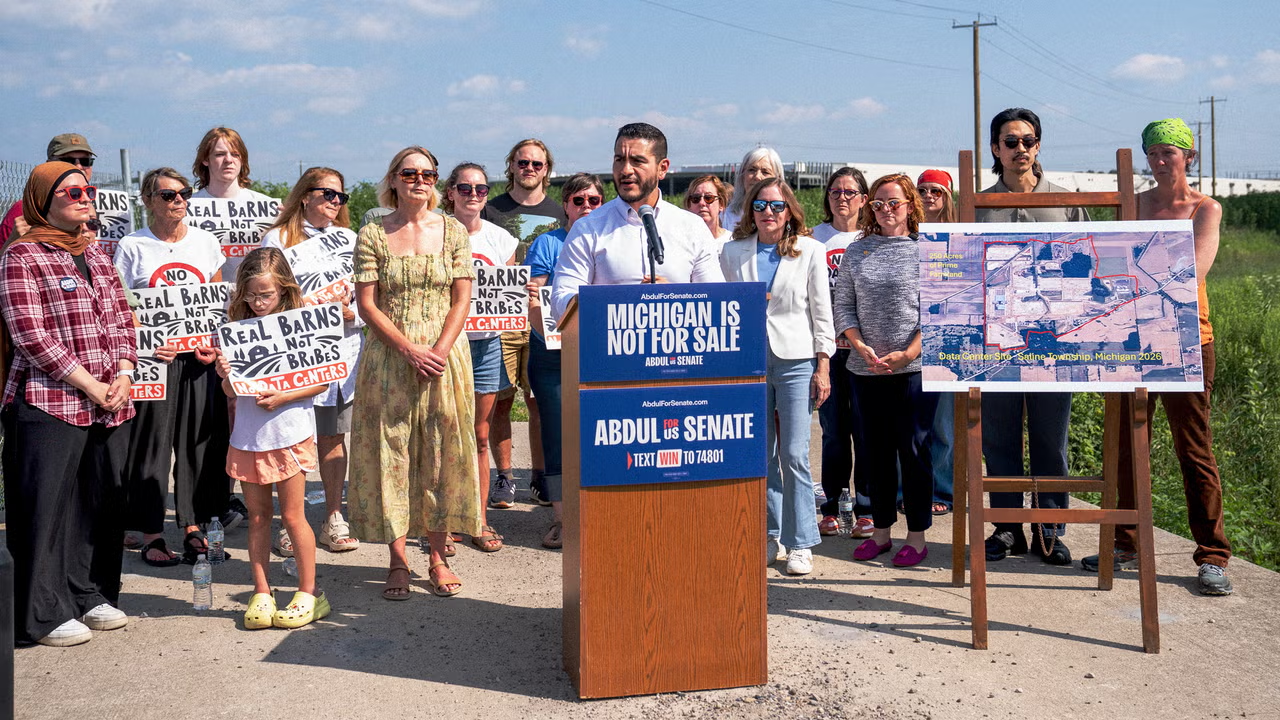
Across 10 states, residents approved ballot initiatives designed to pause construction, mandate voter or community approval for new facilities, cap data center electricity consumption, and tie public tax incentives to binding financial assurances. Alongside those direct ballot measures, congressional and state-level candidates campaigning on platforms to curb unconstrained data center growth secured broad victories.
"Data centers were dealt a resounding blow in the midterm elections," Mandy DeRoche, director of emerging issues at Earthjustice, said during a Wednesday press event.
As reported by Fast Company, the electoral pushback follows years of scrutiny over how developers fast-tracked large-scale projects. Industry operators have routinely required local government officials to sign non-disclosure agreements, restricting public access to project specifications and limiting community participation prior to approval. Developers have also utilized a permitting strategy known as segmentation—dividing a single massive facility into smaller permit applications, occasionally filed under multiple corporate entities—to bypass comprehensive environmental reviews and obscure the full operational footprint of a site.
Advocacy organizations noted that opposition to hyperscale construction has bridged traditional political divides in both urban and rural jurisdictions, ranging from Box Elder County, Utah, to Clinton, Iowa, and Matagorda County, Texas.
"I've never been part of a movement like this before," said Sarah Friedman, co-founder of the Better Data Center Project, an advocacy group assisting communities confronting facility proposals. "The effort to push back on rampant data center development has created new alliances, new support, and I think new awareness of big tech and the role it plays."
DeRoche emphasized that bipartisan resistance already has regulatory precedent when state agencies intervene on behalf of local ratepayers and residents. "Harmful data center development has been reined in when a state regulator acts, and acts in its community's interest," DeRoche said, adding that she expects stronger enforcement as newly elected governors and agency leaders take office.
State Mechanisms on Power, Tax Incentives, and Oversight
Because the majority of land-use and environmental permitting occurs at the state and municipal levels, incoming state legislatures hold direct authority to reshape data center economics. Policy analysts point to immediate statutory tools, beginning with statutory bans on non-disclosure agreements in public development deals and mandatory community engagement periods.
On the energy front, lawmakers can enforce strict procurement rules for facilities generating their own on-site power. Callie Rabinovitz, research and policy analyst with Earthjustice's Clean Energy Program, stated that legislatures can require operators to meet "new, near, and now" clean energy standards.
"That means that they're building new clean energy resources, not taking existing clean energy resources that would otherwise benefit the grid," Rabinovitz explained. "They must be online when the data center comes online to ensure there's no fossil fuel bridge power, and they should match the data center's load 24/7."
State lawmakers can also mandate cumulative environmental impact assessments that evaluate existing regional pollution alongside both primary facility power and backup diesel or gas generators, preventing developers from separating those emissions during permitting reviews. Financially, legislatures have the latitude to repeal data center tax exemptions that have cost municipal budgets hundreds of millions of dollars. Furthermore, states can require operators to post financial assurances covering future facility decommissioning and to fund any transmission or grid infrastructure upgrades required if an initially off-grid facility later connects to the public utility network—a transition Rabinovitz noted most facilities are eventually expected to make.
Regulatory Shifts in Texas and Federal Outlook
The operational impact of a development pause depends heavily on executive enforcement and regulatory appointments. DeRoche noted that while outgoing Texas Gov. Greg Abbott previously issued a data center pause, regulators at the Texas Commission on Environmental Quality (TCEQ) still advanced 35 separate permitting actions for data center projects.
That regulatory posture in Texas is now set to change. Governor-elect Gina Hinojosa, who campaigned on enforcing a data center pause, will have the authority to appoint at least two new commissioners to the TCEQ. Additionally, Texas voters elected a new Democratic commissioner to the Texas Railroad Commission, which regulates the state's oil and gas sector. Nonprofit watchdog group Commission Shift told local outlet KERA News that the incoming commissioner "was not the oil and gas industry's pick to win the seat." Texas voters also elected a District Attorney who has publicly opposed unchecked data center expansion and advocated for stronger local governance over industrial projects.
At the federal level, with Democrats holding majorities in both the House of Representatives and the Senate, Congress has parallel avenues to establish national guardrails. Federal lawmakers can restrict data center siting on public lands, mandate standardized disclosures for water consumption, electricity draw, and greenhouse gas emissions, and enact enforceable utility ratepayer protections that prevent grid expansions from subsidizing additional fossil fuel generation. A Democratic-led Congress is also positioned to strengthen oversight of the Environmental Protection Agency (EPA) to enforce existing federal environmental statutes while safeguarding local municipal rights to regulate land use.
"We are hoping that this creates an opportunity to refocus on addressing the climate crisis and building a just clean energy transition, rather than orienting the government towards accommodating a hyperscale data center buildout at any cost," said Meg Slattery, staff scientist at Earthjustice.