New York Mayor Mamdani Tests Pragmatic Socialism With City CEOs
One year into Mayor Zohran Mamdani's term, New York corporate leaders are balancing ideological skepticism with shared goals on housing and childcare.
EXECUTIVE BRIEF // KEY TAKEAWAYS
One year into Mayor Zohran Mamdani's term, New York corporate leaders are balancing ideological skepticism with shared goals on housing and childcare.
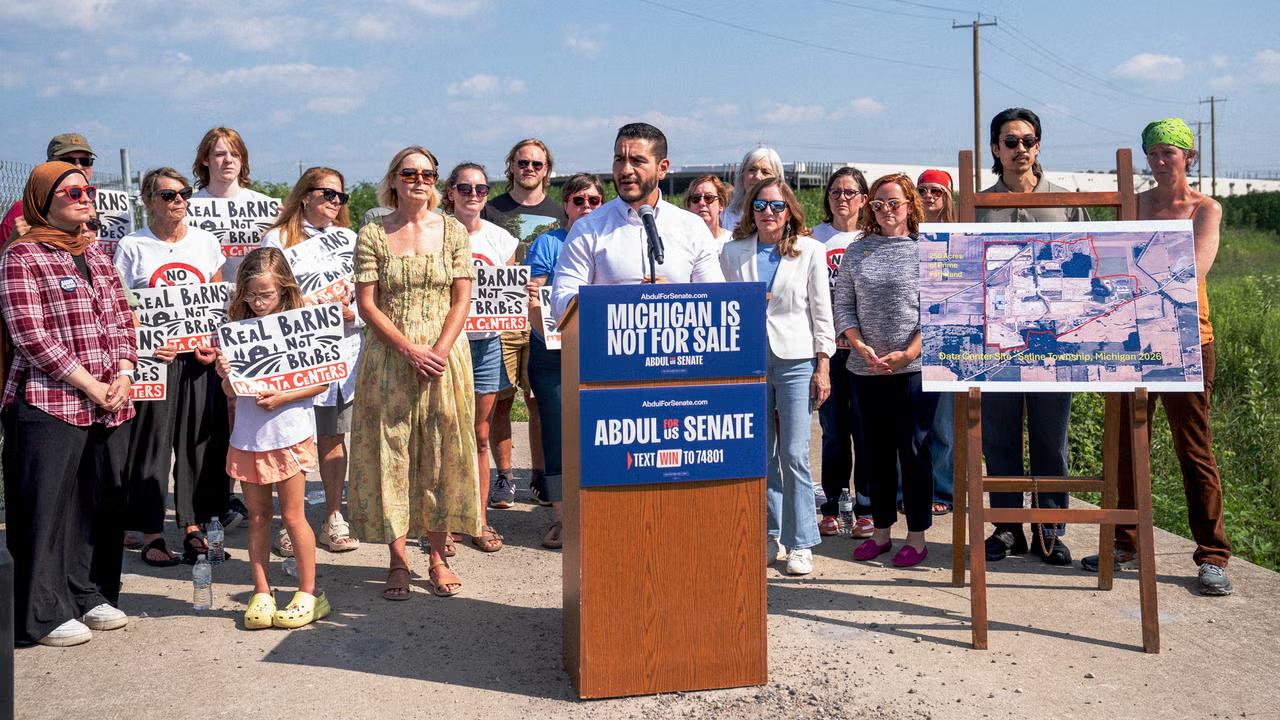
One year into his tenure as Mayor of New York City, democratic socialist Zohran Mamdani has maintained a functional détente with the nation's financial and corporate elite by pairing progressive economic interventions with rapid municipal service delivery, according to a report by Fast Company. Despite widespread pre-election anxiety among executives that his administration would destabilize the local economy, 15 chief executives representing more than 100,000 employees across real estate, healthcare, film, and sports have joined the mayor's Business Advisory Council to address structural bottlenecks in the city's labor market.
For corporate enterprises and institutional investors, Mamdani's first year demonstrates how municipal governance focused on workforce affordability can align with private-sector talent retention. As soaring housing and childcare costs make recruiting in major metropolitan hubs increasingly difficult, businesses operating in New York are evaluating whether state-backed cost-of-living interventions can indirectly bolster corporate competitiveness without triggering capital flight.
Bridging Ideological Divides in America's Financial Capital
Before Mamdani's election, corporate lobbying groups and billionaires spent tens of millions of dollars campaigning against him, fearing the policies of the Democratic Socialists of America (DSA), whose national membership has since grown past 120,000, including 15,000 in New York. While friction remains over tax rhetoric, several prominent critics—including a real estate executive who donated $250,000 to mayoral opponent Andrew Cuomo and Chobani billionaire CEO Hamdi Ulukaya—have joined the administration's advisory council, which held its inaugural meeting in September.
"I was very concerned when he was elected. The DSA's official policies include things like government takeover of private companies, increasing income taxes, and abolishing the police. Publicly, he's said some things to moderate those positions, [but] at times he's advocating for some of those policies, which are deeply unpopular and aren't going to lead to growth and prosperity." — Neil Blumenthal, cofounder and co-CEO of Warby Parker
To execute his economic agenda, Mamdani appointed former acting U.S. Labor Secretary Julie Su as deputy mayor for economic justice, alongside former Port Authority executive director Anthony Shorris as president and CEO of the New York City Economic Development Corporation (NYCEDC) and former Federal Trade Commission Chair Lina Khan as NYCEDC board chair. Khan told Fast Company via email that she aims to use the corporation's toolkit to grow the economy in a manner that delivers affordability, widespread prosperity, and tangible opportunity. Business leaders have also universally praised Mamdani's decision to retain Police Commissioner Jessica Tisch from the previous administration as a foundational stabilizer.
"They love mayors, they get mad at mayors, whatever. At the end of the day, I think what they really care about is the city's economy being strong." — Anthony Shorris, president and CEO of the New York City Economic Development Corporation
Operational Velocity, Public Pilots, and Capital Market Indicators
Supported by a 69% approval rating and the passage of all five of his championed ballot initiatives, Mamdani has applied rapid procurement and operational metrics to city agencies. Thus far in 2026, the city has repaired more than 200,000 potholes—surpassing the full-year total under former Mayor Eric Adams—and fast-tracked a one-year, $4 million pilot with Throne Labs to install 17 modular public restrooms within months of issuing a request for proposals. Meanwhile, the administration secured a $131.5 million enforcement action against DoorDash for underpaying delivery workers.
On a broader scale, the administration is deploying targeted public-private models and market interventions across four key areas:
In childcare and workforce support, working with Governor Kathy Hochul, the city launched a pilot expanding universal care to 2-year-olds for up to 10 hours a day, 260 days a year. Serving 2,000 children initially with a target of 12,000 by fall 2027, the initiative has won backing from the newly formed NYC Child Care Business Council, backed by Tech:NYC, the Partnership for New York City, and the Real Estate Board of New York (REBNY).
In housing and real estate, while freezing rents on one- and two-year leases across roughly 1 million units—about 40% of the city's rental stock—Mamdani has embraced private construction to add 200,000 affordable apartments over the next decade through faster permitting and zoning reform. REBNY President James Whelan confirmed that developers and the administration are aligned on expanding housing supply.
In municipal retail and technology equity, the NYCEDC designed a $70 million pilot to open five city-owned, privately operated grocery stores across the five boroughs beginning in late 2027, targeting prices 30% below local averages on produce, meat, seafood, and 20 staple categories—a plan facing anti-competition lawsuits from the National Supermarket Association and small grocers. Separately, the NYCEDC invested $29 million in a quantum computing laboratory at New York University in exchange for a 15% revenue share from intellectual property generated on city-funded equipment.
Despite heated clashes—such as a promotional video filmed outside Citadel CEO Ken Griffin's Central Park penthouse touting a proposed 0.8% to 6.5% pied-à-terre tax on high-value second homes, which hedge fund manager Bill Ackman and venture capitalist Bradley Tusk criticized—commercial indicators remain resilient. Available Manhattan office space recently dropped to its lowest level since 2020, second-quarter contracts for residential properties priced between $10 million and $20 million rose nearly 40% year-over-year, Griffin has continued his Midtown office development, and Ackman announced a $660 million brain research institute on the West Side.
Strategic Outlook and Legislative Hurdles in Albany
As Mamdani transitions from administrative quick wins to structural fiscal policy, the durability of his truce with private capital will face stiffer tests. His campaign proposals to raise city income taxes by 2% on earners making over $1 million—projected to generate $4 billion annually—and to increase the corporate tax rate from 7.25% to 11.5% to yield $5 billion per year require approval from the state legislature and Governor Hochul, who has shown little appetite for broad tax hikes beyond the legally contested pied-à-terre levy.
Over the remaining three years of his term, corporate leaders led by Blumenthal, Tech:NYC CEO Julie Samuels, and Partnership for New York City CEO Steven Fulop will judge the administration on empirical metrics: net job growth, housing completions, public safety, literacy rates, and population retention. With the NYCEDC also evaluating interventions in building insurance and supply-chain monopolies, New York's experiment will determine whether municipal socialism can function as a stabilizing infrastructure partner for modern enterprise.