NASA Perseverance Instruments Probe Mars Rock Record for Mineral Clues
NASA's Perseverance rover utilizes its SuperCam and PIXL instruments to analyze unexpected geological features across the Martian rock record.
EXECUTIVE BRIEF // KEY TAKEAWAYS
NASA's Perseverance rover utilizes its SuperCam and PIXL instruments to analyze unexpected geological features across the Martian rock record.
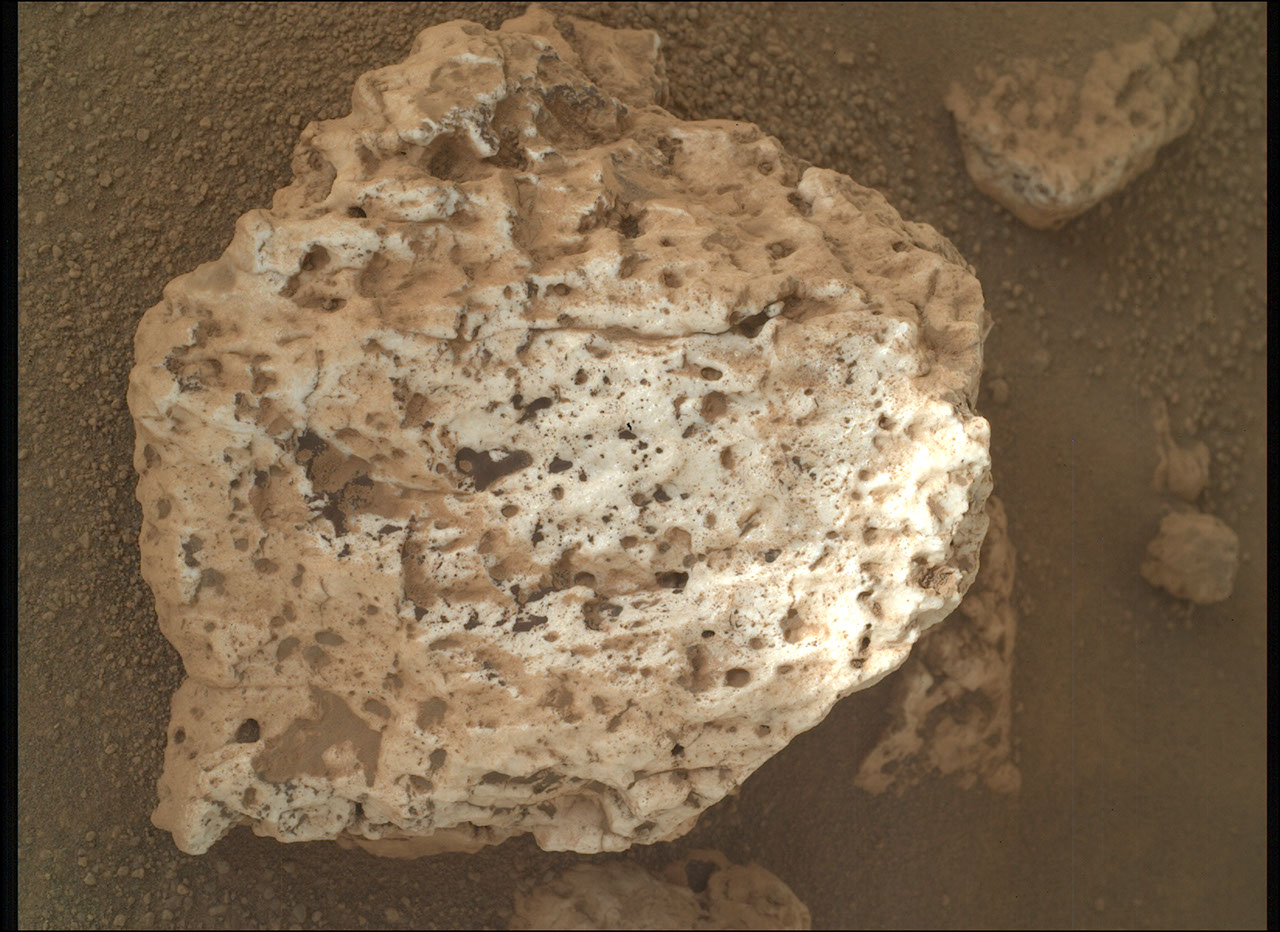
Researchers operating NASA's Perseverance rover are leveraging advanced spectroscopic and chemical analysis tools to investigate unexpected mineralogical formations within the ancient rock record of Mars, according to a mission update published by NASA News Releases. Led by scientific teams including Roger C. Wiens, SuperCam Principal Investigator for NASA's Perseverance rover at Purdue University, the ongoing surface exploration campaign examines whether aluminum-rich or corundum-bearing structures—colloquially referenced in mission dispatches as potential Martian rubies—exist within the planet's complex crustal stratigraphy.
For the global aerospace, planetary science, and remote-sensing technology sectors, the analytical performance of Perseverance's payload demonstrates the increasing precision of autonomous in-situ resource and geological characterization. High-resolution geochemical mapping on the Martian surface directly informs the engineering requirements for next-generation planetary landers, sample-return architectures, and commercial space instrumentation designed to operate in extreme extraterrestrial environments.
Spectroscopic Capabilities and Mission Context
In a November 4, 2026 mission report, Wiens noted that exploration on Mars frequently turns up unexpected geological phenomena. To evaluate the composition of ancient Martian rocks, the Perseverance science team relies heavily on two complementary scientific payloads: the Planetary Instrument for X-ray Lithochemistry, known as PIXL, and the SuperCam suite.
According to the NASA News Releases report, both PIXL and SuperCam possess specialized capabilities for detecting a wide spectrum of elemental and mineralogical signatures. SuperCam conducts remote optical, laser-induced breakdown spectroscopy, and Raman spectroscopy measurements from the rover's mast, enabling researchers to rapidly classify rock targets from several meters away. Meanwhile, PIXL mounted on the rover's robotic arm delivers fine-scale X-ray fluorescence mapping to resolve sub-millimeter elemental distributions on abraded rock surfaces.
Operational and Technological Impact
The coordinated deployment of SuperCam and PIXL allows mission scientists at Purdue University, NASA's Jet Propulsion Laboratory, and partner institutions to cross-verify mineralogical hypotheses without waiting for physical samples to reach terrestrial laboratories. When anomalous rock textures or distinctive elemental concentrations appear in initial remote surveys, operators command the rover to position its turret for targeted high-resolution scans.
This dual-instrument workflow reduces operational ambiguity during surface traverses. By correlating laser spectroscopy data with localized X-ray lithochemistry, the science team can distinguish between standard basaltic regolith, altered sedimentary matrices, and rare metamorphic or igneous mineral phases that form under specific temperature and pressure regimes. Each confirmed mineralogical detection refines existing models of Martian crustal evolution, aqueous alteration history, and planetary differentiation.
Furthermore, the operational insights gathered from Perseverance's sensor suite serve as a benchmark for autonomous scientific discovery software. Onboard algorithms that assist PIXL and SuperCam in targeting specific mineral grains establish the technical foundation for future robotic explorers tasked with prospecting across the Moon, Mars, and near-Earth asteroids.
Strategic Outlook for Martian Sample Analysis
As Perseverance continues its traverse across the Martian terrain, the data collected by SuperCam and PIXL will guide the prioritization of rock cores cached for potential return to Earth. Identifying unusual mineral assemblages on-site ensures that the mission's sample collection captures the broadest possible diversity of the planet's geological history.
Over the coming operational cycles, planetary geologists will continue analyzing the spectroscopic datasets transmitted from the rover to determine the precise formation mechanisms behind the anomalous rock features highlighted by the SuperCam team. These ongoing investigations will remain central to shaping NASA's long-term Mars exploration strategy and defining the scientific objectives for future international planetary missions.