Innomotics Modernizes 1866 Dynamo Principle With Smart Drive Systems
Built on Werner von Siemens' 1866 discovery, Innomotics integrates active vibration control and physics-based analytics into modern industrial motors.
EXECUTIVE BRIEF // KEY TAKEAWAYS
Built on Werner von Siemens' 1866 discovery, Innomotics integrates active vibration control and physics-based analytics into modern industrial motors.
Sixteen decades after Werner von Siemens formulated the dynamo-electric principle in 1866, electric motor and drive manufacturer Innomotics is pairing that foundational electromagnetic architecture with active vibration control, specialized bearing lubrication, and physics-based predictive analytics to extend industrial machinery lifespans, according to a report published in IEEE Spectrum.
As global manufacturing, petrochemical processing, and heavy industry face tightening mandates for energy efficiency and operational resilience, the modernization of legacy electromechanical infrastructure has become a critical capital priority. By layering sensor-driven diagnostics and mechanical isolation technologies onto the self-excitation motor framework, industrial operators can mitigate unplanned downtime and optimize asset utilization without replacing the underlying physics that power global production lines.
From 19th-Century Self-Excitation to Continuous Industrial Duty
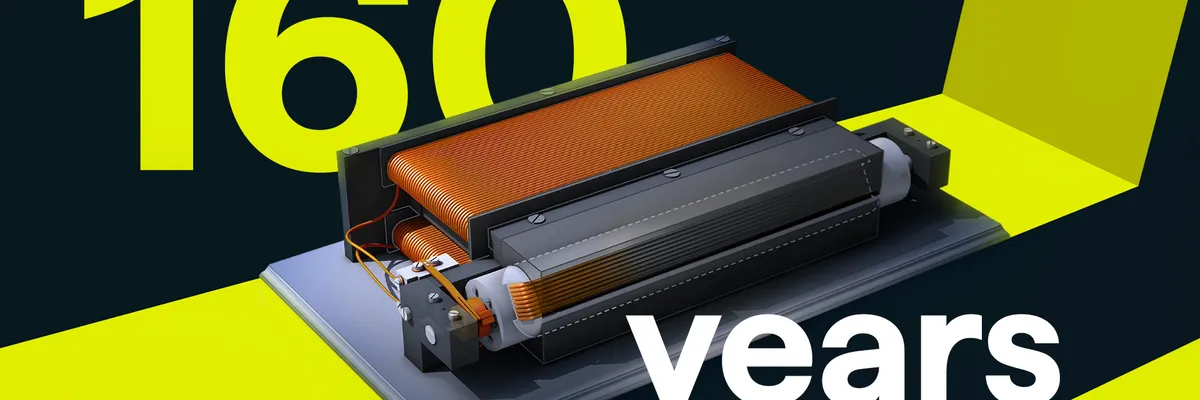
The dynamo-electric principle established a turning point in electrical engineering during Europe's late 19th-century industrial transformation. Prior to 1866, electric machines remained largely laboratory curiosities. Von Siemens demonstrated that an electric machine could generate its own magnetic field through self-excitation: an iron core produces a stable magnetic field, a rotating coil moving within that field induces an electric current, a portion of that current reinforces the magnetic field, and electrical energy converts continuously into mechanical motion.
This bidirectional conversion between electrical energy and physical motion laid the groundwork for widespread industrial electrification. According to Innomotics and IEEE Spectrum, the durability of this core design is exemplified by an Innomotics electric motor installed in the early 1900s at the historic Tsingtao Brewery in Qingdao, China. Operating continuously under demanding industrial brewing conditions, that single motor supported production processes for more than 90 years.
Mechanical Stabilization and Medium-Voltage Drive Architecture
While the electromagnetic core of industrial motors remains unchanged after 160 years, contemporary plant tolerances require mechanical and electronic enhancements to prevent premature component degradation. Innomotics has introduced two primary hardware upgrades that received recognition from the German Innovation Award: the Active Vibration Control System (AVCS) and patented Oil-Lubricated Rolling Bearing (OLRB) technology.
High-voltage motors frequently suffer from structural resonance and mechanical stress. The AVCS addresses this operational bottleneck by actively decoupling motors from their physical foundations, stabilizing the machine and suppressing damaging vibrations. Simultaneously, the OLRB system provides continuous lubrication to prevent rolling bearing failures from the outset, directly increasing equipment availability and lowering long-term maintenance expenditures.
On the power control side, Innomotics has deployed more than 25,000 units of its Perfect Harmony GH180 medium-voltage drive platform over the past three decades. Engineered with a modular architecture, the GH180 regulates power delivery across heavy industrial applications such as petrochemical plants, maintaining stable production and high system availability across thousands of global installations.
Predictive Lifecycle Analytics and Operational Outlook
Beyond mechanical hardware, the industrial sector is increasingly reliant on data-driven lifecycle management to de-risk aging capital equipment. Through its Customer Services division, Innomotics deploys Winding Lifetime Analysis (WLA) to evaluate the structural integrity of critical motors in the field.
Rather than relying solely on fixed maintenance schedules, WLA synthesizes historical operating data, direct machine measurements, and physics-based modeling to assess the exact condition of winding insulation and calculate its remaining useful lifetime. For plant managers and electrical engineers navigating stringent efficiency targets, the integration of predictive insulation modeling with active vibration dampening ensures that the 160-year-old dynamo-electric principle remains viable for next-generation industrial automation, minimizing the operational uncertainty of unscheduled outages.