Fortescue Advances Utility-Scale Wind Deployment in Pilbara Region
Australian mining and energy group Fortescue is scaling oversized wind turbine infrastructure in Western Australia to support its real-zero emissions targets.
EXECUTIVE BRIEF // KEY TAKEAWAYS
Australian mining and energy group Fortescue is scaling oversized wind turbine infrastructure in Western Australia to support its real-zero emissions targets.
PERTH, Australia — Fortescue is advancing plans to deploy oversized wind turbine blades across its operational footprint in the remote Pilbara region of Western Australia, according to reporting by CleanTechnica. The infrastructure deployment forms a central pillar of the company's strategy to eliminate fossil fuel consumption across its heavy industrial mining operations while its executive leadership engages in high-level international sustainability initiatives.
The progression of utility-scale renewable installations in the Pilbara underscores a broader structural shift within the global extractive and heavy industrial sectors. As mining conglomerates confront tightening institutional capital requirements and supply chain decarbonization mandates, the transition from diesel and natural gas generation to captive, large-scale wind and solar arrays has become a primary determinant of long-term operational competitiveness and capital allocation.
Executive Diplomacy and On-the-Ground Execution
According to CleanTechnica, operational progress in Western Australia is proceeding alongside high-profile diplomatic engagement by Fortescue executive Andrew Forrest. CleanTechnica noted that Forrest recently met with King Charles III to discuss corporate sustainability frameworks under the auspices of the Commonwealth Nature Initiative. While those international discussions focus on multilateral environmental alignment, engineering teams in the Pilbara are executing physical infrastructure plans centered on massive wind generation hardware.
"While Fortescue's boss hobnobs with King Charles III and chats about sustainability, under the Commonwealth Nature Initiative, progress continues towards real zero in the remote Pilbara of Western Australia," CleanTechnica reported regarding the dual track of corporate diplomacy and project execution.
The company's stated objective of achieving "real zero" terrestrial emissions requires the complete replacement of conventional thermal power across its iron ore mining sites, rail networks, and port facilities. Unlike net-zero frameworks that rely on carbon offsets or unverified sequestration credits, a real-zero mandate necessitates direct physical substitution of hydrocarbon fuels with renewable electricity and green molecules.
Engineering Scale in the Western Australian Interior
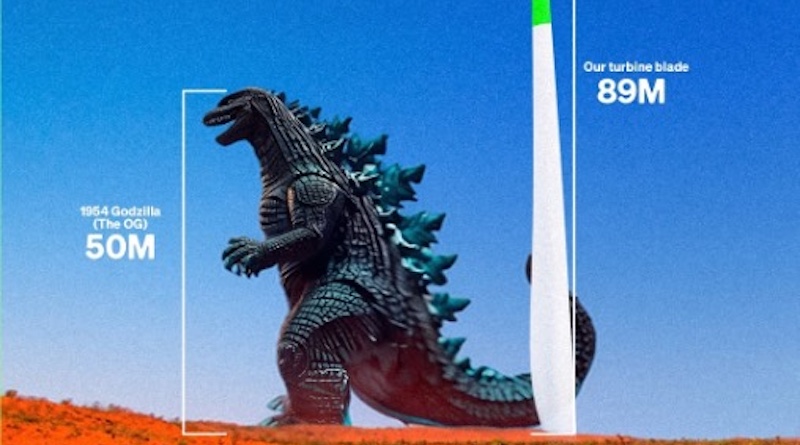
Central to the Pilbara decarbonization blueprint is the procurement and installation of next-generation wind turbine blades described by CleanTechnica as exceeding the scale of the fictional character Godzilla—a benchmark emphasizing the extreme rotor diameters now entering commercial onshore deployment. In utility-scale wind engineering, longer turbine blades sweep a substantially larger rotor area, allowing generators to capture higher volumes of kinetic energy and maintain elevated capacity factors even during periods of moderate wind speeds.
Deploying super-sized wind hardware in the remote interior of Western Australia presents distinct logistical and civil engineering challenges. Transporting ultra-long composite blades from port entry points across inland road networks requires specialized heavy-haulage convoys, route grading, and reinforced crane pads capable of withstanding extreme mechanical loads. Furthermore, infrastructure in the Pilbara must be engineered to endure high ambient temperatures, seasonal cyclonic wind gusts, and abrasive dust conditions without suffering premature blade leading-edge erosion or drivetrain degradation.
For industrial power consumers operating isolated microgrids, pairing high-capacity wind turbines with solar photovoltaic arrays and battery energy storage systems is critical for diurnal load balancing. While solar generation peaks reliably during midday hours in the Australian outback, wind generation profiles in the Pilbara frequently complement solar curves by sustaining power output through the evening and overnight shifts, reducing the total battery storage capacity required to keep twenty-four-hour mining and processing operations online.
Strategic Implications for Industrial Decarbonization
Fortescue's continued capital commitment to mega-scale wind hardware in the Pilbara serves as a bellwether for the broader global mining industry. As steelmakers in Europe and East Asia seek low-emissions iron ore feedstocks to lower their Scope 3 carbon footprints, suppliers capable of verifying fossil-free extraction and transport stand to capture green premiums and secure long-term offtake agreements.
Looking ahead, the successful integration of ultra-large wind turbines into the Pilbara electrical grid will test the scalability of heavy transport logistics, grid-forming inverter stability, and regional regulatory permitting processes in Western Australia. Industry analysts and competing resource extractors will closely monitor construction timelines and operational yield metrics as Fortescue works to translate its executive sustainability commitments into verified industrial power generation.