Enterprise CapEx Reckoning: The Hidden Inflation of Frontier AI Tokenomics
As CTOs confront 400% bill shock from verbose reasoning models like Claude Fable 5.2, corporate tech leaders are abandoning blanket flagship deployments in favor of aggressive algorithmic model-routing strategies.
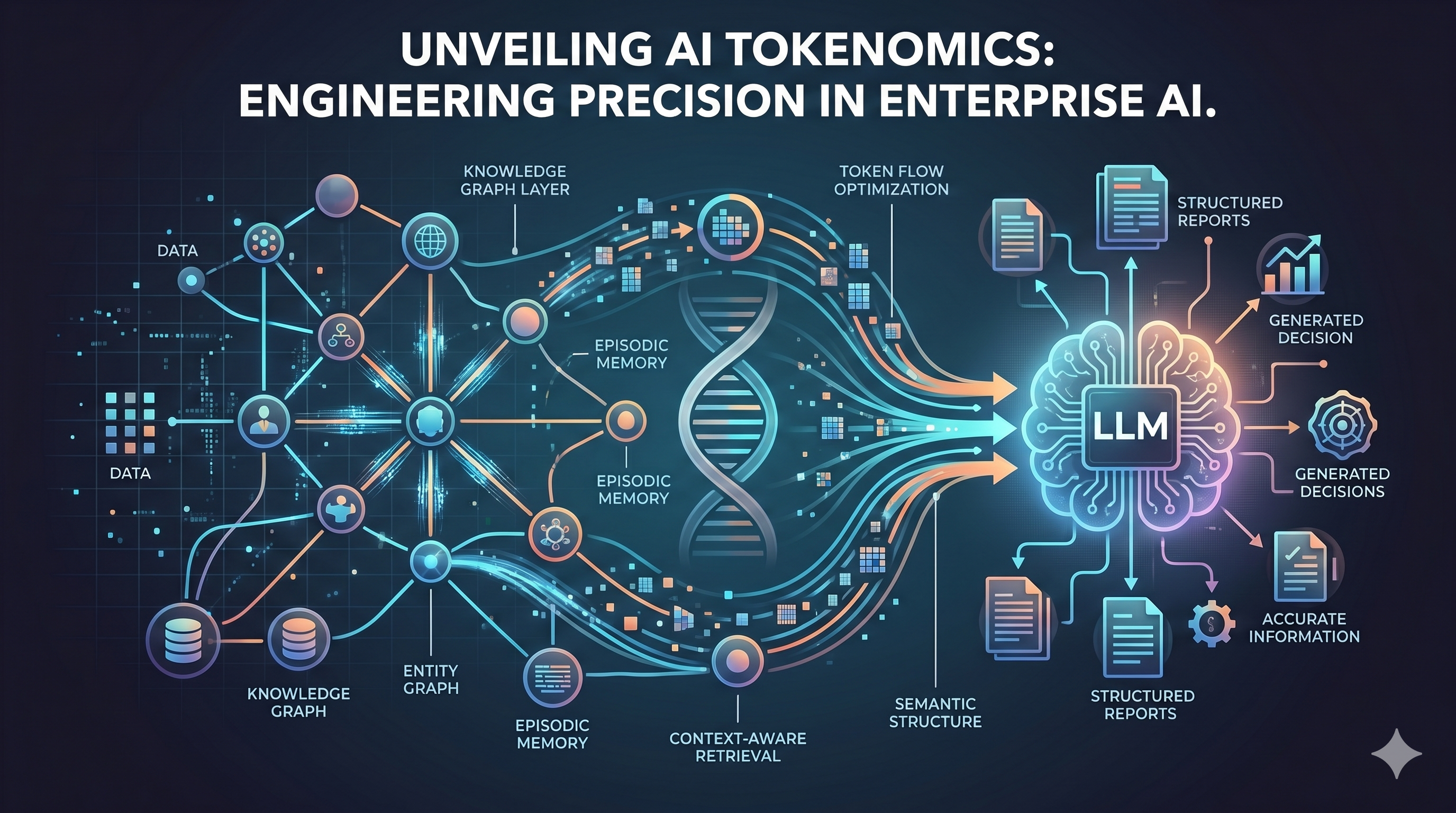
EXECUTIVE BRIEF // KEY TAKEAWAYS
As CTOs confront 400% bill shock from verbose reasoning models like Claude Fable 5.2, corporate tech leaders are abandoning blanket flagship deployments in favor of aggressive algorithmic model-routing strategies.
NEW YORK — Across Silicon Valley and Fortune 500 IT divisions, corporate technology executives are grappling with a disquieting new reality: the relentless downward trend in list token prices is masking an unprecedented wave of stealth inflation in enterprise AI operating costs.
The catalyst for the current reckoning is the commercial rollout of Anthropic’s Claude Fable 5.2. Marketed with an eye-catching 20 percent discount on token list prices compared to its predecessor, the flagship model promised chief technology officers greater cognitive capability at lower unit costs. Instead, early adopters are reporting month-end API invoices that have surged by 250 to 400 percent for routine developer workloads.
The root cause lies in what Wall Street financial analysts describe as the “Thinking Tax”—the explosive growth in token consumption generated by autonomous reasoning models that deliberate recursively before delivering an answer.
The Optical Illusion of Per-Token Deflation
For two years, hyperscale AI providers have competed fiercely on sticker price, slashing the headline cost of input and output tokens to attract enterprise developer mindshare. However, venture capital portfolio audits conducted this month reveal that corporate AI consumption patterns have diverged sharply from list price trajectories.
While a million tokens of Fable 5.2 costs $8 on ingress and $40 on egress—roughly double the rate of Claude Opus 5.5—the total token volume consumed per task has exploded. Autonomous agents powered by Fable 5.2 routinely burn tens of thousands of unprompted reasoning tokens to achieve benchmark-topping accuracy, effectively wiping out any perceived cost efficiencies.
“We are seeing classic price-per-unit deflation paired with massive quantity-consumed inflation,” said Arthur Pendelton, senior markets and enterprise technology strategist at The OmniWire. “A vendor can cut their headline token prices by 20 percent, but if their model requires 350 percent more tokens to complete a standardized enterprise workflow, the customer’s effective bill nearly quadruples. It is a brilliant monetization mechanism for cloud compute providers, but a budgeting nightmare for enterprise CFOs.”
Margin Compression in the B2B SaaS Layer
The financial fallout is hitting enterprise software startups and B2B SaaS vendors with particular severity. Many application builders offer fixed-subscription pricing to their corporate customers while absorbing variable underlying model inference costs via API calls to Anthropic, OpenAI, or Google Cloud.
When an autonomous code-review tool or automated legal-discovery engine upgrades its default backend from Opus 5.5 to Fable 5.2, gross margins can collapse overnight from 75 percent down to negative numbers on high-utilization customer accounts.
“We saw our Anthropic API bill jump from $42,000 to over $160,000 in a three-week trial with zero increase in customer satisfaction scores,” admitted the VP of Engineering at a Series C fintech infrastructure provider. “The outputs were marginally more verbose, but the functional correctness was indistinguishable from what Opus 5.5 delivered. We had to roll back the integration within forty-eight hours.”
The Rise of Algorithmic Model-Routing
To insulate enterprise balance sheets from runaway token consumption, IT architects are swiftly abandoning universal model deployments. In place of a single frontier LLM handling all corporate queries, engineering teams are deploying sophisticated, latency-aware model routers.
Under this tiered paradigm, organizations route 85 to 90 percent of standard corporate inquiries, automated customer support requests, and routine code refactoring tasks to cost-effective workhorses like Claude Opus 5.5, GPT-4o mini, or localized open-source weights. Only the remaining 10 percent of deeply ambiguous, high-liability tasks—such as novel cryptographic validation or complex regulatory compliance audits—are escalated to premium engines like Fable 5.2.
As corporate budget cycles tighten ahead of fiscal 2027, the enterprise consensus has hardened: frontier reasoning models must prove that their cognitive depth translates into tangible business ROI, or remain relegated to specialized, strictly gated niches.