Electricity Costs Drive Growing US Backlash Against AI Data Centers
Mounting public opposition to hyper-scale artificial intelligence infrastructure centers on local power grid strain and consumer utility costs.
EXECUTIVE BRIEF // KEY TAKEAWAYS
Mounting public opposition to hyper-scale artificial intelligence infrastructure centers on local power grid strain and consumer utility costs.
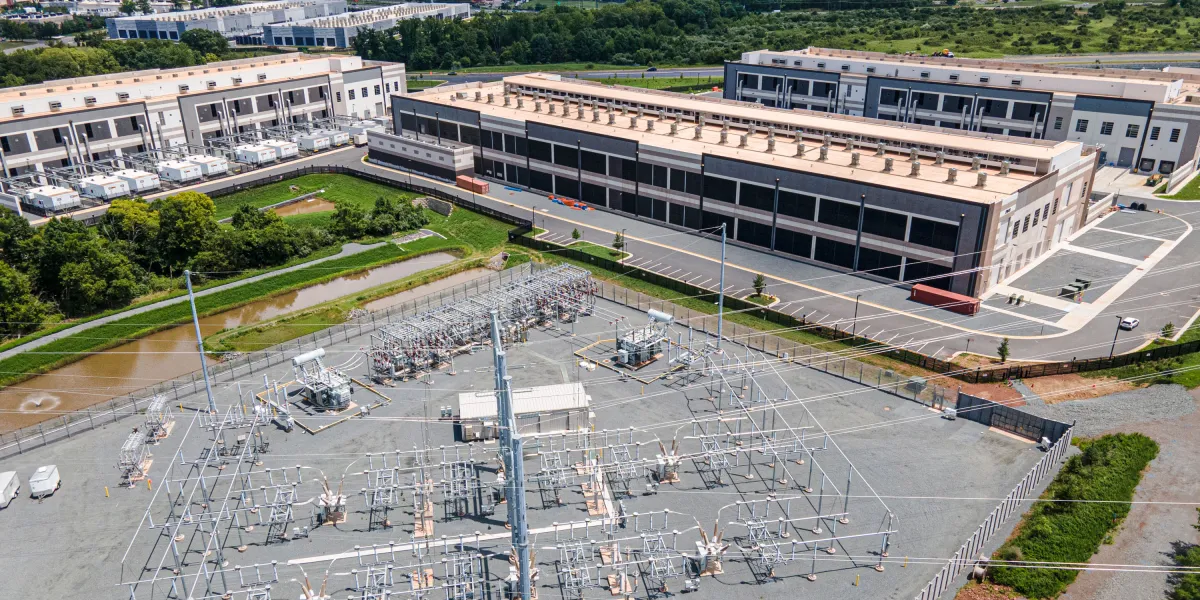
ASHBURN, Va. — As voters cast ballots across the United States, escalating public pushback against the rapid expansion of artificial intelligence infrastructure has converged on a fundamental economic pain point: electricity supply and pricing. According to reporting from MIT Technology Review, which examined conditions on the ground in Ashburn, Virginia—widely recognized as Data Center Alley and the largest data center hub in the world—local resistance to computing facilities is increasingly driven by concerns over power consumption rather than abstract opposition to technology.
The distinction carries critical implications for hyperscale cloud providers, institutional infrastructure investors, and regional utility regulators. As enterprise adoption of generative artificial intelligence accelerates, the physical footprint required to train and deploy foundation models has collided with the structural limits of domestic electrical grids, turning municipal utility planning into a frontline political and economic battleground.
The Epicenter of Computing Infrastructure
Northern Virginia's Data Center Alley serves as the primary backbone for global internet traffic and enterprise cloud computing. Featured in MIT Technology Review's AI newsletter, The Algorithm, on-the-ground reporting from Ashburn during the recent US election cycle highlights how the concentration of server farms has reshaped local civic priorities. For years, municipal governments welcomed data center development as a reliable engine for commercial property tax revenue that placed minimal demand on public schools or municipal transportation networks.
However, the transition from standard cloud storage to energy-intensive artificial intelligence workloads has altered that calculus. The sheer scale of power required to run dense clusters of advanced semiconductors has transformed quiet industrial parks into massive industrial energy consumers, prompting scrutiny from residents and voters who live alongside the expanding server corridors.
Grid Capacity and Economic Friction
At the core of the backlash is the direct connection between hyperscale computing demand and household utility economics. Data centers require uninterrupted, high-voltage power delivery, forcing regional utilities to propose new transmission lines, substations, and generation facilities. When utilities invest billions of dollars in grid upgrades to accommodate commercial computing clusters, residential ratepayers and local advocates frequently raise concerns that the resulting infrastructure costs are socialized across the broader consumer base through higher monthly electricity bills.
Beyond rate structures, the relentless demand for megawatts has strained existing grid capacity across major hubs like Northern Virginia. Grid operators face the dual challenge of maintaining baseline reliability during peak seasonal demand while integrating massive new load requests from technology firms. This friction has shifted public debate from zoning aesthetics and noise ordinances to the fundamental allocation of regional energy resources and who ultimately bears the financial burden of grid modernization.
Strategic Outlook for Hyperscale Expansion
Looking ahead, the realization that data center opposition is fundamentally rooted in electricity economics will dictate how technology companies site and finance future AI infrastructure. To mitigate community pushback and regulatory bottlenecks, major cloud providers are increasingly pressured to negotiate specialized rate tariffs that insulate residential consumers from infrastructure upgrade costs, or to procure dedicated, behind-the-meter power generation.
As regulatory commissions and local voters from Virginia to emerging secondary markets scrutinize utility resource plans, securing community consent for new artificial intelligence hubs will depend less on promises of technological innovation and more on transparent, equitable energy financing that protects local power grids and household budgets.