Bunker Roy, Pioneer of Rural Grassroots Solar Engineering, Dies at 81
Sanjit 'Bunker' Roy died at 81 in Rajasthan, leaving a global legacy of training rural village grandmothers to build and maintain decentralized solar grids.
EXECUTIVE BRIEF // KEY TAKEAWAYS
Sanjit 'Bunker' Roy died at 81 in Rajasthan, leaving a global legacy of training rural village grandmothers to build and maintain decentralized solar grids.
Sanjit "Bunker" Roy, a prominent Indian social activist and educator whose grassroots development model trained illiterate rural grandmothers to become certified solar engineers, died peacefully at his home in Tilonia, Rajasthan, at the age of 81, according to a report published by CleanTechnica. Roy's death marks the passing of a foundational figure in decentralized renewable energy deployment, whose initiatives demonstrated that off-grid electrification could be sustained by local communities without reliance on urban engineering contractors or formal academic credentials.
For the global clean energy sector and international development institutions, Roy's career represents a critical case study in last-mile infrastructure resilience. While commercial renewable energy developers and multilateral development banks have historically focused on utility-scale solar arrays and capital-intensive grid extensions, Roy's work proved that micro-grid sustainability in remote regions depends primarily on local human capital and community-level maintenance capacity.
Redefining Technical Education in Tilonia
Operating from his base in Tilonia, Rajasthan, Roy challenged conventional technocratic assumptions regarding who can master and maintain modern clean energy hardware. Traditional rural electrification programs across the developing world frequently failed within a few years of installation because external technicians rarely returned to remote villages to repair faulty inverters, charge controllers, or battery banks, and young local men trained in basic maintenance often migrated to cities in search of higher wages.
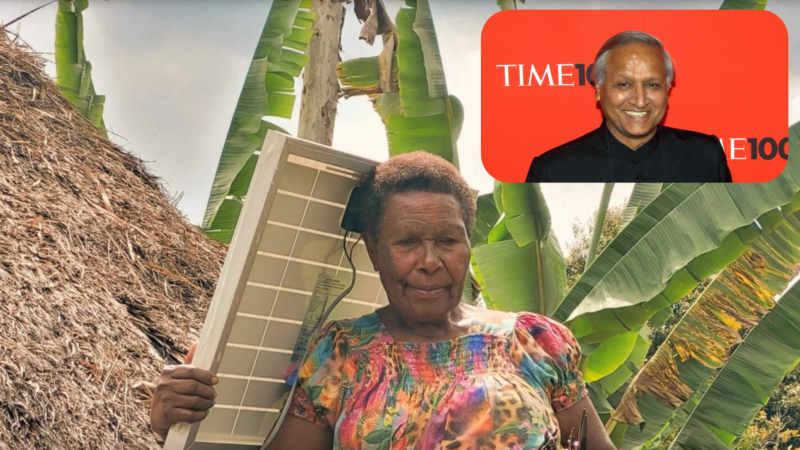
Roy addressed this structural attrition by focusing recruitment specifically on older women and grandmothers rooted in their communities. By demystifying photovoltaic technology—relying on color-coding, hands-on assembly, and practical demonstration rather than written manuals—the Tilonia training methodology enabled women with no formal schooling to fabricate, install, and troubleshoot solar lighting systems independently.
"Sanjit 'Bunker' Roy, who taught illiterate grandmothers to become solar engineers, passed away peacefully this morning at his home in Tilonia, Rajasthan, aged 81." — CleanTechnica
Global Reach and Operational Impact
Although anchored in Rajasthan, the operational footprint of Roy's rural solar model expanded well beyond the Indian subcontinent, reaching remote off-grid communities across Asia and the Global South. CleanTechnica noted that the tangible results of his work were documented as far afield as the rainforests of Borneo as early as October 2016, where village-level solar installations brought reliable nocturnal illumination to isolated settlements previously dependent on kerosene, firewood, or diesel generators.
From an economic and environmental standpoint, empowering local grandmothers as village technicians altered the unit economics of rural energy access. Removing the need for external maintenance contracts significantly reduced the lifecycle operational expenditure of off-grid solar home systems. Simultaneously, replacing combustion-based lighting in forest and agricultural communities curbed indoor air pollution, reduced household fuel expenditures, and extended productive evening hours for education and local commerce.
Strategic Legacy for Decentralized Energy
As international climate finance increasingly targets universal energy access under global decarbonization frameworks, the lessons from Tilonia remain directly relevant to contemporary cleantech deployment. Hardware cost reductions in photovoltaic panels and lithium-iron-phosphate battery storage have largely solved the supply-side economics of off-grid solar, yet workforce bottlenecks and equipment abandonment continue to hinder long-term project viability in rural markets.
Moving forward, energy policymakers, philanthropic funds, and distributed energy enterprises face the ongoing challenge of institutionalizing Roy's community-first maintenance architecture. Ensuring that decentralized renewable energy transitions remain durable across rural Asia, Africa, and Latin America will require continued investment in localized, inclusive technical training models that keep engineering expertise anchored within the communities being served.