Apple TV Integrates Built-In Sign Language Interpretation Feature
Apple TV introduces native sign language interpretation controls within supported streaming titles, advancing media accessibility standards across its ecosystem.
EXECUTIVE BRIEF // KEY TAKEAWAYS
Apple TV introduces native sign language interpretation controls within supported streaming titles, advancing media accessibility standards across its ecosystem.
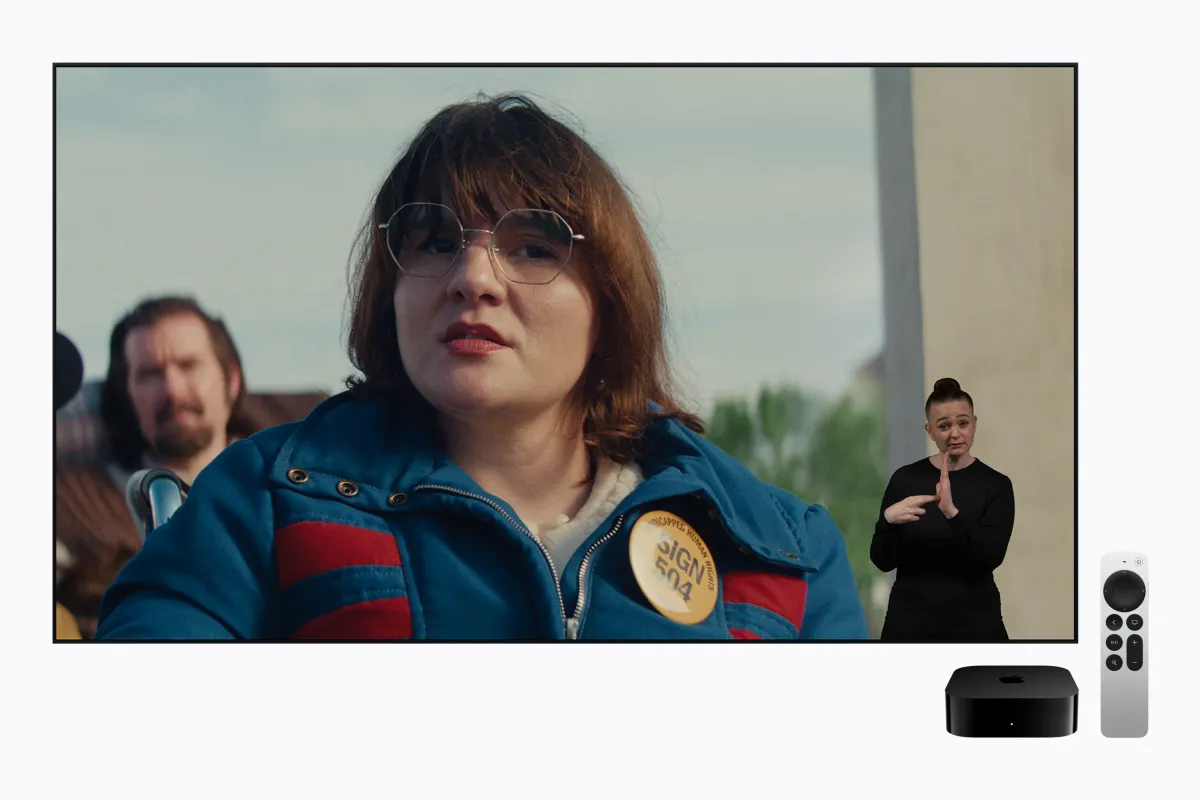
Apple TV has introduced a built-in accessibility capability that allows viewers to activate sign language interpretation directly within supported streaming titles, according to a report by TechCrunch. By embedding native toggle controls for sign language feeds into the core playback interface, the platform moves away from maintaining separate, standalone video catalog entries for accessible versions of films and television series.
The integration carries significant weight for the global streaming media landscape and consumer hardware ecosystems. As major technology companies and digital entertainment providers face increasing consumer demand and regulatory expectations around inclusive media design, native player-level support for sign language interpretation establishes a more streamlined technical architecture for distributing accessible video content at scale.
Streamlining Media Accessibility Architecture
Historically, streaming platforms seeking to offer sign language interpretation alongside standard programming have had to publish duplicate catalog listings—requiring deaf and hard-of-hearing audiences to search specifically for separate, open-captioned or sign-interpreted versions of a release. This fragmented approach complicates content discovery, splits viewership analytics, and creates friction in shared household viewing environments.
As detailed by TechCrunch, Apple TV addresses this structural limitation by making sign language interpretation an integrated accessibility option that viewers can turn on directly inside supported titles. Much like closed captioning, subtitles for the deaf and hard-of-hearing (SDH), and audio description tracks for blind and low-vision users, the new functionality treats visual interpretation as a selectable layer tied to the primary media asset rather than a secondary catalog item.
Apple TV's new accessibility feature lets viewers turn on sign language interpretation within supported titles, consolidating accessible playback options directly inside the primary viewing interface.
For software and hardware ecosystems, consolidating accessibility options into the primary media player reduces user interface complexity while maintaining consistency across living room and mobile screens. Viewers no longer need to navigate away from a title's main landing page to verify whether interpreted playback is available, simplifying navigation across the broader streaming library.
Operational and Technical Impact on Streaming Platforms
From an operational and content delivery perspective, treating sign language interpretation as an integrated feature within supported titles introduces distinct workflows for post-production, metadata indexing, and video streaming infrastructure. Unlike text-based subtitle files—which require minimal bandwidth and are rendered dynamically over video frames—sign language interpretation requires synchronized video feeds that preserve crisp visual clarity and high frame rates so hand movements, facial expressions, and spatial grammar remain fully legible.
Integrating this capability directly into playback controls means content distributors and platform engineers must manage synchronized video tracks or picture-in-picture overlay streams alongside standard high-definition and ultra-high-definition video assets. For streaming services operating globally, this architectural approach also lays the groundwork for supporting multiple regional sign languages—such as American Sign Language (ASL) or British Sign Language (BSL)—under a unified title entry, depending on regional licensing and production availability.
Furthermore, unify-in-player accessibility features strengthen platform retention and household utility. When accessible tracks are selectable within the standard playback session, families and multi-viewer households can access the exact same catalog entry without managing separate watchlists, playback progress markers, or parental control profiles.
Strategic Outlook for Digital Entertainment Standards
The deployment of built-in sign language interpretation on Apple TV highlights how accessibility engineering continues to serve as a key differentiator in the subscription video-on-demand (SVOD) and consumer electronics sectors. As hardware ecosystems mature, platform operators are increasingly focusing on software-driven inclusivity features that enhance usability without requiring specialized third-party peripherals.
Looking ahead, the critical milestone for platform-wide adoption will be the breadth of catalog coverage. Because the feature operates within supported titles, its long-term impact will depend on how rapidly studio partners, third-party content distributors, and internal production teams commission and encode sign language interpretation tracks for both new releases and legacy library assets. As digital accessibility standards evolve across North American, European, and Asia-Pacific markets, native player support for sign language interpretation is positioned to become a benchmark expectation across tier-one streaming architectures.