US Offshore Wind Supply Chain Stalls as Pipeline Collapses
A projected $23 billion buildout of domestic offshore wind manufacturing has stalled amid economic headwinds and political attacks, Canary Media reports.
EXECUTIVE BRIEF // KEY TAKEAWAYS
A projected $23 billion buildout of domestic offshore wind manufacturing has stalled amid economic headwinds and political attacks, Canary Media reports.
A U.S. offshore wind manufacturing buildout that industry planners once expected to anchor a domestic supply chain has stalled, according to Canary Media. Economic headwinds and political attacks from President Donald Trump have shrunk the project pipeline, and manufacturers that had aimed to serve the sector have pivoted to other markets or shelved their plans. Experts cited by the publication say the setback could amount to roughly a decade.
The reversal matters for investors, utilities and industrial firms because a domestic supply chain was expected to lower construction costs and shorten project timelines. Canary Media reports that, without it, future installations will take longer and cost more to complete, even if the industry recovers.
From Promise to Pullback
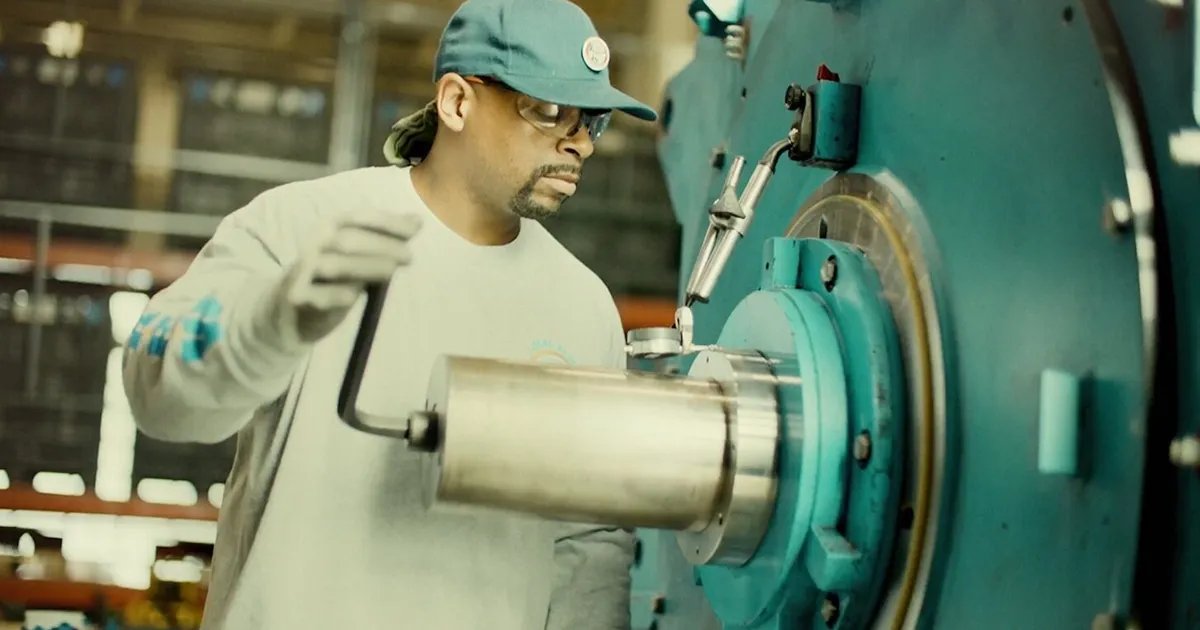
The case of a Milwaukee factory illustrates the shift. Ingeteam, a Spanish manufacturer, opened the plant in 2011 to serve American clean energy industries, repairing and producing equipment at a site between the Milwaukee Brewers baseball stadium and Lake Michigan. Akinlana Abdalla spent years there repairing generators for onshore wind turbines. He is now a business representative for the International Brotherhood of Electrical Workers Local 2150, which represents the factory's union workforce.
As the plant was settling in, a new industry was emerging off the East Coast. Energy companies, utilities, and state and federal officials were preparing the first U.S. offshore wind farms to supply power to densely populated, land-constrained communities. Because American companies did not yet make key turbine parts, most components were expected to come from Europe.
Developers wanted domestically made generators, turbine towers, steel foundations and other equipment to reduce high construction costs and compress schedules. Canary Media reports that building a substantial U.S. supply chain was expected to require nearly $23 billion in investment by 2030, covering components, port infrastructure and specialized vessels.
By late 2022, the Wisconsin plant was preparing to build more onshore turbine generators, partly because of federal incentives in the Inflation Reduction Act, passed that August. Garan Chivinski, a former Ingeteam human resources manager, told BizTimes Milwaukee that fall:
"There's this hunger right now to make Milwaukee the capital of the renewable energy revolution."
Abdalla said the company and union representatives began early-stage discussions in spring 2024 about making offshore generators as well. James Meyer, business manager of IBEW Local 2150, which has about 6,300 members in Wisconsin and Upper Michigan, recalled the mood at the time:
"We were going into this whole new boom, like this could really take off."
Pipeline Shrinks, Supply Chain Stalls
The scale of lost expectations is visible in the numbers. Before Trump was elected in November 2024, BloombergNEF projected the United States would build 39 gigawatts of offshore wind by 2035. Canary Media notes that only about 0.3 gigawatts of capacity was online nationwide at the end of 2024, leaving a vast gap between the installed base and the forecast.
According to the report, the combination of economic pressures and the administration's political attacks has effectively erased much of the project pipeline. Manufacturing discussions in Milwaukee, Abdalla and Meyer indicated, fizzled out. The experience mirrors a broader pattern the publication describes, in which suppliers that had considered entering the offshore market redirected capital toward other customers or put expansion on hold.
The consequences extend beyond individual factories. Offshore wind economics depend on volume: domestic factories, ports and vessels are justified by a steady stream of projects. When developers cancel or delay installations, suppliers lose the demand certainty needed to finance specialized facilities, which in turn leaves later projects reliant on costlier or slower imported components.
Outlook
The industry's path forward hinges on whether a project pipeline can be rebuilt. Canary Media reports that, should offshore wind stage a comeback, installations will take longer and cost more than they would have had the supply chain developed on schedule. Experts quoted by the publication put the delay at perhaps a decade.
For capital markets, the episode shows how exposed long-horizon industrial investment is to shifts in federal policy. The roughly $23 billion in supply chain spending once deemed necessary by 2030 depended on confident demand signals from both developers and government. For workers in places such as Milwaukee, where onshore wind equipment production continues but offshore ambitions have faded, the next opportunity depends on whether those signals return.


