T-Mobile Ties AI Strategy to Frontline Workforce and Culture
T-Mobile CEO Srini Gopalan outlines how pairing AI integration with frontline employee engagement will safeguard the carrier's competitive advantage.
EXECUTIVE BRIEF // KEY TAKEAWAYS
T-Mobile CEO Srini Gopalan outlines how pairing AI integration with frontline employee engagement will safeguard the carrier's competitive advantage.
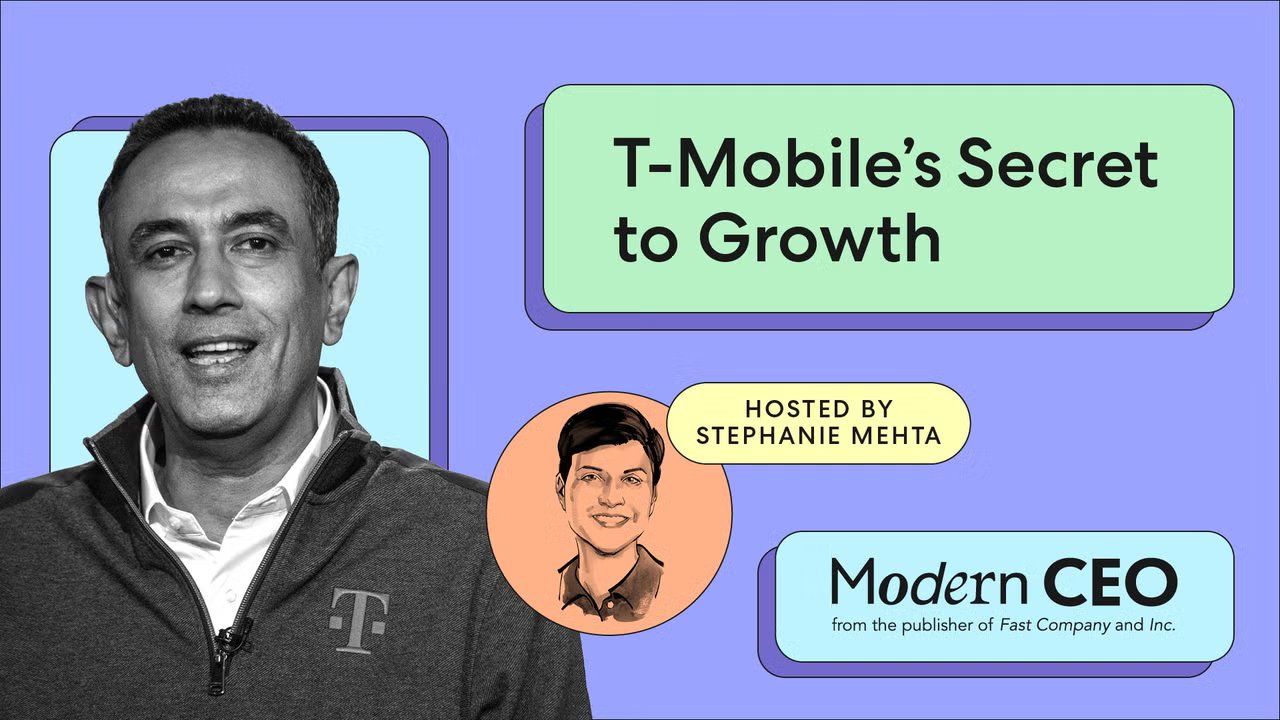
BELLEVUE, Wash. — Telecommunications giant T-Mobile is anchoring its next expansion cycle on the dual integration of artificial intelligence and frontline workforce engagement, Chief Executive Officer Srini Gopalan revealed in an extensive strategy briefing with Fast Company. In conversation with Mansueto Ventures chief executive Stephanie Mehta, Gopalan outlined how the carrier plans to maintain its historical "un-carrier" market momentum by deploying intelligent automation while systematically reinforcing human-centric customer service protocols across its retail and care networks.
The operational blueprint emerges at a decisive juncture for global telecommunications and enterprise technology, where corporate leaders face mounting pressure to demonstrate tangible productivity gains from capital-intensive AI investments. By positioning algorithmic tools as workforce augmentations rather than outright labor replacements, T-Mobile is attempting to resolve a critical tension in corporate balance sheets: scaling operational efficiency and reducing churn without sacrificing the high-touch consumer loyalty that drives recurring service revenues.
Frontline Alignment and Cultural Preservation at Scale
Central to Gopalan’s operational philosophy is the premise that technological acceleration must not sever executive leadership from direct customer experiences. As T-Mobile expanded its operational footprint following large-scale industry consolidation, maintaining the brand’s agile challenger culture required institutional guardrails. Gopalan emphasized to Mehta that organizational identity remains rooted in an uncompromising focus on both frontline staff and subscribers.
"To me, it is an obsession with the customer, an obsession with the front line, but done with a twinkle in your eye, done in a cheeky, irreverent manner, done in a surprising and memorable manner," Gopalan stated during the Fast Company exchange.
To enforce this standard across corporate ranks, T-Mobile has broadened its internal "Frontline Connect" initiative, mandating that corporate leaders spend dedicated working shifts inside retail stores and customer care facilities. Gopalan noted that executive stock-based compensation and performance evaluations are structurally linked to active participation in these frontline engagements, ensuring managerial decision-making remains grounded in real-world customer interactions rather than purely theoretical dashboard analytics.
Operational Deployment and Algorithmic Integration
Beyond cultural governance, T-Mobile's technological roadmap integrates machine learning architectures across three principal operational tiers: customer journey orchestration, physical network management, and preventative maintenance. Rather than utilizing generative AI solely for post-inquiry deflection via basic conversational bots, the carrier has embedded predictive algorithms into its core digital platforms to resolve subscriber bottlenecks before friction escalates.
At the network level, the carrier has deployed automated self-organizing network systems to balance transmission spectrum and allocate bandwidth dynamically during demand surges. By synthesizing billions of operational data points across localized geographic grids, algorithmic planning models now guide targeted capital deployment for physical cell site upgrades. Furthermore, partnerships with enterprise technology providers in artificial intelligence radio access networks (AI-RAN) have demonstrated marked improvements in spectral efficiency and downlink delivery speeds, optimizing infrastructure returns on invested capital while curbing baseline operational expenditures.
Strategic Trajectory and Regulatory Horizons
Looking ahead, T-Mobile’s hybrid posture provides a test case for how incumbent telecom operators manage the transition toward intelligent edge networks and autonomous systems. The carrier is positioning its low-latency fifth-generation wireless grid as foundational digital plumbing for emerging physical AI applications, including industrial automation, edge computing nodes, and enterprise robotics.
However, realizing this vision will require navigating tightening global regulatory environments concerning algorithmic accountability, customer privacy, and telecom labor standards. Industry regulators in North America and Europe are scrutinizing algorithmic data ingestion, consumer credit profiling, and automated customer service transparency with increasing vigilance. For Gopalan and T-Mobile, the test over the coming fiscal periods will be whether the carrier can balance aggressive technological modernization with its signature employee-first ethos, sustaining margin expansion while preserving the customer advocacy that established its market share.