Revolution Wind Reaches Full Capacity Amid Federal Opposition
The $6.2B Revolution Wind farm achieves full operation, providing 704MW to New England despite ongoing challenges from the Trump administration.
EXECUTIVE BRIEF // KEY TAKEAWAYS
The $6.2B Revolution Wind farm achieves full operation, providing 704MW to New England despite ongoing challenges from the Trump administration.
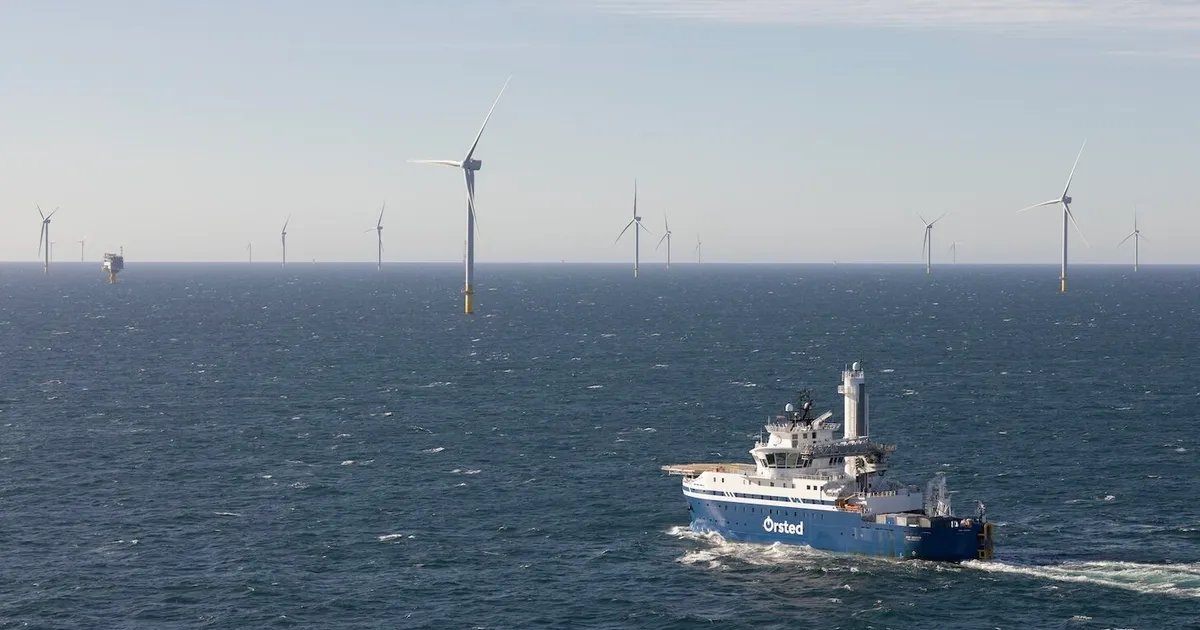
WASHINGTON — The 704-megawatt Revolution Wind project is officially fully operational, marking a significant milestone for the burgeoning U.S. renewable energy sector as it navigates an increasingly hostile regulatory and political landscape. According to an announcement by Danish energy giant Ørsted, the $6.2 billion offshore wind farm situated near the coastlines of Connecticut and Rhode Island achieved full generating capacity in October, following the installation of its final turbine in September. The facility represents the third major utility-scale offshore wind farm to reach commercial completion in the United States, following South Fork Wind near New York and Vineyard Wind off the coast of Massachusetts.
As reported by Canary Media, the successful completion of the project underscores the resilience of private capital infrastructure initiatives in the face of persistent headwinds. The facility's carbon-free electricity is being funneled directly into the regional power grid under long-term power purchase agreements with three major Northeast utilities: Rhode Island Energy, Eversource Energy, and United Illuminating. For capital markets, the milestone demonstrates that despite sweeping administrative shifts, deeply capitalized energy developers can still cross the finish line on multi-billion-dollar clean energy assets, albeit through protracted legal channels.
Regulatory Battles and Political Headwinds
America's broader offshore wind industry has faced continuous political and administrative opposition since President Donald Trump took office in January 2025. Prior to the current administration, market analysts at BloombergNEF projected that the United States would construct 39 gigawatts of offshore wind capacity by 2035. However, due to shifting federal priorities and regulatory roadblocks, that forecast has been drastically revised downward to just 5.9 gigawatts—a figure reflecting only those projects that were already completed or actively under construction at the start of last year.
Revolution Wind's path to full commercial operation was far from straightforward. Ørsted was forced to halt construction twice over the course of the development cycle. In August 2025, the U.S. Department of the Interior issued a sudden stop-work order citing unspecified national security concerns, though a federal judge subsequently vacated the order a month later. In late December, the administration issued sweeping stop-work directives targeting all five offshore wind projects then under construction. Although federal judges systematically struck down those administrative orders, the temporary halts forced developers to absorb substantial financial losses and narrowly averted catastrophic delays to tight operational timelines.
Economic Impact and Regional Grid Reliability
Despite the diminished pipeline for future projects, operational facilities like Revolution Wind are providing immediate, tangible benefits to power markets in the Northeast. According to regional energy experts cited by Canary Media, completed utility-scale offshore wind assets have proven instrumental in mitigating grid stress and stabilizing household utility bills during periods of extreme weather throughout the year.
“Revolution Wind will provide an essential boost of utility-scale electricity to the power-hungry Northeast, delivering a substantial new source of generation, diversifying supply, and strengthening electric reliability for decades,” stated Hillary Bright, executive director of the offshore wind advocacy group Turn Forward.
Ørsted similarly emphasized the strategic utility of the installation. In an emailed statement following its quarterly earnings call, the company noted that the facility will generate sufficient electricity to power the equivalent of more than 350,000 New England homes, significantly bolstering regional energy security and supply diversity.
Strategic Outlook and Ongoing Legal Scrutiny
Even with commercial operations now fully underway, Revolution Wind remains within the sights of federal regulators. In October, the Department of the Interior formally petitioned a federal court for permission to reevaluate the agency's initial 2023 approval of the wind farm's construction and operations plan. While that legal maneuvering did not immediately disrupt active generation, it highlights the enduring regulatory uncertainty facing renewable infrastructure assets developed under federal leases.
As the broader U.S. market adjusts to a significantly constrained growth trajectory through the next decade, the successful commissioning of Revolution Wind, South Fork Wind, and Vineyard Wind establishes a baseline for offshore generation. For institutional investors and regional grid operators, the immediate focus shifts toward defending existing operational assets against retroactive legal challenges while securing long-term power agreements in high-demand eastern load zones.


