North America's First Modular Reactor Faces Delays and Cost Overruns
Ontario Power Generation's delayed Darlington SMR unit tests the economic premise of next-generation nuclear deployments across global capital markets.
EXECUTIVE BRIEF // KEY TAKEAWAYS
Ontario Power Generation's delayed Darlington SMR unit tests the economic premise of next-generation nuclear deployments across global capital markets.
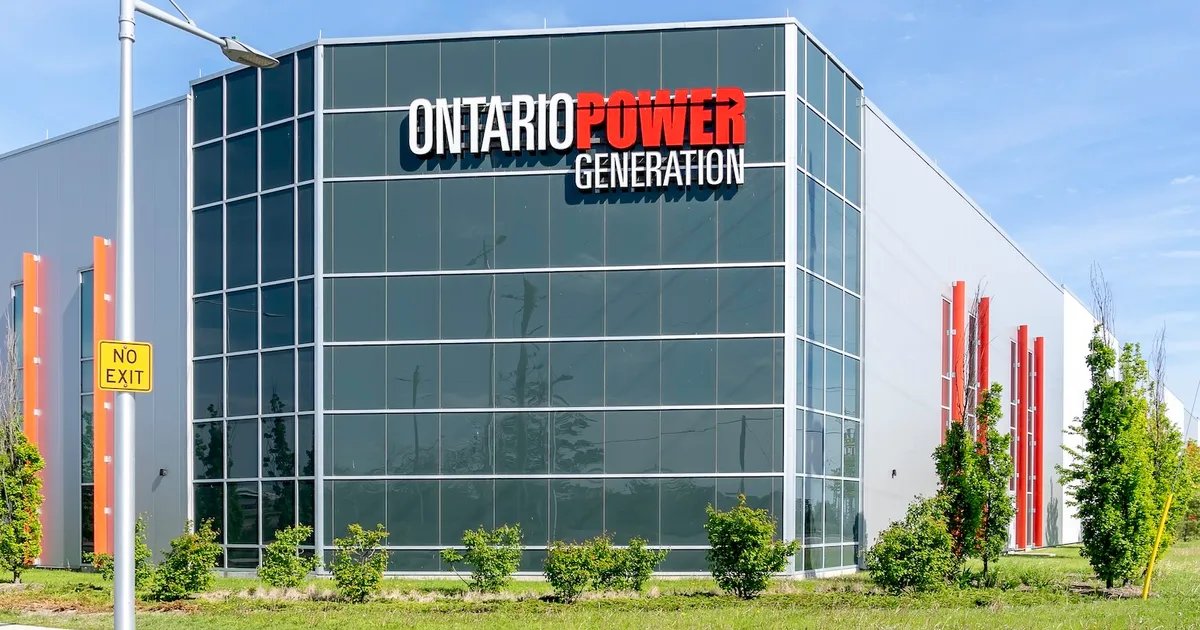
TORONTO — North America’s vanguard small modular nuclear reactor project has succumbed to the acute scheduling and budgetary pressures historically endemic to the nuclear power sector, dealing an early blow to commercial deployment timelines across the continent. Ontario Power Generation disclosed in an earnings release that the inaugural GE Vernova Hitachi BWRX-300 reactor under construction at its Darlington site east of Toronto will fail to achieve commercial operation by its targeted October 2030 deadline and will exceed its established CA$7.7 billion ($5.4 billion) capital expenditure ceiling, according to reporting by clean energy outlet Canary Media.
The disclosure marks a critical juncture for global infrastructure investors, industrial power consumers, and policymakers who have framed small modular reactors, or SMRs, as a swift, predictable antidote to escalating clean firm power deficits. With major tech conglomerates and utilities actively scouting dispatchable, carbon-free capacity to satisfy expanding grid loads, the operational stumbling blocks at Darlington signal that novel nuclear architectures remain vulnerable to the compounding execution risks and capital inflation that have constrained conventional atomic builds for decades.
Darlington’s SMR Deployment and Compounding Schedule Revisions
The Darlington installation represents Canada’s first new nuclear construction initiative in over three decades, serving as an international benchmark for the commercial viability of light-water modular reactors. The project’s recent deferral marks the second substantial timeline revision since Ontario Power Generation selected the design in late 2021, when the provincial utility initially projected completion as early as 2028. Utility management declined to publish immediate replacement targets, confirming instead that a comprehensive evaluation of revised schedule trajectories and cost estimates is underway.
The utility is working on a revised assessment of cost and schedule that it expects “to be substantially completed by mid-2027,” according to corporate disclosures cited by Canary Media.
Unlike several advanced reactor concepts seeking regulatory clearance across North America, the BWRX-300 does not rely on experimental coolants or unproven fuel cycles. Engineered by GE Vernova Hitachi, the modular unit adapts standard light-water technology currently deployed across the global commercial fleet, scaled down to deliver 300 megawatts of electricity. While substantially smaller than gigawatt-scale conventional plants, the reactor was engineered precisely to lower upfront capital requirements, simplify licensing pathways, and expedite construction intervals through modular shop fabrication.
Economic Stakes, Capital Commitments, and Industry Precedents
Ontario Power Generation’s long-term master plan for the Darlington facility envisions an aggregate cluster of four BWRX-300 modular reactors carrying an initial cumulative budget of CA$20.9 billion. Public-sector and institutional backing has anchored the flagship build, with federal and provincial investment funds committing up to CA$3 billion in public capital in exchange for minority equity stakes in the facility. The capital stakes are magnified by parallel initiatives across the United States border, where the Tennessee Valley Authority secured a construction permit from the Nuclear Regulatory Commission in September for a BWRX-300 unit, and private developer Blue Energy initiated the NRC permitting process for a planned Texas deployment.
Prolonged delays and cost escalation have historically crippled the economic justification for North American nuclear assets. The most recent commercial nuclear deployment in the United States—Georgia Power’s Vogtle Units 3 and 4, utilizing Westinghouse AP-1000 large-scale reactors brought online in 2023 and 2024—required an additional seven years of construction and accrued $17 billion in budget overruns before entering service. Proponents of SMR technology maintain that standardized, modular fabrication will mitigate such capital risks by unlocking steep manufacturing learning curves, theorizing that subsequent units will drop rapidly in cost. However, with only two commercial SMR installations presently operating globally—in Russia and China—financial institutions and utility analysts continue to debate whether factory modularity can realistically outperform the scale efficiencies of conventional nuclear facilities.
Outlook: Policy Alignment, Market Demand, and Regulatory Thresholds
Despite emerging delivery bottlenecks, nuclear power continues to garner aggressive bipartisan backing in Washington and Ottawa amid surging structural demand for round-the-clock clean power. The Biden administration prioritized nuclear output as the structural backbone of a decarbonized electric grid, while successive Trump administrations championed the sector under the strategic mandate of American energy dominance. Concurrently, major corporate balance sheets are underwriting nuclear expansion, underscored by the Department of Energy’s $5 billion loan guarantee to Constellation Energy for nuclear uprates alongside parallel commercial partnerships involving tech leaders such as Google.
The near-term trajectory for SMR commercialization now hinges upon Ontario Power Generation’s mid-2027 audit, which will establish the actual capital premium and construction duration required to deliver North America’s benchmark modular plant. Until the revised Darlington projections are formalized, institutional developers, utility regulators at the NRC, and prospective industrial off-takers will face heightened scrutiny from capital markets regarding whether SMRs represent a repeatable manufacturing breakthrough or an extension of traditional nuclear construction vulnerabilities.


