Next-Gen Bionic Hand Trial Marks Milestone in Neural Integration
An advanced experimental prosthetic hand enables real-time pressure feedback for the first time in an independent home trial.
EXECUTIVE BRIEF // KEY TAKEAWAYS
An advanced experimental prosthetic hand enables real-time pressure feedback for the first time in an independent home trial.
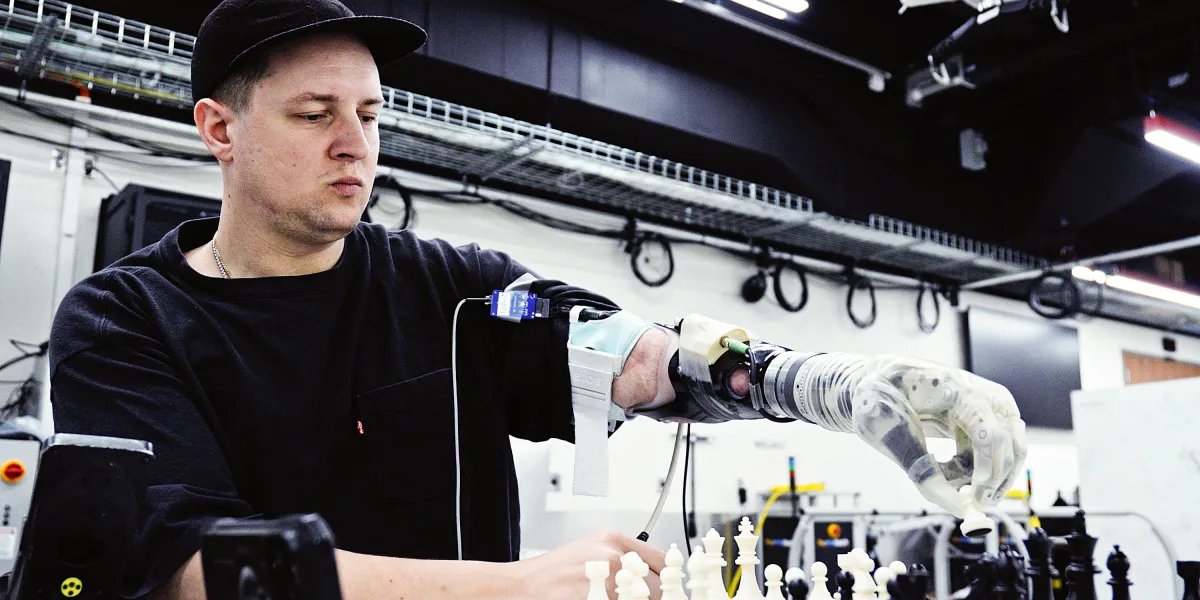
SALT LAKE CITY — Advancing the frontier of neuro-prosthetics, researchers at the University of Utah have successfully deployed an experimental bionic hand that restores tactile sensation to amputees. According to an investigation published by the MIT Technology Review, participant Avi Davidson has become the first at-home user of the device, which is wired directly into the nerves of the upper forearm to transmit pressure feedback. The breakthrough bridges a critical gap in assistive technology, transforming prosthetic limbs from purely mechanical tools into sensory-responsive extensions of the human body.
Davidson, who lost his dominant left hand following a severe electrical accident at age 16, is the ninth individual to receive the experimental implant but the first authorized to take the hardware outside the clinical environment for independent daily use. By establishing a direct interface with the peripheral nervous system, the device allows users to modulate grip strength and safely handle delicate objects—ranging from grapes and eggs to the hand of a loved one—without relying entirely on visual cues.
Expanding Clinical Horizons in Neuro-Engineering
The underlying hardware utilized in the study is the bionic LUKE arm, a multi-articulated prosthesis initially developed in the 2000s, trialed in 2014, and granted clearance by the US Food and Drug Administration that same year. However, the current clinical trial led by the University of Utah diverges from the arm's foundational mechanics, focusing instead on the novel neural interface that connects the device to the central and peripheral nervous systems.
Researchers anticipate that data gathered from Davidson’s independent deployment will provide crucial insights into the efficacy, reliability, and physiological impacts of long-term neural integration. Academic and clinical teams aim to evaluate how continuous sensory feedback influences cortical reorganization, daily utility, and overall psychological well-being. Past prosthetics used by Davidson ranged from rudimentary mechanical hooks provided shortly after his 2009 injury to more advanced myoelectric models capable of articulating individual digits via residual muscle movements.
"Once I woke up, they explained to me: You’re paralyzed, you’re never going to walk again, and also, we took your left hand," Davidson recalled of his extensive injuries, which included second- and third-degree burns across 37% of his body and a severed spinal cord.
Despite these profound physical challenges, Davidson transitioned into a career as a trauma therapist. His accidental encounter with a research scientist at a local supermarket ultimately connected him with the Utah engineering team, setting the stage for his participation in the ongoing neural interface trial.
Economic and Technological Implications for Capital Markets
The commercialization and clinical validation of sensory-enabled prosthetics represent a rapidly expanding sector within medical technology and advanced robotics. While traditional commercial prosthetics are frequently constrained by medical insurance replacement cycles—typically permitting device upgrades every five years—breakthroughs in neural interfacing are attracting increased venture capital and federal research grants.
Market analysts note that the integration of bidirectional neural communication significantly increases the value proposition of medical device manufacturers. As clinical trials transition from controlled laboratory environments to unsupervised home use, the gathered telemetry data will serve as a foundational asset for regulatory submissions required by international health authorities. The commercial scalability of these devices will depend heavily on durable biocompatible electrodes, robust signal-processing algorithms, and expanded insurance coverage structures capable of accommodating advanced neural hardware.
Strategic Outlook and Regulatory Milestones
Moving forward, the primary objective for the University of Utah research team is to quantify the long-term viability of the neural interface outside clinical oversight. Investigators will monitor potential degradation of nerve signals, hardware durability under everyday physical stress, and the psychological adaptation required by patients managing constant sensory input from an artificial limb.
Regulatory pathways for next-generation neuro-prosthetics remain complex, requiring rigorous longitudinal safety data to satisfy FDA and international standards. Success in these current trials could pave the way for broader clinical availability, potentially transforming the standard of care for upper-extremity amputees worldwide. As the line between biological tissue and cybernetic hardware continues to blur, the insights gained from pioneering users like Davidson will directly inform the engineering iterations of the next decade.


