New York Awards Ports $230M in Repurposed Wind Grants
New York is redirecting $228 million in offshore wind funds into versatile port upgrades to sustain maritime commerce amid mounting federal headwinds.
EXECUTIVE BRIEF // KEY TAKEAWAYS
New York is redirecting $228 million in offshore wind funds into versatile port upgrades to sustain maritime commerce amid mounting federal headwinds.
ALBANY, N.Y. — New York state has awarded more than $228 million in state funding across five maritime infrastructure projects along regional rivers and harbors, repurposing public funds initially earmarked strictly for offshore wind manufacturing into multi-industry port upgrades, Canary Media reported Friday.
The strategic reallocation, announced by Gov. Kathy Hochul, signals an operational adaptation for subnational industrial policy in the clean energy transition. Confronted by federal policy disruptions, macroeconomic inflation, and stalled component manufacturing, state authorities are deploying capital into foundational dockside facilities capable of supporting diversified commerce immediately while preserving heavy logistics readiness for a future resurgence in offshore wind development.
Strategic Capital Realignment and Executive Mandate
The five newly announced grants draw directly from $200 million initially dedicated to establishing domestic manufacturing and logistics hubs for the Atlantic offshore wind pipeline. That funding was part of a larger $500 million offshore wind initiative unveiled by Hochul in 2022, launched during a period of rapid expansion and greater commercial optimism for the marine energy sector.
State energy officials underscored that widening the scope of the grants prevents public capital from sitting idle while broader market dynamics adjust. Doreen Harris, president and CEO of the New York State Energy Research and Development Authority (NYSERDA), noted that the upgraded facilities reflect the extended timelines inherent to coastal engineering.
“Port facilities and their upgrades tend to be capital-intensive, they tend to have long lead times. So our investments today are long-term in nature,” Harris said in an interview with Canary Media.
Harris explained that the restructured projects “will make our state prepared to support offshore wind in the future, but it also will ensure the investments produce jobs and economic benefits in the near term.” She characterized the investments as “strong infrastructure development for the state of New York, irrespective of their final use,” emphasizing state efforts to ensure maritime investments generate broad economic utility across multiple industrial sectors.
Operational Impact and Industrial Upgrades Across Regional Hubs
Under the revised funding guidelines, the $228 million in state support will enable operators and terminal developers to build out heavy industrial capacity suitable for general freight, manufacturing, and future clean energy assembly. Key improvements include expanding waterfront cargo-handling capacity, deploying heavy-lift cranes and specialized transfer equipment, and boosting shore-side manufacturing capabilities.
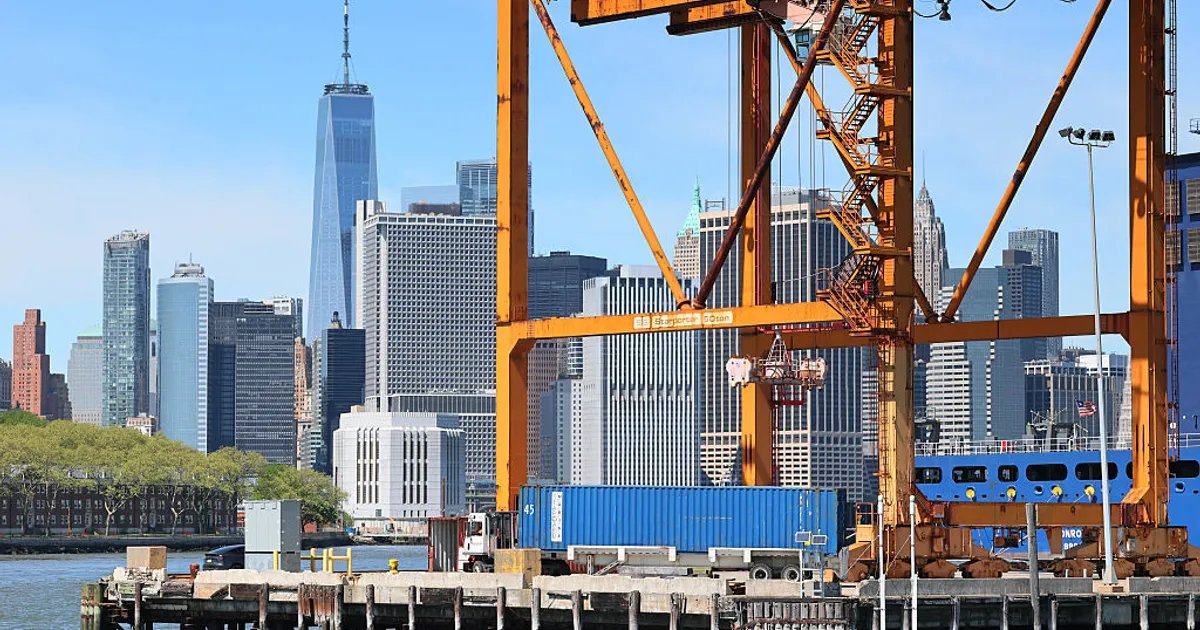
Among the designated recipients is the Red Hook Container Terminal in Brooklyn, situated within New York’s primary maritime commercial harbor. Bolstering heavy-lift facilities and industrial handling at sites like Red Hook provides immediate utility for bulk container logistics while maintaining the structural footprint required to handle turbine assemblies and high-tonnage marine equipment.
The policy shift follows prior manufacturing cancellations in the upper Hudson River corridor. In late 2023, NYSERDA provisionally awarded $300 million in grant funding to GE Vernova and its subsidiary LM Wind Power to manufacture offshore wind turbine components at the Port of Coeymans. Concurrently, regional authorities at the nearby Port of Albany designed a $600 million industrial project to produce specialized steel tower sections. However, severe macroeconomic headwinds and complex supply chain logjams prevented both marquee facilities from moving forward into production.
Regulatory Headwinds and Long-Term Decarbonization Targets
The redeployment of port infrastructure funds coincides with growing administrative resistance from Washington following Donald Trump’s return to the presidency in January 2025. The Trump administration has undertaken sustained actions to disrupt the offshore wind sector, including efforts to rescind project permits, halt ongoing construction, and introduce federal programs designed to pay offshore wind developers to cancel or pause active projects.
New York has mounted aggressive legal challenges against federal actions, successfully contesting administrative stop-work orders to permit major contracted installations, including the offshore Empire Wind and Sunrise Wind projects, to resume construction activities along the Atlantic outer continental shelf.
Despite near-term regulatory friction and federal intervention, New York remains legally committed under statutory mandates passed in 2019 to deploy 9 gigawatts of offshore wind capacity by 2035—a threshold calculated to generate enough clean electricity to power roughly 6 million households. By directing state grants into resilient, heavy-lift harbor infrastructure, state planners intend to maintain long-term grid decarbonization objectives while ensuring local ports deliver viable commercial returns today.


