NASA Highlights M-Class Solar Flare Amid Elevated Space Weather
NASA's Astronomy Picture of the Day documented an M-class solar flare, underscoring systemic space weather risks for orbital assets and terrestrial grids.
EXECUTIVE BRIEF // KEY TAKEAWAYS
NASA's Astronomy Picture of the Day documented an M-class solar flare, underscoring systemic space weather risks for orbital assets and terrestrial grids.
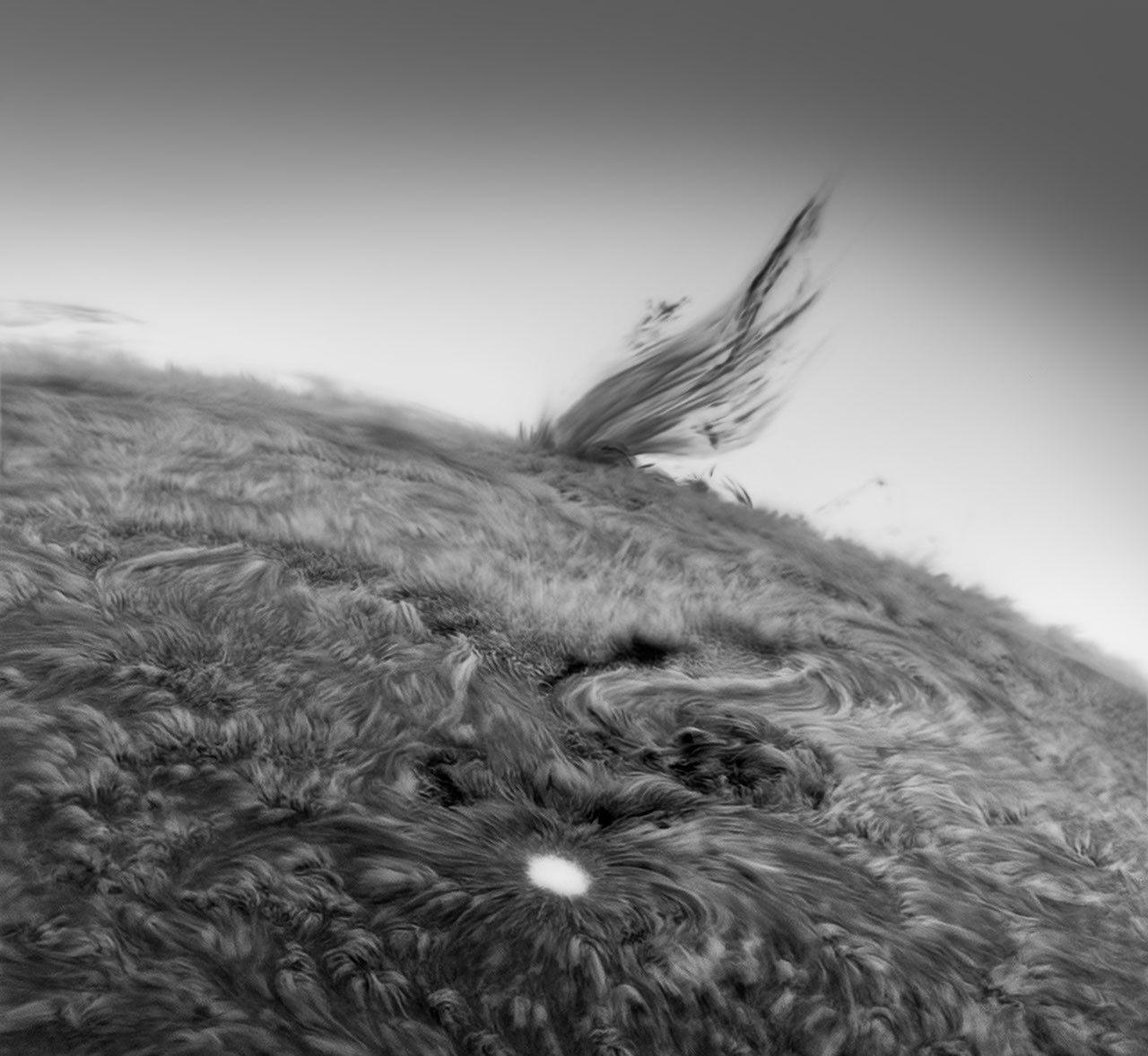
WASHINGTON — The National Aeronautics and Space Administration documented an M-class solar flare in an analytical imaging release published Wednesday via its Astronomy Picture of the Day service, detailing a medium-sized energetic eruption from the solar surface as elevated solar activity continues to challenge orbital and terrestrial telecommunications systems.
The observational release highlights the tangible operational exposure confronting satellite fleet operators, high-frequency communications providers, and electric grid operators during periods of heightened solar magnetic activity. While categorized below the catastrophic thresholds of extreme X-class solar events, M-class eruptions carry sufficient electromagnetic and radiative force to induce localized ionospheric disturbances, degrade Global Positioning System signals, and trigger brief radio blackouts across sunlit sectors of the globe.
Observational Documentation and Heliophysical Context
The imagery, shared through NASA's long-running educational and astronomical portal, captured coronal plasma dynamics and localized magnetic reconnections driving the energetic solar flare. The platform, curated to track cosmic and planetary phenomena, emphasizes systematic heliophysics observation.
"Each day a different image or photograph of our fascinating universe is featured, along with a brief explanation written by a professional astronomer," the NASA Astronomy Picture of the Day platform noted in its overview documentation.
Solar flares are scientifically classified on a logarithmic scale based on their peak soft X-ray flux as measured in the 0.1-to-0.8 nanometer wavelength band by space-based monitoring satellites. The hierarchy progresses through classes A, B, C, M, and X, with each alphabetical threshold denoting a tenfold increase in energetic magnitude. An M-class designation indicates a medium-sized flare, typically generating between 10 micro-Watts and 100 micro-Watts per square meter at Earth orbit. Although M-class flares release significantly less energy than X-class superflares, their frequent occurrence during the peak phases of the 11-year solar cycle presents chronic operational friction for aerospace and aerospace-dependent industries.
Commercial and Operational Consequences for Orbital Assets
The technological impact of medium-scale solar flares extends across civil and commercial space operations. When solar flares erupt, intense bursts of electromagnetic radiation travel at the speed of light, reaching Earth within approximately eight minutes. This sudden ionization of the upper atmosphere, particularly the D-region and E-region of the ionosphere, disrupts high-frequency radio waves utilized by commercial transoceanic aviation and maritime navigation systems.
Simultaneously, ultraviolet and X-ray radiation deposited in the upper atmosphere causes atmospheric expansion. This thermospheric heating increases neutral atmospheric density at altitudes ranging from 300 to 600 kilometers, creating heightened orbital drag on low-Earth orbit satellite constellations. Mega-constellations providing commercial broadband, Earth observation, and defense surveillance face increased propellant expenditure to maintain orbital stations, while ground radar operators must recalibrate orbital tracking vectors to prevent collision hazards among thousands of active satellites and pieces of space debris.
Regulatory Oversight and Long-Term Mitigation Strategies
As commercial enterprises expand orbital infrastructure, institutional vigilance surrounding space weather resilience is shifting from voluntary guidance to formal risk management. Government aerospace regulators and insurance underwriters are scrutinizing satellite shielding standards, redundancy protocols in power electronics, and autonomous orbital evasive capabilities. Solar events of this scale serve as operational testing grounds for autonomous satellite safe-mode systems designed to power down sensitive optical instruments and lock solar arrays parallel to incident radiation.
Looking ahead, national meteorological agencies and space situational awareness networks are deploying advanced machine-learning algorithms and multi-point solar observatories to improve warning times for solar flares and associated coronal mass ejections. For technology enterprises and infrastructure managers, continuous monitoring of NASA heliophysical releases and real-time space weather indices remains essential to mitigate financial losses, preserve critical communications channels, and protect fragile supply chains from space-borne volatility.


