NASA Photographers Recall Space Shuttle Endeavour's Final Flight to LA
NASA visual chroniclers reflect on the Sept. 21, 2012 airborne transfer of Space Shuttle Endeavour aboard the 747 carrier aircraft as a new exhibit opens.
EXECUTIVE BRIEF // KEY TAKEAWAYS
NASA visual chroniclers reflect on the Sept. 21, 2012 airborne transfer of Space Shuttle Endeavour aboard the 747 carrier aircraft as a new exhibit opens.
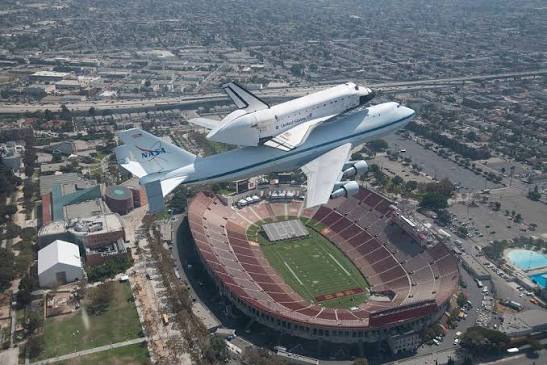
As a new public exhibition opens showcasing the retired Space Shuttle Endeavour, National Aeronautics and Space Administration (NASA) photographers are reflecting on the logistical and visual milestone that brought the orbiter to its permanent destination in Los Angeles. According to NASA News Releases, agency imaging specialists documented the historic ferry flight on Sept. 21, 2012, when millions of spectators observed Endeavour mounted atop NASA's modified Boeing 747 Shuttle Carrier Aircraft for its final aerial journey across California.
The commemoration of Endeavour's final transit highlights the enduring institutional role of aerospace archival documentation and public engagement infrastructure as the space sector transitions from government-owned reusable orbiters to commercial orbital transport. Preserving the operational heritage and engineering artifacts of the Space Shuttle program serves both as an educational catalyst for the aerospace workforce and a physical record of thirty years of orbital Flight operations.
Documenting the Final Airborne Mission
The Sept. 21, 2012 flight represented the culmination of Space Shuttle Endeavour's operational history and the conclusion of its cross-country ferry mission to Southern California. Per NASA's Armstrong Flight Research Center retrospective, agency photographers were tasked with capturing the definitive imagery of the orbiter's final flight profile while mated to the dorsal mounting struts of the 747 Shuttle Carrier Aircraft.
Those aerial and ground-based photographs were distributed globally, recording the low-altitude flyovers that allowed millions of residents across California civic and aerospace landmarks to witness the conclusion of the shuttle's flight era. Rather than relying solely on telemetry or ground tracking, NASA's photographic teams operated from chase aircraft and strategic ground vantage points to ensure that the visual record captured both the technical configuration of the piggyback transport system and the public reception below.
According to NASA News Releases, agency photographers documented the iconic images shared around the world on Sept. 21, 2012, as millions watched Space Shuttle Endeavour fly atop the agency's 747 Shuttle Carrier Aircraft for the final time prior to entering its Los Angeles exhibition home.
Operational Mechanics of the Shuttle Carrier Transport
Transporting an orbiter across the continental United States required specialized aerodynamic and structural engineering managed through NASA's flight research facilities. The 747 Shuttle Carrier Aircraft was specifically modified with reinforced fuselage attach points, vertical stabilizer tip fins for directional stability, and upgraded propulsion systems to accommodate the aerodynamic drag and weight of the mounted spaceplane.
During the September 2012 operation, flight crews and photographic chase planes coordinated tightly controlled flight corridors and altitude profiles. For NASA's visual communications personnel, capturing air-to-air photography during a low-level flyover demanded precise formation flying, split-second exposure control, and coordination with flight safety officers. The resulting archive established a permanent technical and cultural record of how NASA decommissioned and relocated its high-value orbital assets following the retirement of the Space Shuttle fleet.
The transition of Endeavour from an active orbital spacecraft to a centerpiece museum artifact also required extensive post-flight demilitarization, hazardous materials safing, and overland transport logistics across Los Angeles urban corridors before reaching its permanent display facility. Each phase of that relocation relied on close coordination between federal aerospace engineers, municipal planners, and museum curators.
Strategic Legacy and Public Exhibition Outlook
The opening of the new exhibition showcasing Space Shuttle Endeavour reinforces the long-term value of physical aerospace preservation in major metropolitan centers. By pairing the physical orbiter with the retrospective documentation captured by NASA photographers at Armstrong and partner centers, exhibition organizers provide researchers, students, and the broader public with direct insight into the engineering scale of the Space Transportation System.
Looking ahead, the archival photographs from the Sept. 21, 2012 flight remain central to how the agency communicates its historical transition from low-Earth orbit shuttle operations to deep-space exploration architectures. As aerospace institutions and science centers expand their archival displays, the visual records produced during Endeavour's final ferry mission will continue to anchor educational programming and historical scholarship surrounding the Space Shuttle era.