NASA NG-25 Mission to Launch Space Crops and Brain Research
NASA's upcoming NG-25 resupply mission will transport pioneering space crop production and precision health investigations to the space station.
EXECUTIVE BRIEF // KEY TAKEAWAYS
NASA's upcoming NG-25 resupply mission will transport pioneering space crop production and precision health investigations to the space station.
NASA is preparing to dispatch a series of critical biological and physical science investigations to the International Space Station aboard Northrop Grumman’s 25th Commercial Resupply Services mission, designated as NG-25. According to NASA News Releases, the upcoming payload features a first-of-its-kind space crop production system designed to test microgravity plant cultivation, alongside advanced human health trials that build upon previous neurological studies. This multi-payload mission underscores the increasing convergence of deep-space exploration logistics and terrestrial agricultural innovation, providing researchers with operational platforms that are entirely unattainable within Earth-bound laboratories.
The strategic deployment of these experiments represents a pivotal step for both aerospace logistics and terrestrial commercial sectors, particularly in the fields of controlled-environment agriculture and advanced biotechnology. As space agencies look toward extended habitation on lunar surfaces and crewed voyages to Mars, the requirement for autonomous, sustainable life-support systems becomes paramount. Concurrently, technologies engineered to sustain plant growth in resource-constrained environments offer direct commercial applications for terrestrial vertical farming and indoor agriculture markets. Furthermore, advancements in automated tissue-maintenance systems can accelerate the pace of pharmaceutical development and neurological disease modeling on Earth, linking public-sector space exploration directly to high-value commercial biotechnology pipelines.
Validating Microgravity Agricultural Systems
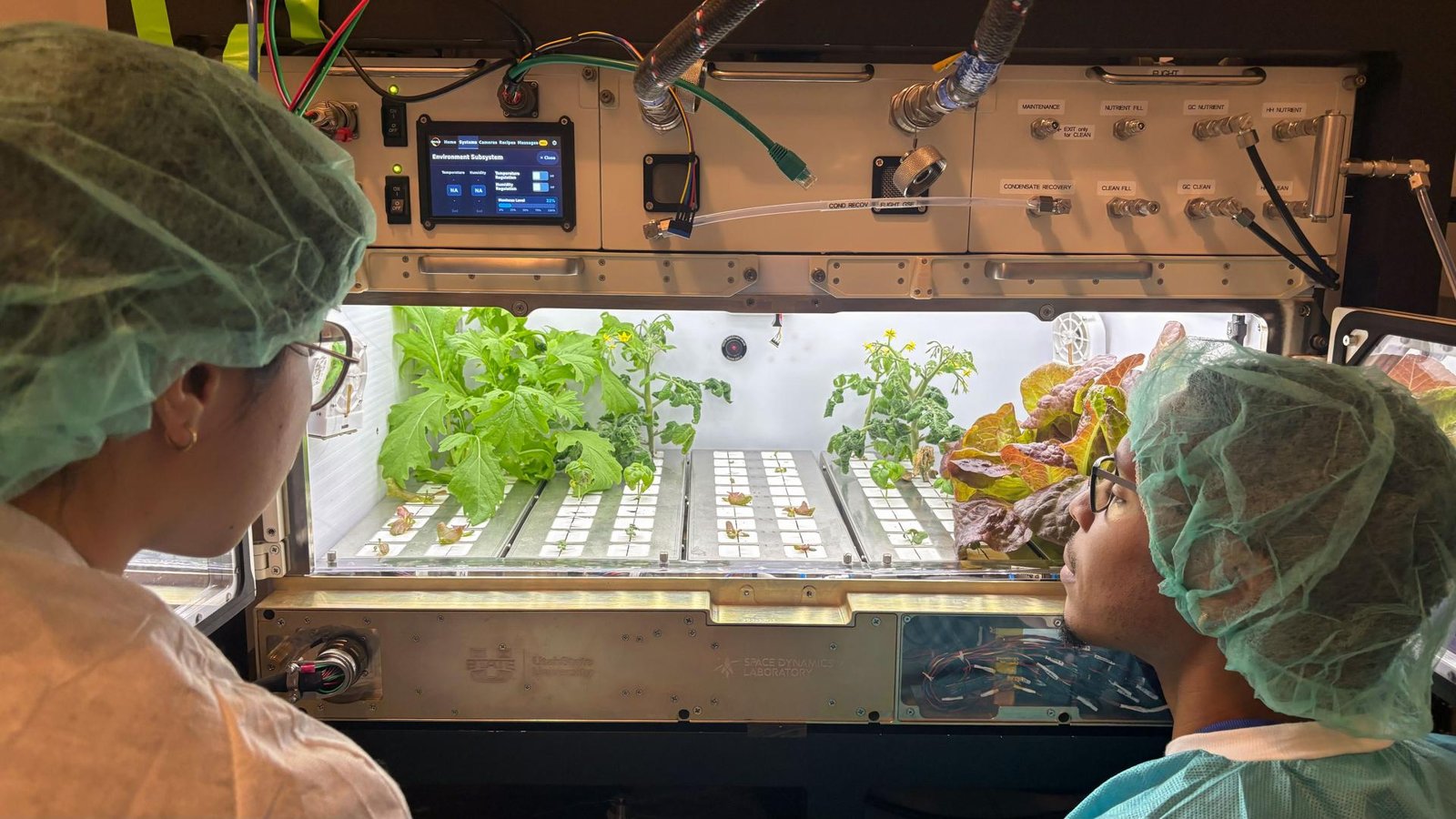
To sustain human crews during prolonged deep-space voyages, astronauts require continuous, reliable, and sustainable sources of nutrition that cannot be entirely fulfilled through packaged resupply payloads alone. Addressing this logistical bottleneck, the NG-25 mission introduces a novel prototype growth chamber specifically engineered for microgravity crop production. Researchers will utilize the Ohalo III facility and associated hardware to rigorously validate the system’s advanced plant-water delivery mechanisms and volume optimization technology.
Data gathered from these orbital trials will directly inform the architectural design of crop production infrastructure intended for future Moon Base habitats and extended Mars missions. Moreover, the technological insights gained from operating a closed-loop, highly efficient water and nutrient delivery system in space hold significant utility for terrestrial enterprises. Controlled-environment agriculture companies, including vertical farming operators and indoor growing facilities, can leverage these aerospace innovations to optimize water conservation, spatial density, and yield efficiencies in commercial food production.
Advancing Precision Health and Tissue Research
Beyond agricultural development, the scientific payload aboard the NG-25 flight features a sophisticated precision health investigation aimed at enabling long-duration studies of human biological tissues in orbit. This research directly expands upon prior initiatives that successfully transported small, lab-grown models of the human brain, known as miBrains, to the International Space Station.
The upcoming experiment focuses on validating a miniature fluid-handling system designed to autonomously mix, deliver, and maintain the precise nutrient-rich liquid required to keep delicate neural tissues alive in a microgravity environment. According to disclosing entities at NASA, researchers will utilize the resulting data to help identify potential neurological risks associated with spaceflight and to formulate targeted physiological protection strategies for astronauts. On Earth, the validation of such miniature fluid-handling systems may substantially advance human tissue research, improve automated laboratory instrumentation, and enhance neurological disease modeling methodologies.
Strategic Outlook and Future Exploration Milestones
The execution of the NG-25 mission marks an essential milestone in NASA’s broader strategic roadmap for sustainable human spaceflight. By leveraging the extreme environment of the International Space Station, the agency's Biological and Physical Sciences Division continues to unlock fundamental scientific knowledge that remains inaccessible under terrestrial conditions. Future operational milestones will depend heavily on the empirical performance data returned from the Ohalo III facility and the fluid-handling tissue systems.
As regulatory frameworks for commercial space habitation and orbital manufacturing evolve, the successful demonstration of closed-loop biological life support systems will serve as a foundational benchmark for commercial space station developers. The ongoing synergy between aerospace logistics providers, such as Northrop Grumman, and federal scientific agencies ensures that technological breakthroughs achieved in low-Earth orbit will continue to cascade downward, yielding tangible economic, agricultural, and medical benefits for society at large.


