NASA Johnson Marks 65 Years of Crewed Flight, Eyes Moon Base
NASA's Johnson Space Center marks 65 years of crewed spaceflight operations, pivoting from orbital missions to sustained Artemis lunar exploration.
EXECUTIVE BRIEF // KEY TAKEAWAYS
NASA's Johnson Space Center marks 65 years of crewed spaceflight operations, pivoting from orbital missions to sustained Artemis lunar exploration.
HOUSTON — Marking 65 years as the operational anchor of American human space exploration, NASA’s Johnson Space Center commemorated its founding milestone this month as flight controllers, mission planners, and engineers prepare to transition human spaceflight capabilities from low Earth orbit toward permanent lunar infrastructure.
For global aerospace enterprises, defense contractors, and sovereign space partners, the Houston center’s six-and-a-half-decade evolution illustrates the changing technical architecture and industrial footprint of deep-space operations. Originally established during the onset of orbital spaceflight, Johnson Space Center now oversees agency-defining initiatives including the Orion spacecraft and Moon Base programs, functioning as the operational nexus for public-private initiatives targeting the lunar surface and long-duration crew deployments.
From Gemini to Apollo: The Architecture of Mission Control
Established as the Manned Spacecraft Center on Nov. 1, 1961, the institution was formed while NASA had completed only two suborbital Project Mercury flights, with orbital missions still months away. While Mercury launch operations remained at Cape Canaveral in Florida to preserve operational continuity, Project Gemini relocated to Houston, operating from temporary leased facilities across the city while construction of the permanent Clear Lake campus progressed.
Houston’s central operational role solidified in June 1965 when the Mission Control Center assumed primary flight control responsibilities during Gemini IV, a mission that featured the first American spacewalk. Over the next two years, the center directed eight subsequent Gemini missions, validating orbital rendezvous and docking techniques essential for lunar exploration.
The center subsequently steered the agency through severe institutional adversity. Following the fatal Apollo 1 launchpad fire in January 1967, managers, engineers, and astronauts at the Manned Spacecraft Center overhauled spacecraft safety protocols, resuming crewed flights in October 1968. Houston managers subsequently engineered the flight profile for Apollo 8, which achieved humanity’s first circumlunar flight in December 1968.
“Houston.”
That single callsign constituted the first transmission sent back to Earth when Apollo 11 astronauts Neil Armstrong and Edwin “Buzz” Aldrin touched down on the lunar surface in July 1969. Johnson flight controllers oversaw five additional successful lunar landings through December 1972, concluding the initial era of crewed lunar exploration.
Operational Expansion: Skylab, Shuttle, and Continuous Orbital Presence
Beyond the Apollo lunar landings, the center’s flight control and scientific apparatus adapted to sustained orbital missions. Teams supported Skylab and the historic Apollo-Soyuz Test Project, establishing the procedural frameworks for long-duration living and international mission coordination. Those protocols expanded significantly during the Space Shuttle program, which provided the operational foundation for heavy-lift assembly and complex satellite servicing.
That operational lineage directly underpins the International Space Station, which has sustained continuous human habitation for more than 26 years. Throughout this continuous presence, Johnson personnel have managed orbital station operations, active crew rotations, space medicine, and extensive microgravity scientific research.
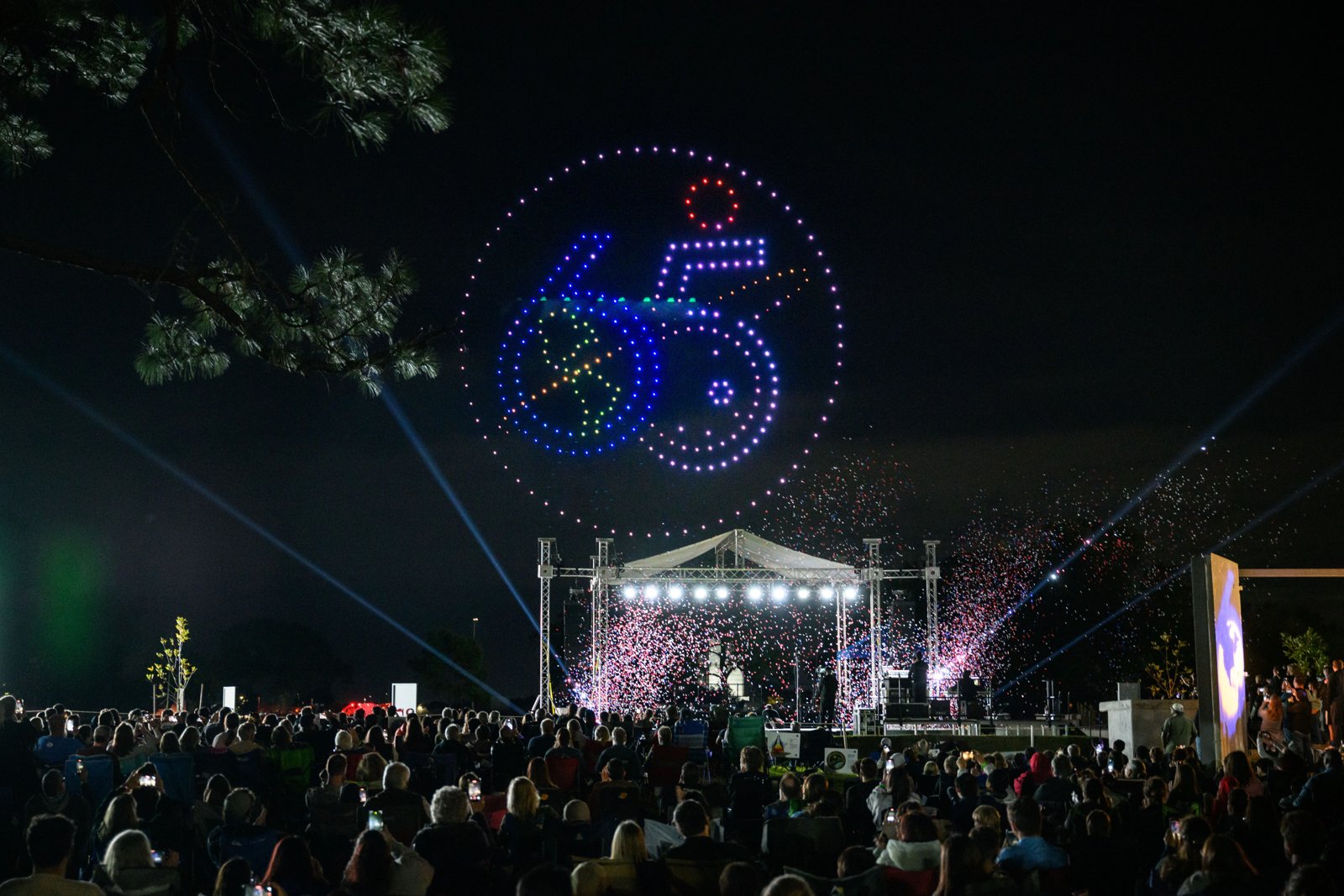
The center also managed critical scientific sample logistics through the Manned Spacecraft Center’s original Lunar Receiving Laboratory, where scientists conducted initial examinations of Apollo lunar material and distributed samples to global researchers. Following the facility’s demolition in March 2024, the site was commemorated as the Lunar Receiving Park, where center personnel and invited guests gathered on Nov. 19, 2026, to observe Johnson’s 65th anniversary.
Strategic Outlook: Orion, Moon Base, and Deep-Space Infrastructure
As NASA shifts resources from low Earth orbit maintenance toward deep-space operations, Johnson Space Center has been designated the programmatic lead for the Orion spacecraft and the Moon Base initiative. The center retains primary responsibility for flight director operations, astronaut corps instruction, integrated spacecraft design, and human physiological health monitoring in deep-space environments.
The strategic shift was highlighted on Nov. 6, 2026, during the Artemis Celebration Gala at the Kennedy Space Center Visitor Complex in Merritt Island, Florida. The gathering brought together active NASA astronauts Randy Bresnik, Frank Rubio, and Bob Hines, European Space Agency astronaut Luca Parmitano, and Apollo 9 veteran Russell “Rusty” Schweickart to align flight operational history with the agency’s lunar campaign.
The center’s immediate operational horizon centers on validating deep-space life-support hardware and establishing permanent surface architecture under the Artemis framework. With 65 years of flight heritage bridging suborbital capsules to permanent orbital habitation, Johnson Space Center faces its most technically demanding phase: managing sustained human presence and long-term scientific installations on the surface of the Moon.


