NASA Highlights Barnard 68 Dark Molecular Cloud in APOD Feature
NASA's Astronomy Picture of the Day explores Barnard 68, a dense interstellar dust cloud offering key insights into stellar formation.
EXECUTIVE BRIEF // KEY TAKEAWAYS
NASA's Astronomy Picture of the Day explores Barnard 68, a dense interstellar dust cloud offering key insights into stellar formation.
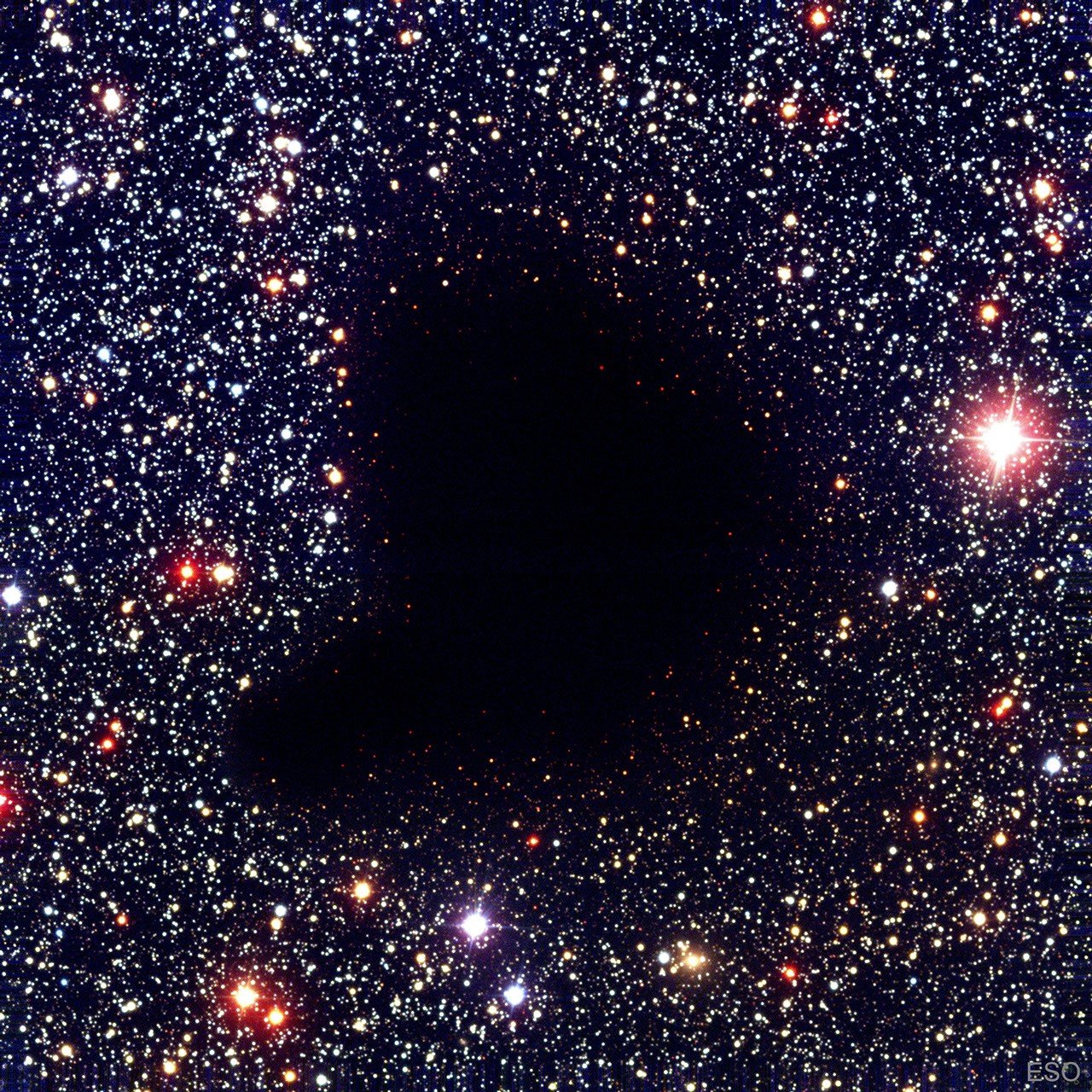
WASHINGTON — Astronomers analyzing data featured through NASA's Astronomy Picture of the Day (APOD) have reaffirmed the structural significance of Barnard 68, a prominent dark molecular cloud that absorbs virtually all visible light passing through its core. Disclosed in recent NASA news releases and astronomical data repositories, the celestial formation provides researchers with an exceptional laboratory to study the mechanics of stellar nurseries, extreme cosmic cold, and the opaque barriers that historically baffled early observers who mistook them for literal holes in the stellar canvas.
For astrophysicists studying the lifecycle of the galaxy, the primary utility of dark molecular clouds lies in their dual role as both cosmic obscuring agents and prospective stellar incubators. As global aerospace agencies and research institutions increasingly prioritize deep-space observation infrastructure—ranging from ground-based extremely large telescopes to advanced infrared orbital observatories—understanding dense molecular structures like Barnard 68 is critical for mapping the interstellar medium and predicting the future distribution of stellar systems within the Milky Way.
Stellar Obscuration and Spatial Characteristics
According to astronomical findings cited by NASA, Barnard 68 is situated approximately 500 light-years away within the constellation Ophiuchus, spanning a diameter of roughly half a light-year. The region's high concentration of microscopic dust grains and dense molecular gas effectively blocks optical wavelengths of light, creating an eerie, starless void in standard photographic captures. However, professional astronomers note that this optical opacity masks highly dynamic physical processes occurring within some of the coldest and most isolated thermal environments in the universe.
“Where did all the stars go? What used to be considered a hole in the sky is now known to astronomers as a dark molecular cloud,” notes the explanatory documentation accompanying the NASA release. The proximity of the cloud to Earth allows scientists to resolve fine structural details that remain obscured in more distant nebulae, providing empirical constraints for theoretical models of molecular cloud cohesion and turbulence.
Infrared Transparency and Future Star Formation
While visible light is entirely absorbed by the dense accumulation of gas and dust, modern observational techniques leveraging infrared astronomy permit researchers to peer directly through the interior of Barnard 68. These infrared surveys reveal the internal thermal profile of the cloud and indicate that the nebula is not a static interstellar remnant, but rather a dynamic entity undergoing gravitational compression. Current measurements and modeling suggest that Barnard 68 is destined to eventually collapse under its own weight, triggering the birth of a new stellar system.
The precise mechanisms governing the initial formation of molecular clouds remain an active area of scientific inquiry. While observational data confirms that these structures are prime candidates for gravitational collapse, the exact triggers that transition a diffuse interstellar cloud into a dense, star-forming core are still being modeled using high-performance computing clusters and observational archives.
Outlook and Observational Implications
As the international scientific community refines its observational capabilities across the electromagnetic spectrum, targets such as Barnard 68 will continue to serve as benchmark objects for testing theories of star formation and chemical evolution in the interstellar medium. Upcoming deployments of next-generation space telescopes optimized for infrared and submillimeter wavelengths are expected to yield higher-resolution profiles of the cloud's interior, shedding light on the early stages of stellar genesis.
Researchers analyzing these releases emphasize that continued monitoring of nearby absorption nebulae will enhance our broader understanding of galactic evolution. By cataloging the density gradients, magnetic field orientations, and thermal properties of clouds like Barnard 68, aerospace agencies and astronomical institutions aim to construct comprehensive models outlining how the Milky Way recycles its interstellar gas into successive generations of stars and planetary systems.


