NASA Goddard Fortifies Civil Service Core With Strategic Hires
A legacy NASA contractor transitions to federal service at Goddard, reflecting a broader agency push to solidify its technical workforce.
EXECUTIVE BRIEF // KEY TAKEAWAYS
A legacy NASA contractor transitions to federal service at Goddard, reflecting a broader agency push to solidify its technical workforce.
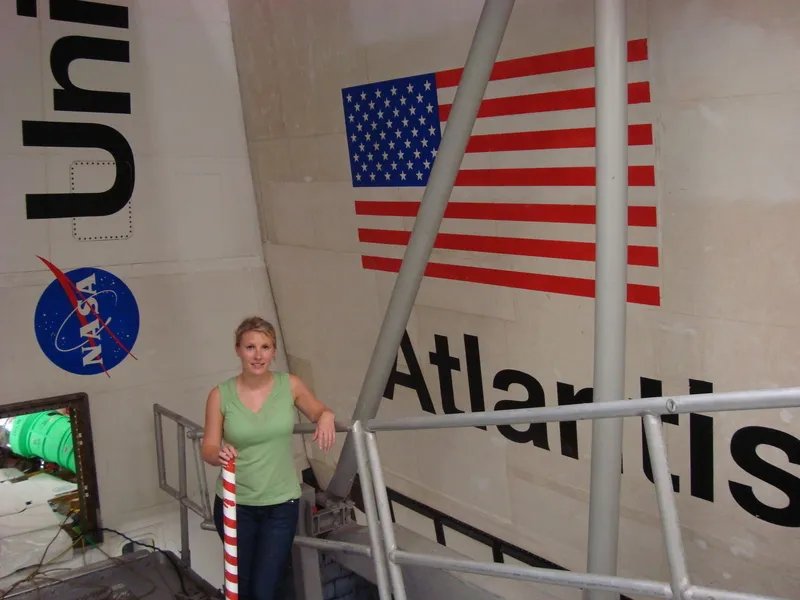
GREENBELT, Md. — In a personnel transition reflecting generational continuity and strategic workforce planning, Ashley Knight and several of her colleagues in the Goddard Office of the Chief Financial Officer were sworn in as federal employees in late August. According to NASA News Releases, the formal swearing-in ceremony marks the culmination of a multi-decade trajectory for Knight, whose career journey bridges childhood familiarity with federal aerospace institutions and hands-on operational experience supporting flagship scientific endeavors. This structural realignment forms part of a broader, agency-wide workforce directive designed to reinforce NASA's technical core competencies by migrating mission-critical roles directly into the civil service framework, thereby ensuring institutional stability for future space and Earth science initiatives.
For the federal space administration, optimizing human capital and anchoring operational stability within its civil service framework remain vital prerequisites as complex, long-duration missions multiply. Bringing long-tenured contractor personnel directly onto the federal roster helps safeguard institutional knowledge, streamline financial governance, and maintain rigorous oversight of high-value scientific hardware development. As civilian space agencies increasingly coordinate with commercial partners and navigate complex fiscal landscapes, maintaining a robust cadre of internal financial and programmatic analysts is viewed by agency leadership as essential to preventing scheduling delays, mitigating funding lapses, and optimizing the execution of multi-billion-dollar federal portfolios.
Lifelong Roots and Early Contributions to Flagship Missions
Knight’s connection to NASA’s Goddard Space Flight Center in Greenbelt, Maryland, traces back to her formative years. Growing up, dinner table conversations frequently centered on agency developments, punctuated by somber reflections on historical events such as the space shuttle Challenger disaster, alongside enthusiastic discussions regarding her parents' daily contributions. Her father, Lyle Knight, served as a mechanical engineer, while her mother, Julia Knight, spent the bulk of her career in human resources. Visits to the center for Take Your Child to Work Day exposed the young Knight to specialized testing chambers and the deeply collaborative ethos defining the facility.
Following her graduation from the University of Maryland in nearby College Park, Knight immediately sought out opportunities within the agency, securing an initial contractor role supporting the Hubble Space Telescope team. Reflecting on that pivotal career phase, Knight noted, “Hubble was doing amazing things, and I always admired how they fixed the faulty mirror.” Her early portfolio as a project support analyst included assisting engineers with test plans, data gathering, and critical hardware procurement for Hubble’s fifth and final shuttle servicing mission, an undertaking that cemented her operational footing in aerospace project management.
Operational Evolution and Financial Stewardship
Following the conclusion of the Hubble shuttle servicing era in 2009, Knight transitioned to a similar support role with the Robotic Refueling Mission under what was then designated as the Satellite Servicing Capabilities Office—now operating as NASA’s In-Space Servicing, Assembly, and Manufacturing Capabilities Office. After a brief tenure performing contracting work for the U.S. Naval Research Laboratory in Washington, she returned to Goddard as a contractor program analyst within the Office of the Chief Financial Officer. In this capacity, her daily responsibilities expanded to managing complex labor budgets within key programs, ensuring seamless financial tracking, averting funding lapses, and guaranteeing that technical personnel received accurate, timely compensation.
The recent workforce directive operationalizes these years of continuity by granting long-standing support professionals formal civil service status. By integrating experienced financial stewards directly into the federal hierarchy, Goddard enhances its internal capacity to navigate fluctuating budgetary cycles without losing institutional velocity. The structural shift underscores a concerted management philosophy that values deep, hands-on familiarity with legacy platforms and advanced robotic servicing initiatives alike, positioning the center's financial and administrative units to better absorb the demands of upcoming deep space and orbital exploration architectures.
Strategic Outlook and Workforce Sustainability
Looking ahead, NASA's initiative to fortify its technical and administrative core through targeted civil service transitions points toward a more resilient institutional framework. As federal agencies compete with private sector enterprises for specialized technical and analytical talent, formalizing paths to permanent civil service employment serves as a powerful retention mechanism. For Goddard's Office of the Chief Financial Officer, securing seasoned professionals like Knight ensures that critical fiscal oversight remains uninterrupted as new missions transition from conceptual design phases through rigorous ground testing and into active space operations.
Ultimately, the alignment of personal legacy with institutional modernization highlights how NASA sustains its human infrastructure over decades. By systematically absorbing trusted contractor personnel who possess an intimate understanding of complex space flight hardware and programmatic lifecycles, Goddard reinforces its foundational capabilities. This measured approach to workforce development mitigates operational risks, preserves invaluable institutional memory, and prepares the agency's administrative backbone to support the next generation of scientific discovery and space exploration milestones.


