NASA Debuts Europa Clipper Documentary Chronicling Deep-Space Trek
NASA releases 'The Europa Concept' as its largest planetary probe marks two years of a 1.8-billion-mile journey to assess habitability on Jupiter's ocean moon.
EXECUTIVE BRIEF // KEY TAKEAWAYS
NASA releases 'The Europa Concept' as its largest planetary probe marks two years of a 1.8-billion-mile journey to assess habitability on Jupiter's ocean moon.
WASHINGTON — The National Aeronautics and Space Administration released a documentary feature Monday chronicling the 11-year development and launch of Europa Clipper, offering an exhaustive record of the engineering hurdles and technical milestones behind the agency's largest deep-space exploration vehicle as it traverses interplanetary space toward Jupiter.
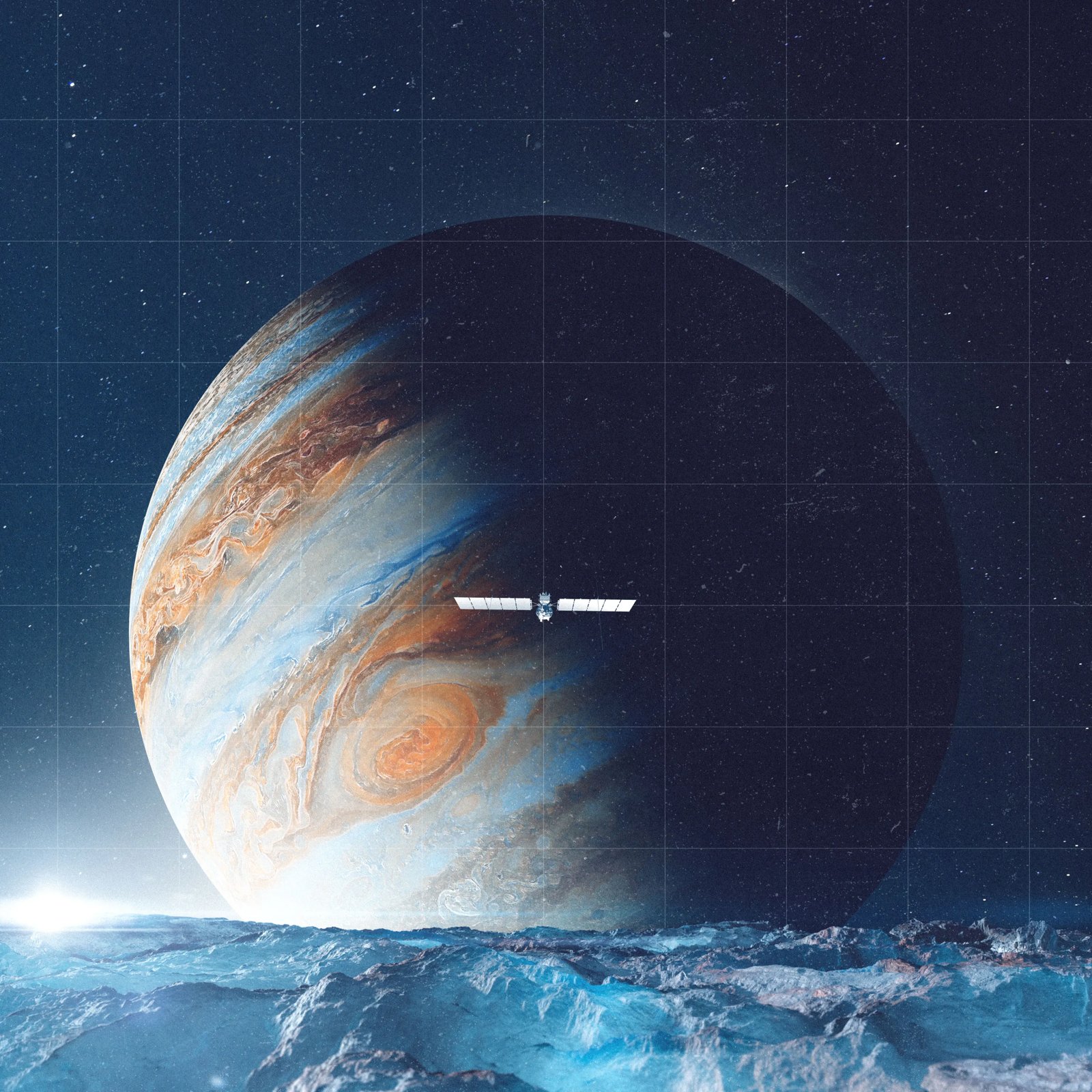
The release of “The Europa Concept” across the NASA+ streaming service, the agency's mobile application, and official web portals comes as the flagship probe completes the second year of its five-year, 1.8 billion-mile (2.9 billion-kilometer) journey. For frontier technology sectors and the scientific community, the project represents a vital case study in public-sector aerospace procurement, long-horizon risk management, and the industrial capacity required to field extreme-environment exploratory hardware.
Decade-Long Engineering and Precursor Science
Formal work on Europa Clipper commenced at NASA’s Jet Propulsion Laboratory in Southern California in 2013, inaugurating an intensive 11-year program to design, assemble, and validate the spacecraft alongside an integrated suite of nine advanced science instruments. The initiative represents the culmination of more than four centuries of observation, tracing back to Italian astronomer Galileo Galilei's initial identification of Europa in 1610.
Subsequent exploratory baselines were established by NASA's early interplanetary reconnaissance, beginning with data gathered by Pioneer 10 in 1973 and Pioneer 11 in 1974. Humanity secured its first detailed visual and environmental readings during Voyager 1's flyby in 1979, with supplemental telemetry later delivered by Voyager 2, the Galileo orbiter, Cassini, and the ongoing Juno mission. These collective flight datasets framed the mission architecture that Europa Clipper now executes.
“With Europa Clipper, we’ve taken the next step in solar system exploration, which will help us uncover the mysteries of an ocean world, and ultimately, whether potentially habitable worlds beyond our own exist,” said Jordan Evans, director of flight projects at JPL and former project manager for the mission. “This documentary pays tribute to the ingenuity, teamwork, and dedication that continue to make this incredible mission possible.”
Operational Resilience and Extreme Environmental Design
The technical trajectory documented in the production highlights the immense operational resilience required to preserve programmatic schedules governed by fixed celestial launch windows. Engineering teams faced unprecedented logistical friction during the fabrication phase, including operational disruptions stemming from a global pandemic. In the immediate run-up to the probe's Oct. 14, 2024, liftoff, launch operations confronted severe meteorological hazards, including a Category 5 hurricane and tornadic activity near NASA's Kennedy Space Center in Florida.
Beyond atmospheric and supply-chain challenges on Earth, the vessel was engineered to survive one of the harshest radiation belts in the solar system. Jovian magnetospheric dynamics generate intense radiation fluxes that threaten sensitive flight avionics and payload sensors. Ironically, scientists note that this severe radiation environment may also drive chemical reactions on Europa's surface that contribute to prebiotic conditions in the subterranean ocean beneath the moon's fractured ice shell.
Astrobiological Scope and Strategic Planetary Outlook
Europa Clipper's primary operational objective remains conducting dozens of low-altitude flybys of Europa to evaluate whether the vast ocean suspected to lie beneath its icy exterior possesses the fundamental ingredients for life: water, chemical building blocks, and an internal energy source. While the probe is not designed to detect direct biological activity, its sensor array will map surface topography, measure ice thickness, and profile the moon's thin atmosphere and magnetic field interactions.
“The things we will learn from Europa Clipper will be so sensational, so fantastic, that everyone will be screaming for the next mission,” said Curt Niebur, program scientist in the Planetary Science Division at NASA Headquarters in Washington. “The only thing that matters is that we learn enough that we, in the broadest sense, want to do it again somewhere else — because that’s what exploration is.”
As the orbiter approaches its destination in the late 2020s, the findings are poised to shape global planetary defense and exploration roadmaps for decades, determining where international space agencies and industrial partners allocate deep-space capital, robotic resources, and long-range orbital infrastructure.


