NASA Advances Fresh Crop Pipeline for Future Moon and Mars Missions
NASA researchers are vetting strawberries and cucumbers to bolster deep-space life-support systems and crew nutrition ahead of lunar and Martian expeditions.
EXECUTIVE BRIEF // KEY TAKEAWAYS
NASA researchers are vetting strawberries and cucumbers to bolster deep-space life-support systems and crew nutrition ahead of lunar and Martian expeditions.
CAPE CANAVERAL, Fla. — Space agency researchers have identified strawberries, cucumbers, and lemon basil as prime agricultural candidates to sustain astronauts on upcoming long-duration expeditions to the Moon and Mars, according to recent research disclosed by NASA News Releases. Conducted across terrestrial flight-simulation chambers and orbital testbeds, the ongoing evaluations mark a critical step toward deploying bioregenerative food systems capable of providing continuous fresh nutrition to crews operating millions of miles from Earth.
The transition from packaged rations to living agricultural infrastructure represents an operational and logistical imperative for the future of human spaceflight, according to NASA News Releases. Beyond supplemental caloric value, cultivating edible crops directly addresses the severe payload limitations associated with deep-space supply chains, while performing vital environmental functions. Plants deployed in sealed habitats serve as autonomous life-support components, absorbing ambient carbon dioxide, producing breathable oxygen, and recycling wastewater within closed-loop ecological architectures required for permanent lunar installations and multiyear Martian transits.
Comparative Agronomy and Cultivar Selection
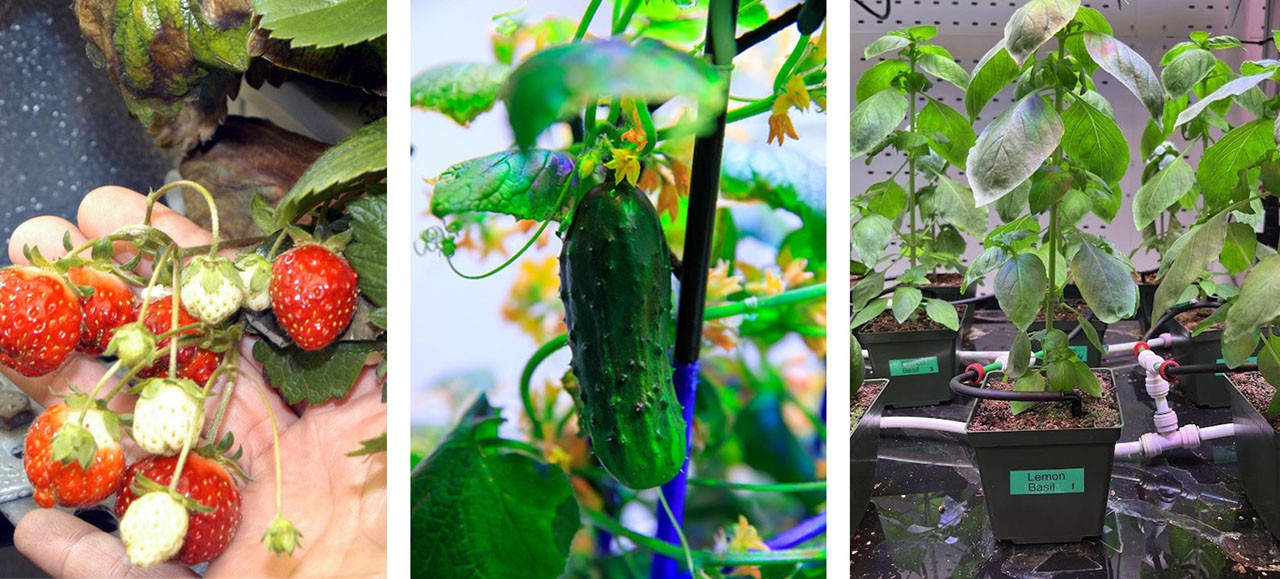
Terrestrial testing overseen by researchers at NASA’s Kennedy Space Center in Florida and the Space Life Sciences Lab has centered on identifying plant varieties that balance nutritional yield with physical spatial economy, as stated by NASA News Releases. Among fruit candidates, the strawberry has emerged as a rare sweet contender due to its self-pollinating biology, high aromatic profile, and dense nutrient concentration. However, determining the most viable genetic strain required rigorous comparative trials conducted in flight-like growth chambers.
Working alongside international partners at the Australian Research Council Centre for Excellence in Plants for Space, investigators from NASA Kennedy, the University of Melbourne, and the University of Western Australia benchmarked a commercial variety known as ‘Delizz’ against a wild strawberry specimen, according to NASA News Releases. The findings, published in the September issue of the peer-reviewed journal Life Sciences in Space Research, illustrated substantial architectural differences between the two plants.
While the wild strawberry demonstrated vigorous early reproductive vigor—generating twice the volume of buds, flowers, and fruit when propagated from seed—its morphological profile proved suboptimal for spacecraft integration. The wild variety produced an extensive network of runners that consumed excessive cubic volume inside tightly constrained growth chambers, alongside bearing small, yellow fruit driven by a recessive genetic mutation. Conversely, Delizz yielded large, red berries while maintaining a compact, contained growth form, enabling the cultivar to retain its primary standing for flight deployment.
Yield Mechanics, Biodiversity, and Dietary Enrichment
Concurrently, NASA-funded investigators have expanded testing into previously uncultivated botanical families, evaluating cucumbers as the inaugural candidate from the gourd family under simulated extraterrestrial conditions, according to NASA News Releases. Research published in the August edition of the academic journal HortScience verified that while cucumber plants exhibited morphological anomalies, such as enlarged foliage under spaceflight-simulated environments, they maintained a consistent and dependable output of edible fruit.
Agronomists highlighted that incorporating diverse crop families like cucurbits delivers systemic dividends across mission architecture, noting that introducing botanical variety enhances dietary intake and supports astronaut psychological wellness during isolated, high-stress mission profiles, as outlined by NASA News Releases. Furthermore, elevated biodiversity within sealed crop enclosures mitigates the biological vulnerability of mono-crop systems, lowering the risk of comprehensive crop collapse during mission-critical operational windows.
A complementary herb initiative at NASA Kennedy is also advancing lemon basil, an edible plant distinguished by citrus aromatics and flavor profiles. Already subjected to preliminary testing on Earth and active cultivation aboard the International Space Station, the herb provides targeted organoleptic enrichment to counteract the sensory fatigue frequently reported by crew members consuming freeze-dried space provisions, according to NASA News Releases.
Orbital Prototyping and Deep-Space Habitation Horizons
The progression of off-world agricultural systems is poised to advance from terrestrial laboratory chambers into microgravity operational testing, as detailed by NASA News Releases. A new flight investigation managed by NASA’s Biological and Physical Sciences Division is scheduled for transport to the International Space Station, deploying a prototype growth chamber engineered to validate advanced autonomous cultivation technologies.
Data gathered from this orbital chamber will establish foundational engineering parameters for the subsequent generation of automated agricultural modules. Program managers intend to translate these microgravity performance benchmarks into scalable, operational crop hardware capable of outfitting surface habitats at future lunar base camps and long-transit spacecraft bound for Mars.
As space exploration architectures pivot from low-Earth orbit sorties to sustainable planetary infrastructure, developing resilient botanical life-support systems remains a foundational technological threshold, according to NASA News Releases. The validation of high-performing crop varieties such as Delizz strawberries and cucumbers underscores a broader strategic pivot toward biologically sustained planetary surface operations.


