NASA Awards $171M in Seed Grants to Accelerate Lunar Tech
NASA has awarded up to $171 million across 302 small business ventures to advance critical lunar infrastructure, robotics, and extreme-environment energy.
EXECUTIVE BRIEF // KEY TAKEAWAYS
NASA has awarded up to $171 million across 302 small business ventures to advance critical lunar infrastructure, robotics, and extreme-environment energy.
WASHINGTON — NASA has selected 302 early-stage research and development initiatives for up to $171 million in federal seed funding, channeling public capital into commercial aerospace suppliers to advance critical infrastructure for the Moon and Mars.
The capital infusion underscores the space agency's accelerating reliance on small commercial enterprises to solve operational bottlenecks facing the Artemis campaign and long-term lunar surface habitation. By underwriting high-risk, early-stage hardware through phased research contracts, NASA aims to stimulate domestic supply chains for aerospace manufacturing, extreme-environment power systems, and autonomous robotics while creating commercial spillover into terrestrial industrial markets.
Phased Federal Financing and Program Structure
The awards, administered through NASA’s Small Business Innovation Research (SBIR) and Small Business Technology Transfer (STTR) programs, follow a dual-phase framework designed to shepherd technical innovations from laboratory validation toward commercialization and mission infusion.
Under the latest allocation, early-stage Phase I contracts will provide up to $225,000 per project to establish scientific merit and technical feasibility. A portion of these agreements represent STTR awards, which formally mandate collaboration between emerging commercial entities and accredited research institutions. In parallel, NASA approved 98 Phase II awards, each valued at up to $1.3 million, to advance initiatives originally selected during the program's 2025 cohort toward hardware demonstration and prototype delivery.
According to program disclosures, the contracted projects address foundational technology requirements tied to the establishment of a permanent U.S. Moon Base under the Artemis exploration architecture. Priority domains encompass resilient power generation, construction toolsets for critical surface assets such as landing pads, next-generation energy storage, and tactile robotic instrumentation capable of withstanding the lunar environment.
Technological Capabilities and Dual-Market Applications
Several high-value contracts spotlight specific hardware intended to secure surface operations under extreme physical constraints. Among the Phase II recipients, Opterus Research and Development Inc. secured funding to develop modular, rollable solar arrays engineered for deployment across lunar and Martian topographies.
The Opterus solar technology is designed to operate effectively in pervasive surface dust and can be manipulated by autonomous robotic systems across variable mounting structures. Engineered for scalability up to 50 kilowatts of electrical output, the modular system seeks to provide a standard primary power architecture for both agency-led scientific habitats and private-sector lunar infrastructure developments.
In autonomous surface operations, Intelligent Fiber Optic Systems Corporation received a Phase I award for its “Rovers With Reach” project, which integrates visual and tactile feedback into a 10-foot extendable robotic arm. By pairing optical cameras with advanced tactile sensors, the articulated arm measures surface textures, physical contact forces, and ambient temperatures, granting lunar rovers the autonomy required to complete intricate assignments without human latency.
“The technology could help automate many lunar surface tasks, such as cleaning solar panels, positioning habitat structures, and collecting scientific samples from hard-to-reach locations,” the agency noted in its contract summary.
Beyond lunar deployment, the sensor-laden arm presents direct dual-use commercial utility on Earth, offering remote inspection and maintenance capabilities for nuclear power reactors, electrical transmission lines, and high-hazard industrial facilities where human intervention remains cost-prohibitive or perilous.
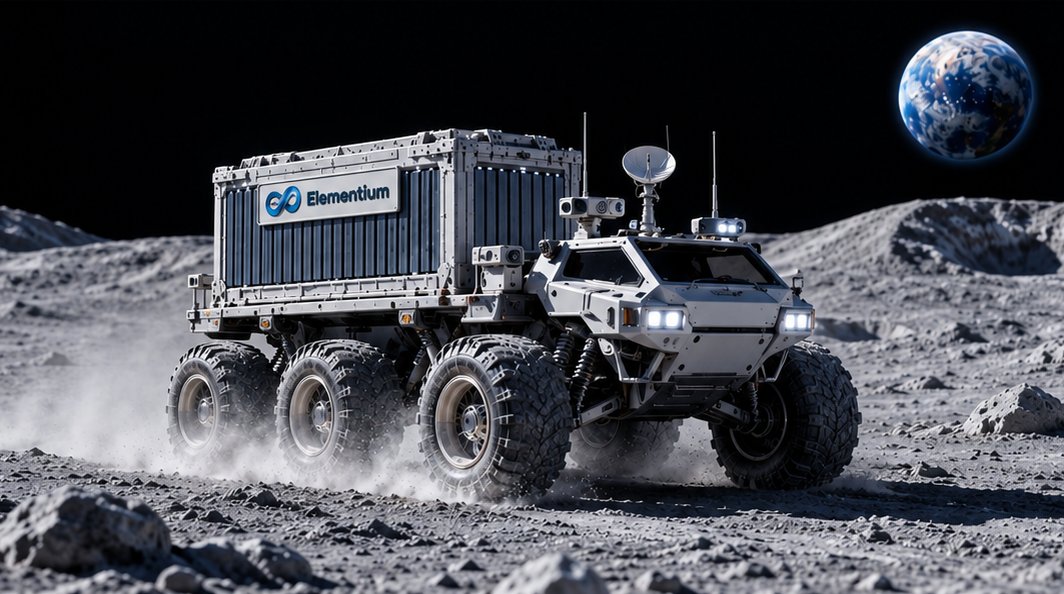
Energy resilience in cryogenic conditions represents another critical focus of the award cycle. Elementium Materials Inc. received Phase I backing to mature an ultra-cold-tolerant battery module engineered to sustain electrochemical performance down to minus 76 degrees Fahrenheit without reliance on supplemental heating systems. By eliminating internal resistive heaters and bulky thermal insulation layers, the architecture promises significant mass savings for lunar roving vehicles while offering industrial durability for Arctic and sub-zero terrestrial transport networks.
Strategic Outlook and Commercial Infusion
As commercial aerospace operators position for recurring lunar surface missions, NASA's seed funding mechanism serves as a de-risking catalyst for nascent hardware that private venture capital frequently avoids during proof-of-concept stages. For recipient firms, progressing from Phase I feasibility to Phase II demonstration establishes a verified pathway toward formal mission integration and agency procurement pipelines.
The strategic deployment of up to $171 million reinforces a competitive industrial base where small business contractors supply specialized modules to prime contractors and commercial lunar payload service providers. With 98 Phase II ventures now entering execution phases targeting deliverable demonstration units, the programmatic focus shifts toward operational testing, qualification under simulated vacuum conditions, and integration readiness ahead of scheduled Artemis surface milestones.


