NASA APOD Features Milky Way Above Brazilian Dunes
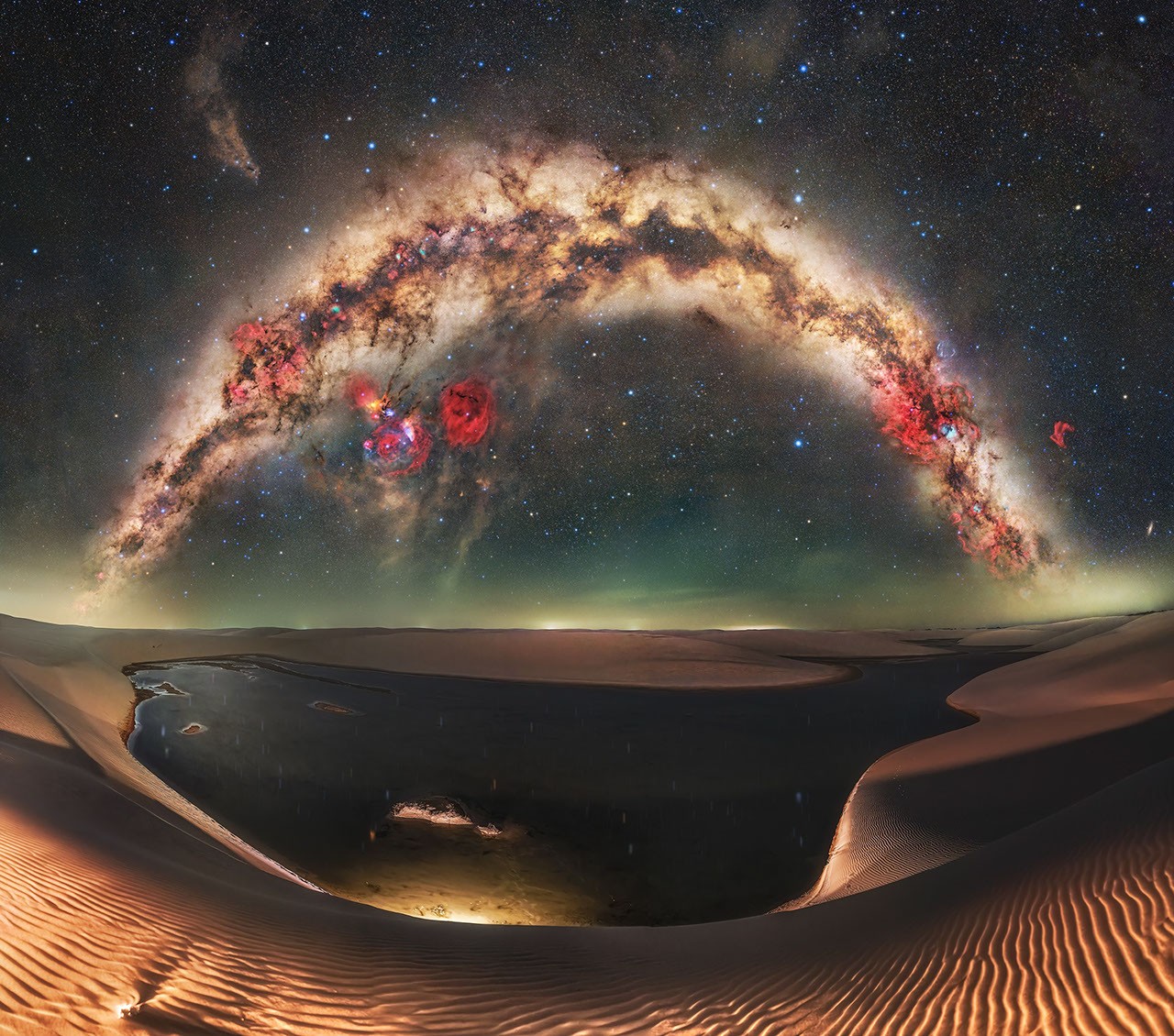
NASA's Astronomy Picture of the Day captures a striking composite image of the Milky Way over Brazil's Lençóis Maranhenses National Park.
EXECUTIVE BRIEF // KEY TAKEAWAYS
NASA's Astronomy Picture of the Day captures a striking composite image of the Milky Way over Brazil's Lençóis Maranhenses National Park.
WASHINGTON — NASA released its Astronomy Picture of the Day (APOD) featuring a wide-angle composite photograph of the Milky Way galaxy arching brilliantly across the night sky above Brazil's Lençóis Maranhenses National Park. According to NASA News Releases, the featured capture highlights the striking juxtaposition between the terrestrial landscape of white sand dunes and dark seasonal lagoons, and the celestial architecture of our home galaxy as observed from a latitude of approximately 2 degrees south.
The image, captured during the late-night hours in July, serves as both a public engagement milestone for space science communication and a testament to modern astrophotography techniques. By pairing professional astronomical explanations with high-resolution visual media, the APOD series continues its decades-long mission to democratize space science, inspiring global interest in planetary and stellar phenomena without relying on commercial incentives or capital market investments.
Composition Mechanics and Optical Physics
According to the disclosing documentation from NASA, the celestial display captured in the photograph features prominent components of the Milky Way, including intricate dark dust lanes and vibrant, colorful nebulas. As Earth rotates on its axis throughout the night and across the seasonal calendar, different sectors of the galactic plane drift into view for terrestrial observers. However, the distinct rainbow-like arch formation visible in the photograph is not an accurate representation of how the galaxy appears to the unaided human eye.
NASA experts clarified that the arched geometry is an optical artifact produced by the utilization of a wide-angle camera lens. The photographer strategically framed the composition so that the curved galactic band mirrored the natural contour of a dark lagoon situated within the national park. This precise alignment generates an optical illusion resembling a colossal cosmic eye, appearing simultaneously anchored to the terrestrial terrain and suspended in the deep cosmos. As stated in the source release, the imagery prompts observers to consider whether the celestial formation appears to look back down at the Earth.
Educational Outreach and Public Science Communication
The dissemination of daily astronomical imagery via NASA's APOD platform remains a cornerstone of the agency's broader educational mandate. By combining accessible, peer-reviewed explanations authored by professional astronomers with compelling visual art, the initiative bridges the gap between complex astrophysical research and public curiosity. The juxtaposition of unique terrestrial ecosystems, such as the rain-fed lagoons of Lençóis Maranhenses, with deep-space phenomena encourages interdisciplinary appreciation for Earth sciences and astronomy alike.
Furthermore, releases of this nature support ongoing public science literacy initiatives by demystifying photographic techniques. By explicitly explaining the role of wide-angle distortion in shaping the final composition, the agency maintains scientific integrity while showcasing the artistic execution of astrophotographers worldwide. These educational touchpoints reinforce the value of continuous public engagement as space agencies globally prepare for subsequent observational milestones in optical and infrared astronomy.
Strategic Implications for Astronomical Observation
While artistic captures like the Lençóis Maranhenses composite primarily serve educational and aesthetic functions, they complement advanced observational frameworks by maintaining public enthusiasm for dark-sky preservation and optical astronomy. As global light pollution continues to threaten terrestrial observatories and nighttime visibility, widespread appreciation for the natural night sky helps bolster international conservation efforts and dark-sky reserve designations.
Looking ahead, NASA's continuous public outreach initiatives—spanning from archival platforms like APOD to advanced orbital missions such as SPHEREx—ensure sustained public backing for space exploration budgets and scientific infrastructure. By translating complex galactic phenomena into accessible visual narratives, the agency cultivates a globally informed citizenry capable of supporting next-generation observational technologies designed to peer even deeper through cosmic dust.


