Michigan Approves First Residential Virtual Power Plant in DTE Pilot
A pioneering net-zero neighborhood in Ann Arbor pairs home solar-storage systems with utility DTE Energy, testing distributed grid resilience in Michigan.
EXECUTIVE BRIEF // KEY TAKEAWAYS
A pioneering net-zero neighborhood in Ann Arbor pairs home solar-storage systems with utility DTE Energy, testing distributed grid resilience in Michigan.
ANN ARBOR, Mich. — A newly constructed net-zero residential neighborhood in southeastern Michigan is slated to serve as the state’s inaugural residential virtual power plant, bridging decentralized renewable energy generation with utility-scale demand response. Built within the Veridian at County Farm master-planned development in Ann Arbor, the initiative aggregates private solar arrays and home battery systems across residential properties into a coordinated distributed energy resource, according to reporting by clean energy publication Canary Media.
The project arrives at a transformative juncture for power utilities and infrastructure investors navigating escalating peak demand, grid decarbonization mandates, and severe weather risks across the North American electric system. By orchestrating aggregated residential battery fleets to inject electricity into the central distribution grid during moments of acute network strain, regulated utilities can defer capital-intensive transmission expansion, suppress volatile wholesale power expenditures, and curtail the dispatch of expensive, hydrocarbon-fueled peaking generation.
Decarbonized Architecture and Aggregated Storage
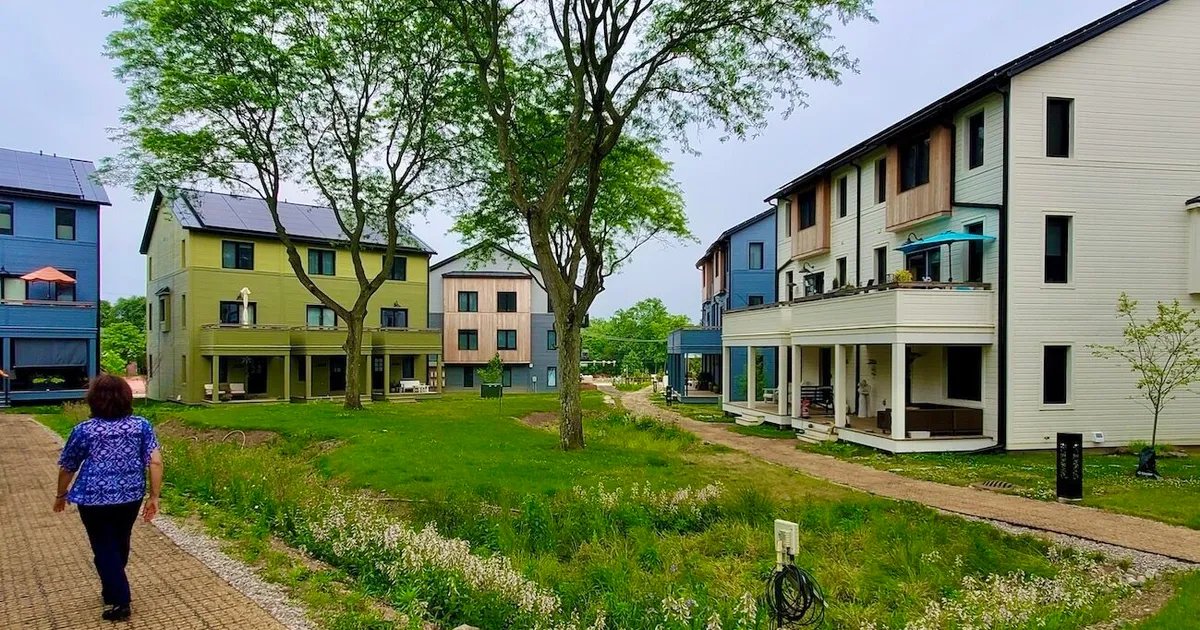
Developed by Ann Arbor-based firm Thrive Collaborative, Veridian at County Farm is designed as a fully electrified, fossil-fuel-free enclave occupying a 14-acre parcel adjacent to County Farm Park. The planned 170-home development incorporates advanced building envelopes, geothermal climate control, and rooftop solar photovoltaics paired directly with intelligent storage systems manufactured by sonnen. Each dwelling produces approximately as much clean electricity annually as it consumes, establishing an operational net-zero energy baseline before dynamic grid services are applied.
Under a pilot structure approved by the Michigan Public Service Commission, Detroit-based electric utility DTE Energy has contracted to enroll nearly 100 residences at Veridian over a two-year evaluation term. The framework enables utility dispatchers to digitally coordinate private battery assets, discharging surplus kilowatt-hours during localized capacity shortages while retaining emergency backup capacity for property owners.
For participating households, the automated aggregation represents a seamless intersection between passive sustainability and utility economics. Mitch Hall, a homeowner residing with his wife, Lori, in one of the community’s constructed townhouses, told Canary Media that the integrated platform operates effectively without requiring residents to engage in manual scheduling or daily energy market arbitrage:
“We are helping take stress off the grid and lowering system costs, all without having to micromanage our battery,” Hall noted regarding the automated demand response system.
Thrive Collaborative founder Matt Grocoff emphasized that modern sustainable developments must evolve beyond isolated microgrids into active, supportive participants in regional electrical networks:
“True sustainability requires neighborhoods to act not just as self-contained eco-islands, but as active civic infrastructure that reinforces the broader energy grid,” Grocoff stated regarding the community’s integration with utility operations.
Operational Mechanics and Utility Load Shifting
The technical deployment reflects an emerging architectural shift in utility demand management, converting residential liabilities into flexible capacity assets. During high-demand periods—such as prolonged summer heat waves that stress cooling infrastructure—DTE Energy algorithms signal the connected sonnen battery arrays to export electricity into local distribution lines. By aggregating residential storage capacities into fractional megawatt blocks, the utility can alleviate distribution bottlenecks at the neighborhood substation tier.
Participating residents receive direct financial compensation from DTE Energy for making their stored kilowatt-hours available for utility dispatch. The platform balances utility calls against household security by reserving a predetermined portion of battery reserves exclusively for residential backup in the event of severe weather interruptions, a frequent point of vulnerability for Midwest distribution networks.
Economic analyses of virtual power plants indicate that aggregating distributed energy resources can yield capital cost efficiencies up to 40 to 60 percent compared to conventional fossil-gas peaker units or standalone transmission investments. In industrial states like Michigan, where industrial load expansion and electric vehicle adoption are projecting sustained load increases, tapping existing residential hardware reduces ratepayer exposure to long-term utility debt issuance for peaking capacity.
Grid Modernization and Regulatory Precedents
As state regulators throughout the Great Lakes region evaluate clean energy portfolio standards and decarbonization deadlines, the Veridian pilot establishes an operational template for rate-based distributed energy aggregation. The Michigan Public Service Commission is monitoring performance metrics across the two-year demonstration to determine whether codified tariff structures should be expanded to retrofitted single-family homes and commercial microgrids statewide.
Key regulatory milestones hinge on establishing transparent valuation methodologies for capacity dispatch, real-time telemetry standards, and homeowner compensation models that can scale across broader customer classes. If successful, DTE Energy and peer utilities could integrate tens of thousands of decentralized home batteries into unified dispatch engines, reshaping how grid operators mitigate intermittency and bolster regional reliability without building new fossil generation assets.