Mexico City's Antara Mall Debuts Monumental Carsten Höller Slide
A permanent four-slide Carsten Höller installation anchors a 1-million-square-foot expansion in Mexico City, redefining experiential mixed-use real estate.
EXECUTIVE BRIEF // KEY TAKEAWAYS
A permanent four-slide Carsten Höller installation anchors a 1-million-square-foot expansion in Mexico City, redefining experiential mixed-use real estate.
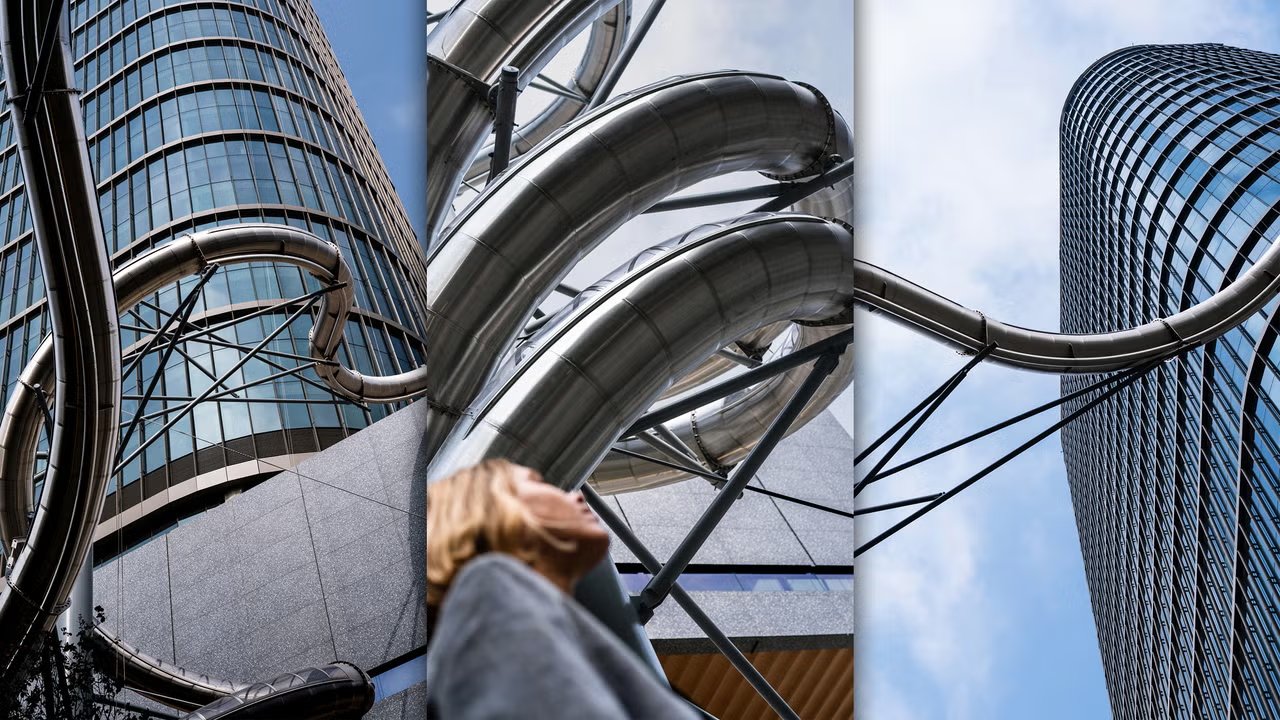
MEXICO CITY — German-fabricated stainless steel and plexiglass spirals now coil across the skyline of Mexico City’s upscale Colonia Granada district, marking the debut of Brussels-born artist Carsten Höller’s largest permanent architectural commission to date. Titled “Mexico City Slides,” the monumental interactive installation links corporate office towers, luxury hospitality, and high-end retail within Antara, an expansive commercial development operated by real estate firm SOMA and its architectural arm, Sordo Madaleno. Scheduled to open to the public in December, the four-slide system integrates public sculpture directly into the civic circulation of one of Latin America’s most prominent mixed-use centers.
As commercial landlords worldwide struggle to incentivize return-to-office mandates and counter structural headwinds confronting traditional shopping centers, Antara’s commitment to permanent, participatory fine art signals a strategic evolution in commercial property programming. By anchoring enterprise tenancies, hospitality, and luxury shopping with museum-caliber public works, commercial operators are engineering physical amenities that transcend conventional retail models. The development highlights how institutional real estate is moving beyond passive decorative art toward immersive infrastructure designed to capture foot traffic and extend consumer dwell time in competitive metropolitan markets.
Curatorial Scale and the Architectural Evolution of Antara
Originally opened in 2006 as Mexico’s first open-air shopping center, Antara served as an anchor for the redevelopment of Colonia Granada from an industrial quarter into a high-density enclave. SOMA and Sordo Madaleno structured the complex as an open urban hub amid a notoriously congested urban landscape. According to reporting by Fast Company, the property currently draws 12.7 million visitors annually, housing international fashion houses such as Brunello Cucinelli and Zimmermann, Latin America’s largest Sephora store, and established culinary destinations including Nobu alongside an upcoming Carbone location.
Unlike Höller’s celebrated temporary installations at prominent institutions such as the Tate Modern in London, the New Museum in New York, and Stockholm’s Moderna Museet—the city where the artist lives and works—the Mexico City slides represent a permanent fixture within a commercial complex. Initial discussions between the developers and Höller commenced two and a half years ago, leading to the fabrication of the slides in Germany 18 months ago before their shipment and arrival in Mexico earlier this year.
“We’ve always had a vision to create these urban centers where people can walk safely and spend their time,” Javier Sordo Madaleno de Haro, vice president of SOMA, told Fast Company, adding that “the complexity of the landscape in Mexico has always been a challenge for people to move around.”
“The main idea behind [the artwork] was to connect these four different uses and spaces with four different slides, and then have all of them land at the center of the project, which is the main plaza,” Sordo Madaleno de Haro said.
Seismic Engineering and Commercial Mixed-Use Integration
The installation anchors an expansion that added nearly 1 million square feet of space to the development—an area equivalent to 15 American football fields. This newly built footprint accommodates regional offices for corporate tenants such as Google and Capital One, a luxury Rosewood hotel, and an expanded retail and restaurant concourse. The four slides originate from disparate points across the campus before terminating in Antara's new courtyard, spanning heights from 12 to 38 meters (39 to 125 feet) and lengths ranging from 31 to 90 meters (102 to 295 feet).
Constructing a kinetic amenity of this magnitude presented complex structural engineering requirements, particularly given Mexico City’s active seismic profile. Because the four slides connect independent buildings with varying heights and functions, engineers had to account for differentiated structural motion during seismic events.
“The slides are all in different places in the buildings, and when these buildings move, they move in different directions, and they’re not moving in the same way. They have different heights,” Sordo Madaleno de Haro explained. “The challenge was how this piece interconnects to these different spaces.”
For Höller, the physical descent offers a unifying communal experience across otherwise segmented commercial activities, bringing office workers, hotel guests, and diners into shared physical contact.
“People sliding from a hotel, from offices, from restaurants and from an art center are brought together in the air and land next to each other,” Höller said in a press statement. “They share the experience of being taken out of their usual form of being, into the unknown, dreamlike territory of simultaneous joy and fear.”
Strategic Outlook and the Future of Experiential Real Estate
When the slides open to visitors in December, the installation will provide a high-visibility test case for the efficacy of participatory art in sustaining commercial asset values. As institutional property owners navigate broader shifts in hybrid workplace attendance and consumer spending behavior, developers are increasingly deploying interactive architectural features to bolster property differentiation.
The long-term success of the installation will depend on effective visitor throughput management, rigorous ongoing maintenance, and sustained compliance with regional seismic safety standards. Nonetheless, SOMA’s deliberate integration of corporate enterprise, hospitality, and world-class experiential art sets an ambitious precedent for the development of post-industrial urban space in Latin America and beyond.


