MERL CEO Anthony Vetro Drives Mitsubishi Electric R&D Transformation
As industrial giants pivot from consumer tech to complex systems, MERL CEO Anthony Vetro steers Mitsubishi Electric toward collaborative, open-hub R&D.
EXECUTIVE BRIEF // KEY TAKEAWAYS
As industrial giants pivot from consumer tech to complex systems, MERL CEO Anthony Vetro steers Mitsubishi Electric toward collaborative, open-hub R&D.
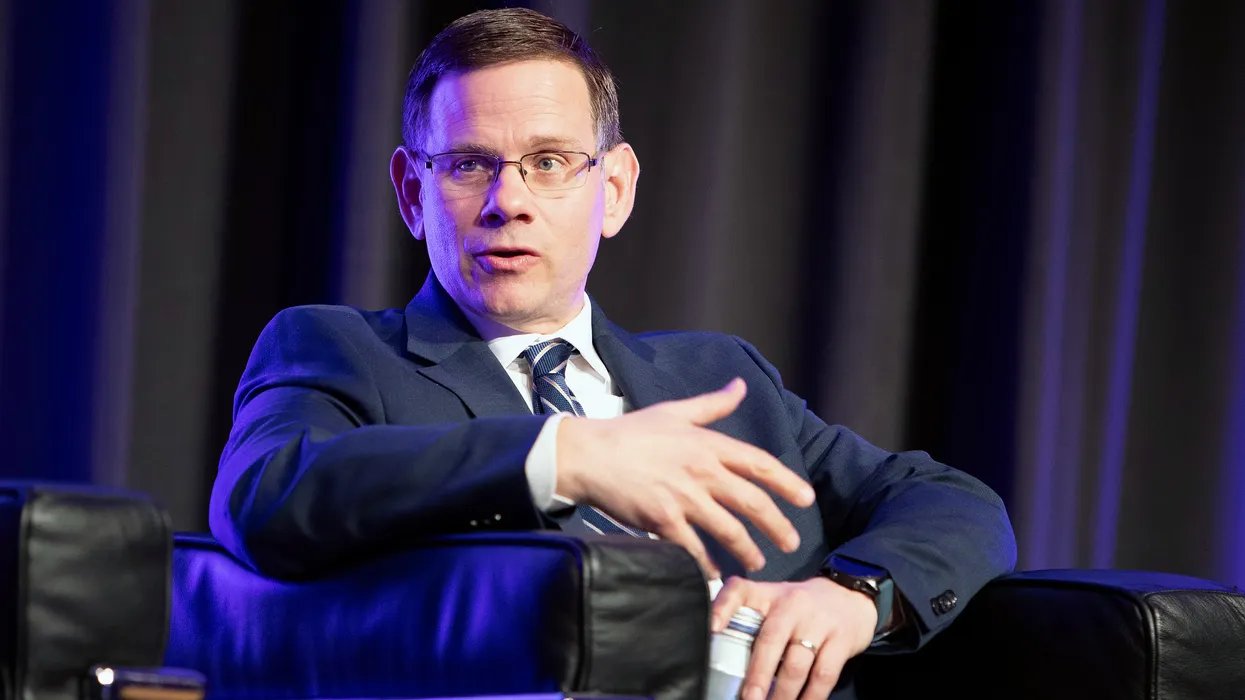
CAMBRIDGE, Mass. — Anthony Vetro, who spent nearly three decades advancing from an entry-level technical researcher to president and chief executive officer of Mitsubishi Electric Research Laboratories (MERL), is orchestrating a structural pivot in how industrial conglomerates approach corporate research and development, according to an extensive retrospective published by IEEE Spectrum.
Appointed president and CEO of the Cambridge, Massachusetts-based research arm in 2023, Vetro has taken on a simultaneous role as deputy head of Mitsubishi Electric’s global R&D activities spanning Asia and Europe. His elevation reflects a broader, macro-level transformation among global technology powerhouses: shifting away from closed, consumer-facing hardware pipelines toward integrated enterprise platforms, energy grid modernization, aerospace technologies, and open-architecture “co-creation” ecosystems alongside external academic and commercial partners.
From Multimedia Signal Processing to Corporate Leadership
Vetro joined MERL in 1996 directly after completing his accelerated bachelor’s and master’s degrees in electrical engineering at the Polytechnic Institute of Brooklyn, now New York University’s Tandon School of Engineering. Supported by MERL, he completed his doctorate in electrical engineering there in 2001. His early career centered on video compression, digital television broadcasting, and multimedia signal processing—pivotal technologies that underpinned DVD, Blu-ray, internet streaming, and early digital broadcast standards.
Elected an IEEE Fellow in 2011 for foundational contributions to video coding, multimedia adaptation, and 3D television, Vetro gradually navigated his unit away from consumer video formats as Mitsubishi Electric phased out television manufacturing. The company reallocated its strategic capital toward high-reliability systems across defense, industrial electronics, power infrastructure, and space exploration.
In 2007, Vetro was elevated to manage MERL’s digital video coding and streaming group, advancing to deputy director in 2014. During this tenure, he spearheaded the lab’s speech and audio division—prior to the market proliferation of voice assistants such as Siri and Alexa—before realigning the group toward broader sensing and information security domains. His ascent culminated in his 2018 promotion to vice president and lab director, followed by his appointment as chief executive five years later.
“Between my IEEE activities, standards work, and some of the business shifts in Mitsubishi Electric, I eventually graduated to more management leadership roles,” Vetro told IEEE Spectrum, citing his leadership on international digital format bodies and professional committees as the training ground for executive governance.
The Serendie Co-Creation Model and Infrastructure Systems
The operational centerpiece of Vetro’s research agenda is the deployment of collaborative innovation nodes designed to solve high-capital industrial bottlenecks. In June, Mitsubishi Electric launched Serendie Street Boston, its first digital transformation and co-creation hub in the United States, colocated directly with MERL in Cambridge. The facility mirrors the corporate group’s inaugural Serendie Street space established in Yokohama, Japan, in 2024.
Derived from a portmanteau of “serendipity” and “digital engineering,” the Serendie platform connects corporate researchers with startups, enterprise clients, and institutional peers to prototype, test, and scale applied applications. Current project streams at the Boston facility concentrate on industrial robotics, systems for integrating distributed renewable generation into power grids, and thermal- and energy-efficient architectures for enterprise data centers facing escalating computing loads.
Vetro emphasized that insulating corporate laboratories from market feedback is no longer viable in an era characterized by rapid technological cycles and complex systems engineering.
“Serendie Street [Boston] aims to strengthen the bridge between our global R&D efforts and real-world industry challenges. The hub is intended to bring our partners and customers together to engage in more cocreation activities, where we listen to their problems and work together to solve them,” Vetro said. “I think the company has come to recognize that we can’t just do it all internally by ourselves.”
The physical positioning of the facility was intentional, designed to tap top-tier engineering talent and basic research from neighboring institutions, including Harvard University and the Massachusetts Institute of Technology.
Strategic Outlook: Industry Consortia and Global R&D Integration
Addressing the 2025 IEEE Vision, Innovation, and Challenges Summit, Vetro underscored that corporate research labs must lean into open innovation models to keep pace with accelerating technological disruptions. For multinational enterprises, cross-border synchronization between regional divisions has become essential to avoid duplicate expenditures and maintain standard-setting influence across competitive geopolitical jurisdictions.
Throughout his career, Vetro played an instrumental role in strengthening formal conduits between private industry and global academic associations. As the inaugural chair of the IEEE Signal Processing Society’s Industry Board, he institutionalized corporate engagement initiatives, continuing-education technical courses, and executive networking channels. Under his guidance, MERL also established technical sponsorships for field honors, including the IEEE James L. Flanagan Speech and Audio Processing Award and the IEEE Fourier Award for Signal Processing.
“Industry-level engagement in IEEE is really very vital to the organization in maintaining its relevance to the community and fulfilling its mission of fostering technological innovation and excellence for the benefit of humanity,” Vetro noted.
Looking ahead, Vetro’s dual mandate over domestic operations and global R&D activities across Asia and Europe signals a centralized alignment for Mitsubishi Electric. By binding academic discovery in Cambridge to applied manufacturing and power-grid deployments worldwide, the conglomerate is betting that open corporate laboratories will serve as the primary engine for industrial resilience and digital transformation.


