Texas Startup Mazama Targets Deep Volcanic Heat for 2029 Grid Power
Backed by oil majors, Mazama Energy drills past 10,000 feet in Oregon, utilizing CO2 cooling to unlock superhot geothermal power for the grid by 2029.
EXECUTIVE BRIEF // KEY TAKEAWAYS
Backed by oil majors, Mazama Energy drills past 10,000 feet in Oregon, utilizing CO2 cooling to unlock superhot geothermal power for the grid by 2029.
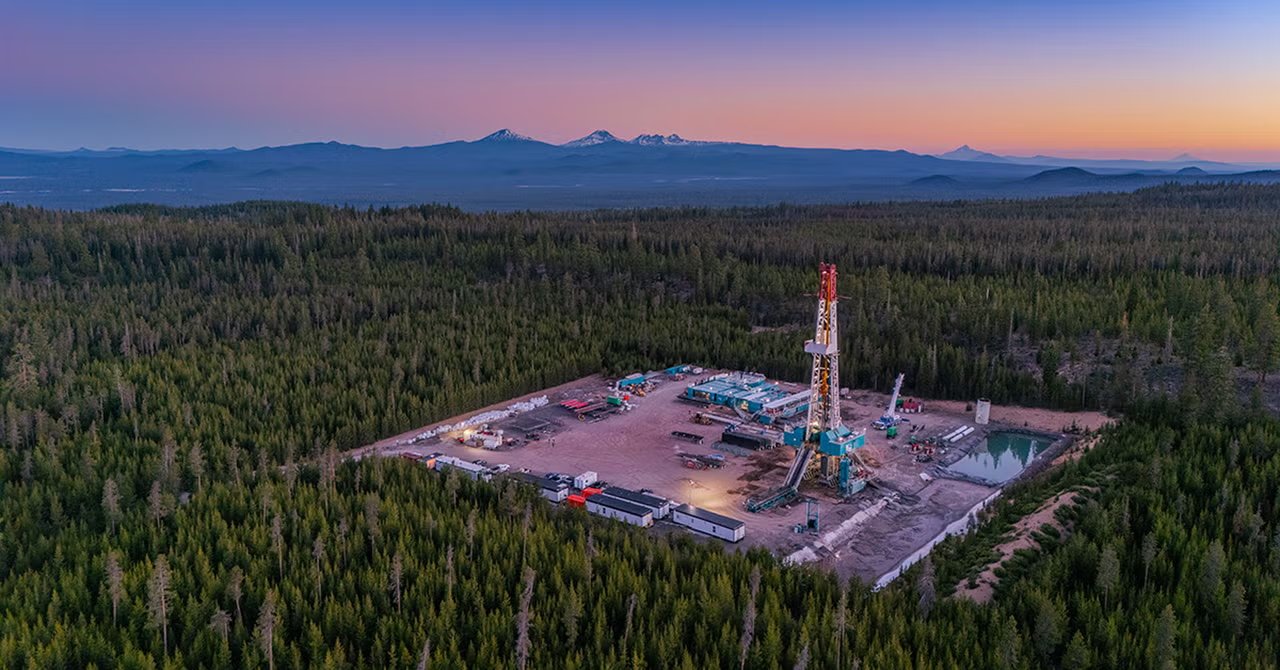
Frisco, Texas-based geothermal developer Mazama Energy has drilled beyond 10,000 feet into volcanic rock near central Oregon's Newberry Volcano, targeting depths exceeding 15,000 feet to harness subterranean heat for baseload electricity generation, according to a report by Fast Company. The pilot drilling initiative aims to demonstrate that deep-formation geothermal energy can be unlocked at lower commercial costs than legacy clean-power alternatives, establishing a scalable operational framework ahead of planned commercial grid interconnections scheduled for 2029.
As energy-intensive enterprise sectors such as artificial intelligence infrastructure and advanced manufacturing seek continuous, zero-carbon power, deep geothermal exploration is emerging as a critical frontier for institutional capital and energy security. With oil majors injecting capital and petroleum engineering practices into geothermal startups, the capability to tap into superhot geological formations offers an avenue to deliver dispatchable clean energy while circumventing the land and intermittency constraints associated with solar and wind generation.
Petroleum Capital and Engineering Lineage
Mazama, founded in 2023 and staffed by a team of roughly three dozen employees, relies heavily on technical methodologies pioneered across decades of commercial oil and gas exploration. Chief Executive Officer and President Sriram Vasantharajan brings direct petroleum industry lineage, having previously served in senior engineering and executive capacities at Mobil Oil and Blade Energy Partners. This background proved instrumental in securing institutional support from traditional energy producers, with Shell and ConocoPhillips backing Mazama's latest financing round to lift cumulative capitalization to $171 million.
Vasantharajan characterized the Oregon volcanic test site as an essential proving ground designed to demonstrate that specialized deep-drilling techniques can function effectively outside conventional oil-producing basins. The objective is to validate standardized operational procedures capable of deployment across non-traditional drilling geographies.
"When you create that blueprint or template, you can then rinse and repeat," Vasantharajan told Fast Company. "That, to me, is when superhot rock has gone from just viable to creating a repeatable and bankable path to unleashing this incredible potential at scale."
Technical Economics and Carbon Dioxide Cooling
The underlying commercial thesis of deep geothermal rests on resource intensity and thermodynamic efficiency. Formations located more than 12,000 feet below the surface reach extreme temperatures that allow operators to extract exponentially more thermal energy per bore. According to operational metrics disclosed by the company, harvesting energy from superhot rock requires 80% fewer wells and 75% less water consumption compared to traditional, shallower geothermal installations. By maximizing per-well energy yield, developers can curtail capital expenditures that have historically rendered enhanced geothermal projects economically prohibitive.
However, operating in subterranean environments where ambient rock temperatures approach 750 degrees Fahrenheit—substantially above the 390 degrees typical of standard geothermal reservoirs—presents severe mechanical obstacles. Thermal stress rapidly degrades polycrystalline diamond compact (PDC) drill bits and compromises downhole electronic steering systems required for trajectory precision.
While industry peers explore alternative approaches—such as Quaise Energy's millimeter-wave rock vaporization or Fervo Energy's horizontal reservoir fracturing—Mazama engineered a downhole thermodynamic mitigation system utilizing liquid carbon dioxide. Drawing on petroleum sector research into subterranean carbon dioxide sequestration under pressure, Mazama circulates liquid CO2 as a closed-loop drilling fluid to insulate sensitive equipment. The application allowed the venture to establish an industry benchmark for the hottest engineered thermal system at 629 degrees Fahrenheit.
"Imagine you’re drilling rock that’s heated to 650 degrees Fahrenheit," Vasantharajan said. "Our drill bit comes out, and it’s got ice on it."
Process optimizations and downhole thermal management have also yielded direct productivity gains. Mazama completed its latest Oregon test well 80% faster than earlier drilling iterations, reflecting an accelerating learning curve necessary to lower commercial exploration costs.
Strategic Outlook and Grid-Scale Milestones
The drive to commercialize extreme-heat drilling has gained momentum within federal energy policy frameworks, with superhot rock exploration recognized as a rare renewable initiative aligned with President Donald Trump's second-term energy dominance agenda. The convergence of federal policy interest, corporate procurement commitments—including data center power agreements forged by Google with peer developers such as Fervo and Quaise—and private venture backing has intensified competition to deliver cost-effective deep geothermal assets.
Resource evaluations indicate that fully exploiting the superhot thermal reservoir at the Newberry Volcano site could yield an estimated 10 gigawatts of recoverable clean electrical capacity. If realized, that single geological asset would surpass the cumulative nameplate output of every commercial geothermal facility currently operating in the United States.
To convert that theoretical capacity into dispatchable power, Mazama must sustain drilling velocities as it advances toward its target depth past 15,000 feet while proving the long-term durability of its subterranean heat-exchange loops. With capital markets closely monitoring initial pilot results ahead of the 2029 commercial grid target, the venture's ability to drive down capital intensity will dictate whether superhot rock can transition from technical demonstration into a core pillar of the national baseload energy mix.


