Macy’s Parade Rescheduled to Saturday Due to Severe Weather
For the first time, severe weather forces Macy’s Thanksgiving Day Parade to Saturday, testing logistics for its landmark 100th edition.
EXECUTIVE BRIEF // KEY TAKEAWAYS
For the first time, severe weather forces Macy’s Thanksgiving Day Parade to Saturday, testing logistics for its landmark 100th edition.
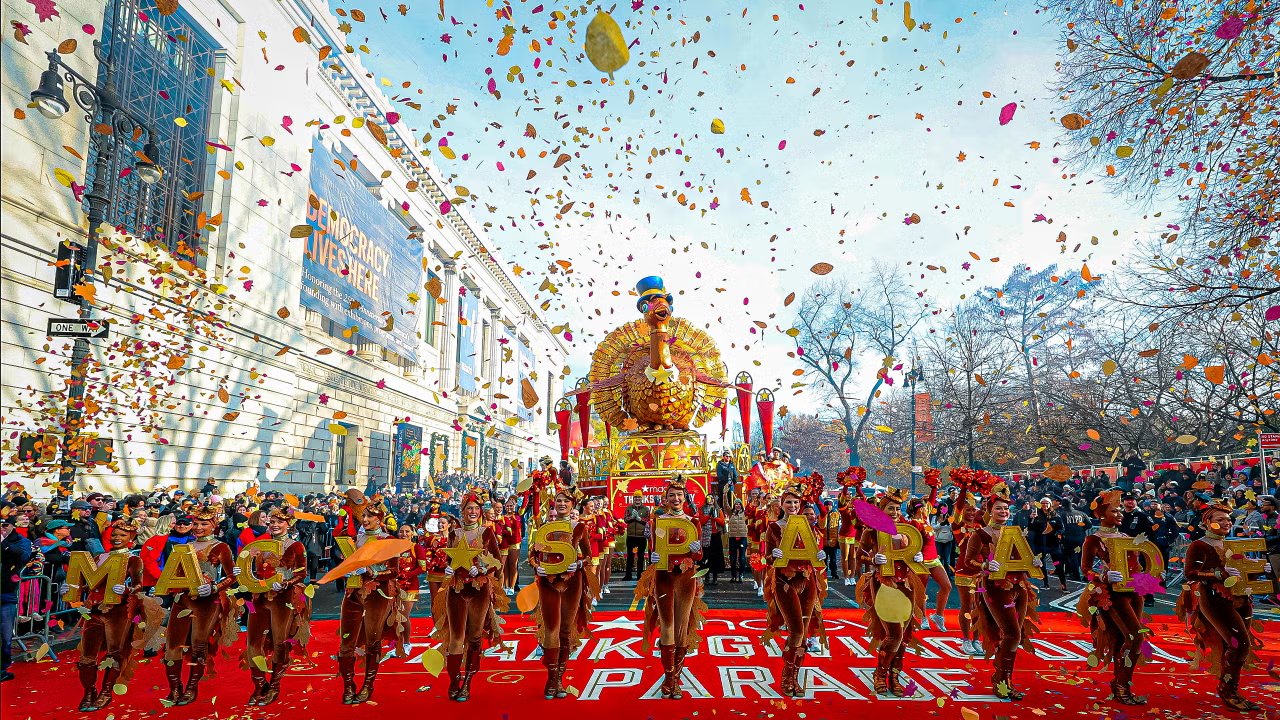
NEW YORK — In an unprecedented operational pivot, Macy’s Inc., NBCUniversal, and New York City officials announced on Wednesday the postponement of the 2026 Macy’s Thanksgiving Day Parade to Saturday, November 28. Disclosed via reporting by Fast Company, the decision marks the first time in the century-long history of the holiday tradition that weather conditions have forced organizers to shift the live event to a non-holiday date. While historical precedent includes wartime cancellations between 1942 and 1944 during World War II, meteorological threats—specifically forecasts calling for dangerous winds, heavy rain, and coastal flooding—prompted a calendar reallocation to safeguard participants, spectators, and the massive helium-filled character balloons.
The timing of the disruption carries considerable weight for the organizers and broadcast partners, as this year officially marks the parade’s 100th edition. Macy’s had planned an expanded commemorative showcase featuring enhanced floats, extensive musical rosters, and landmark celebrity appearances. In lieu of the live Thursday morning spectacle, NBC broadcast a replay of the 2025 parade on Thanksgiving morning, maintaining traditional household viewing metrics while operational teams scrambled to restructure the multi-million-dollar live logistics for the weekend. The live celebration is now slated to step off at 8:30 a.m. Eastern Time on Saturday, November 28, concluding at approximately noon, with comprehensive cross-platform distribution via NBC, Peacock, Telemundo, and major live-television streaming aggregators.
Logistical Complexities and Roster Disruptions
The last-minute calendar shift has reverberated across national talent networks, forcing participating groups, marching bands, and corporate sponsors to recalibrate travel itineraries, lodging, and contractual obligations. According to details published by Fast Company, certain foundational units originally integrated into the Thanksgiving program are unable to remain in New York through the weekend due to conflicting regional commitments.
Notably, the University of Alabama’s Million Dollar Band had to forgo the rescheduled event to return home in preparation for the Saturday Iron Bowl football game. Similarly, Macy’s Great American Marching Band was unable to participate in the modified Saturday schedule. Conversely, other youth organizations leveraged rapid digital fundraising to absorb the sudden economic impact of extended stays in the metropolitan area. A high school marching band from Pearland, Texas, successfully mobilized supporters to raise $350,000 in under 24 hours, ensuring that more than 500 students and accompanying staff members could remain on-site to execute their planned performance.
Despite these scheduling attrition points, the core broadcast elements remain largely intact. Network hosts Savannah Guthrie, Hoda Kotb, and Al Roker are returning to helm the NBC coverage. The announced musical talent pool—comprising acts such as RAYE, Teddy Swims, Megan Moroney, Natasha Bedingfield, Queen Latifah, Jimmy Fallon and The Roots, JoJo, Smash Mouth, and Keke Palmer—is largely adapting to the new timeline. Furthermore, the specialized Broadway showcase, featuring a 10-minute collaborative medley drawn from nine prominent theatrical productions including Hamilton, Wicked, and Rent, alongside the Radio City Rockettes, remains positioned for the Saturday broadcast window.
Economic and Enterprise Implications of Weather Disruption
The sudden alteration of a legacy public event of this magnitude underscores the growing vulnerability of large-scale cultural and commercial gatherings to extreme meteorological events. As detailed by Fast Company, the convergence of high-velocity winds and coastal flood warnings created an untenable operational risk environment for structural rigging, elevated aerial helium inflatables, and dense urban crowd management. For major retail sponsors, municipal entities, and media networks, the fiscal implications of a delayed execution extend deep into advertising inventory, syndication schedules, and hospitality commerce.
Event economists note that while the Saturday rescheduling preserves the advertising revenue model—bolstered by an encore presentation scheduled for 2:00 p.m. ET/PT on NBC—the friction costs borne by participating volunteer groups and tourism ecosystems highlight the complex risk-management frameworks required for modern civic spectacles. Organizations increasingly face the challenge of building financial resilience against climate-driven disruptions that transcend traditional holiday scheduling parameters.
Outlook and Strategic Resilience
As organizers evaluate the execution of the rescheduled centennial parade, municipal planners and entertainment executives are expected to review risk-mitigation protocols for future marquee events. The agility demonstrated by corporate partners in pivoting broadcast feeds to archival content while simultaneously re-engineering live production schedules on a 48-hour notice sets a new operational benchmark for live-media contingencies.
Moving forward, the historic 2026 adjustment will likely serve as a foundational case study for managing extreme weather adaptation in major metropolitan entertainment corridors. The ability of both corporate sponsors and community organizations to absorb unforeseen logistical shocks—exemplified by rapid digital fundraising and adaptable broadcast architecture—demonstrates structural resilience within the live-events economy as it confronts increasingly volatile environmental forecasting patterns.


