Legacy Analog Tech, Not AI, Triggered Nationwide FAA Ground Stop
An overloaded analog system halted U.S. flights Friday, exposing decades of technical debt and a multi-billion-dollar funding gap across FAA infrastructure.
EXECUTIVE BRIEF // KEY TAKEAWAYS
An overloaded analog system halted U.S. flights Friday, exposing decades of technical debt and a multi-billion-dollar funding gap across FAA infrastructure.
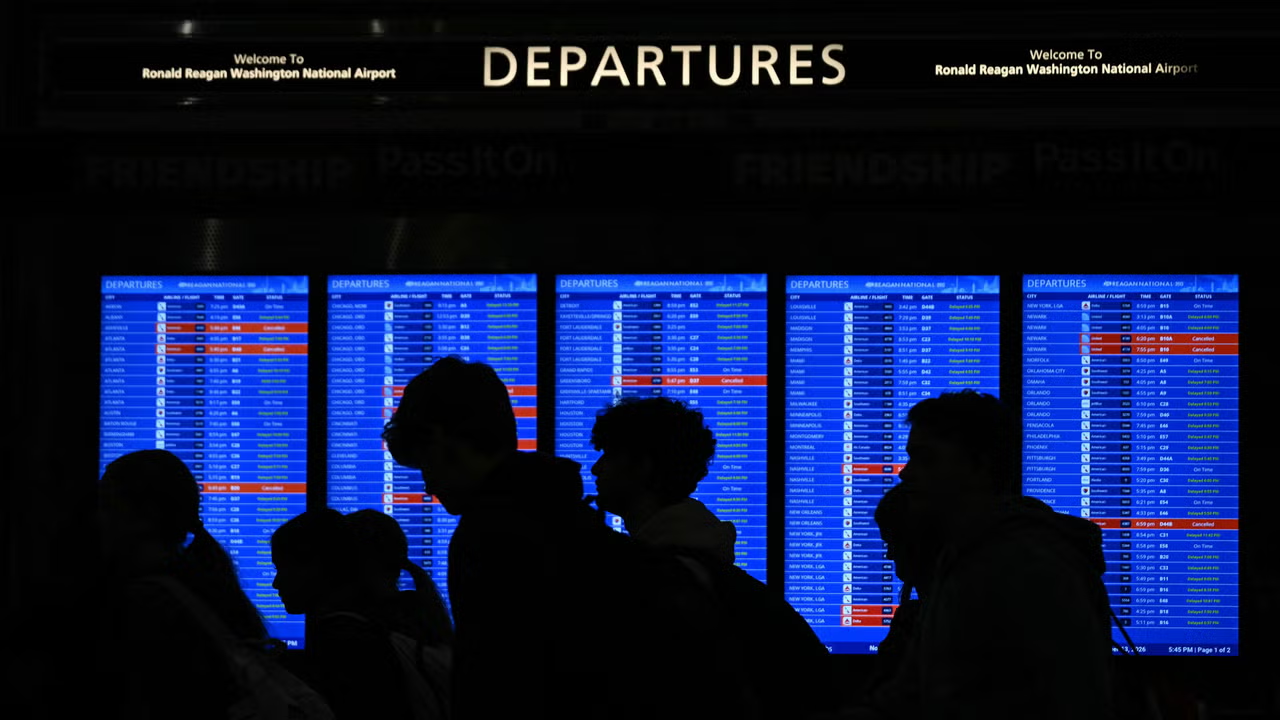
A nationwide Federal Aviation Administration ground stop late Friday night disrupted weekend commercial airline schedules across the United States after an outdated analog network system became overloaded, according to Fast Company. While initial social media speculation blamed either foreign adversaries or a newly deployed artificial intelligence platform, Transportation Secretary Sean Duffy confirmed Friday evening that the outage stemmed from legacy Time-Division Multiplexing (TDM) equipment impacting Terminal Radar Approach Control (TRACON) telecommunications.
For enterprise infrastructure leaders and commercial aviation operators, the incident underscores the operational fragility of maintaining mission-critical public networks built on decades-old hardware. As federal agencies layer modern artificial intelligence tools onto aging physical backbones, the failure demonstrates that surface-level software innovation cannot compensate for unaddressed core technical debt—nor can live national systems be easily modernized without sustained capital commitment.
Legacy Analog Systems vs. Modern AI Speculation
In the immediate aftermath of Friday's disruption, major technology contractors working with the agency, including Microsoft, moved quickly to distance themselves from the outage. Public scrutiny initially centered on the FAA's SMART system, an AI-based airspace planning tool debuted earlier in the week designed to analyze airline schedules, weather, airport capacity, and operational constraints to predict traffic flows. Despite the timing of the rollout and broader federal adoption of AI for pilot voice transcription, drone detection, and meteorology, officials stated there was no evidence linking the SMART system or malicious actors to the outage.
Instead, Duffy attributed the telecommunications breakdown strictly to aging TDM analog architecture that processes data signals over older network configurations. Facilities already transitioned to modern internet protocol-based systems continued operating normally throughout the incident.
"This is all the old legacy equipment. All of the new equipment that's been deployed did not go down."
Friday's stoppage follows a pattern of high-profile system vulnerabilities across U.S. airspace management. In 2023, the Notice to Airmen (NOTAM) hazard-alert system went offline nationwide after contractors inadvertently deleted core files. Subsequent modernization efforts revealed that NOTAM data was not stored exclusively in virtual environments or entirely digital formats. Speaking previously to FedScoop regarding the challenge of upgrading active aviation systems without triggering wider disruptions, Shawn Pruchnicki, a former pilot at Ohio State's Center for Aviation Studies, noted the persistent gap between redundancy claims and operational reality.
"Everyone will say, 'well, there's backups in place.' But we've also seen time and time again where those things have been said and things have gone horribly wrong."
Decades of Technical Debt and Physical Failures
The operational strain on U.S. aviation extends down to physical wiring and decades-old hardware components. According to a September 2026 Government Accountability Office (GAO) report cited by Fast Company, some of the FAA's copper wiring dates back to the 1960s, and the agency has replaced only 2,560 of its 5,170 aging copper lines—less than half of the vulnerable inventory. Those physical deficiencies surfaced acutely in April 2025, when a burnt copper wire severed radar and radio contact for approximately 90 seconds at Newark Liberty International Airport, triggering weeks of flight delays and cancellations before a second communications failure struck in May.
Broader modernization initiatives have similarly struggled to reach completion. The FAA's NextGen overhaul, launched in 2007 to transition air traffic management from ground-based radar to satellite navigation and digital communications, remains unfinished nearly two decades later amid chronic funding shortfalls. Only earlier this month did the agency formally begin retiring floppy disks from its operations. Duffy noted that over the past 25 years, the FAA received $15 billion for modernization with limited structural results, leaving controllers reliant on 1970s radar systems lacking replacement parts, 1980s network configurations, and 1990s software.
"What we're doing is hard and it hasn't happened in the past because it is hard. But I'll tell you by doing nothing, you inject way more risk into the system."
Capital Shortfalls and Legislative Gridlock
Resolving the FAA's infrastructure deficit faces steep fiscal and project-management hurdles alongside an ongoing air traffic controller recruitment crisis. Although Duffy unveiled an ambitious plan in May 2025 to rebuild the air traffic control system by 2028—securing an initial $12.5 billion from Congress—the projected cost escalated to $31.5 billion just two months later. Furthermore, the 2028 target covers only the first phase of physical replacements, leaving the second phase of aircraft-tracking software without a formal timetable. The September 2026 GAO assessment warned that the agency lacks both a comprehensive lifecycle cost estimate and a master schedule for related projects, risking prolonged reliance on obsolete systems.
Additional federal funding remains stalled on Capitol Hill. Republican Sen. Eric Schmitt's $30 billion Modern Skies Act has yet to advance out of committee, while the White House submitted a new request to Congress on November 13 for $30.1 billion in aviation infrastructure funding, including $10.1 billion specifically designated for air traffic control technology. Until lawmakers bridge the multi-billion-dollar gap, U.S. airlines and enterprise travelers remain exposed to recurring legacy network failures.
"It's not red, it's not blue, it's not Democrat, it's not Republican, it's American. Give us the money to fix it."