QuantumScape Unveils Osprey All-Solid-State Battery Platform
QuantumScape introduces the Osprey platform, pairing its ceramic separator and anode-free design with a solid cathode to advance sulfide-based EV batteries.
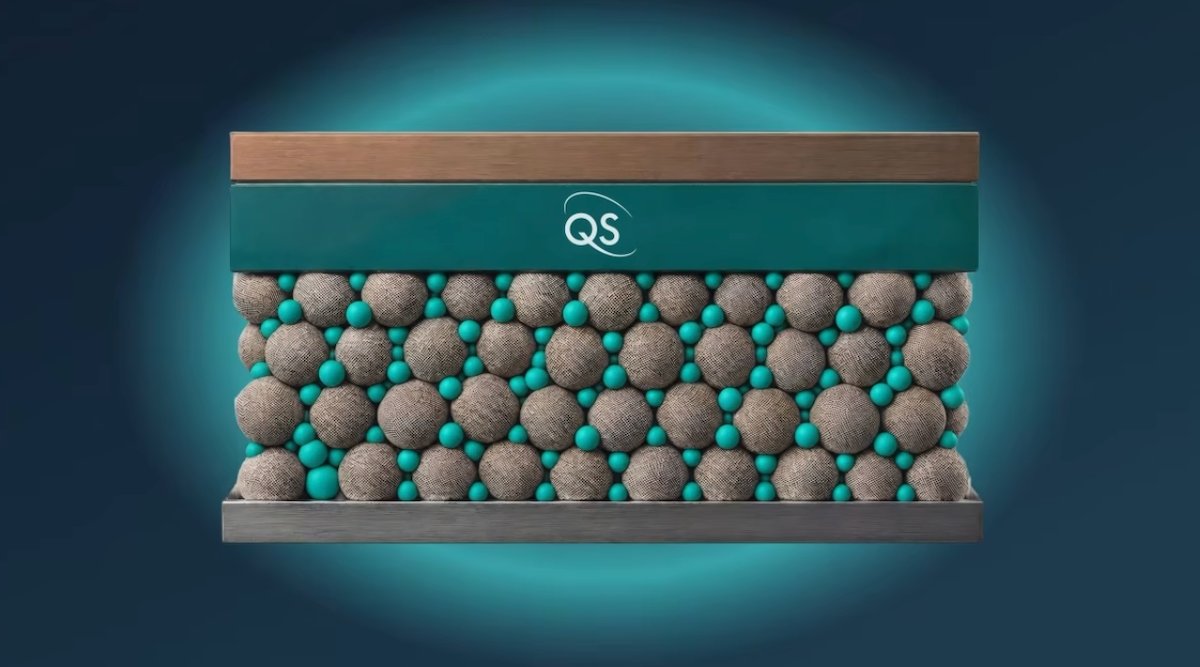
United States battery developer QuantumScape announced the launch of its new Osprey platform on Nov. 11, introducing an all-solid-state cell architecture designed to overcome persistent electrochemical and operational limitations in sulfide-based electric vehicle batteries, according to a report by CleanTechnica. By pairing the company's proprietary ceramic separator and anode-free lithium-metal design with a solid cathode, the Osprey architecture transitions QuantumScape from hybrid lithium-metal configurations into full all-solid-state battery technology. The platform is engineered to provide licensing and co-development pathways for battery manufacturers seeking higher energy density, rapid charging capabilities, and enhanced thermal safety without relying on volatile liquid electrolytes.
The advancement arrives at a pivotal juncture for the North American automotive sector and global battery supply chains. Following a policy-driven contraction in U.S. electric vehicle sales last year, automotive manufacturers and electrification stakeholders have increasingly pivoted toward producing affordable electric models carrying manufacturer suggested retail prices of $30,000 or less. Achieving price parity and clear performance superiority over internal combustion engine vehicles requires next-generation battery chemistries that eliminate heavy mechanical pressurization modules while maintaining durability across extreme operating temperatures. By offering a modular technical bridge for developers already heavily invested in sulfide-based solid-state programs, QuantumScape positions its intellectual property as a foundational layer for commercializing mass-market all-solid-state cells.
Bridging Ceramic Separators and Sulfide Cathodes
Founded in 2010, QuantumScape initially gained industry prominence in 2012 after attracting investment interest from Volkswagen for its lithium-metal battery research. Historically, the company focused on replacing the conventional polymer separator found in standard lithium-ion cells with a solid-state ceramic separator. That configuration allowed engineers to eliminate traditional carbon or silicon anodes in favor of a pure lithium-metal anode that is absent during manufacturing and instead self-forms during the cell's initial charging cycle. Last year, QuantumScape expanded its industrialization efforts by partnering with materials manufacturer Corning to co-develop production systems tailored for its ceramic separator technology.
With the introduction of Osprey, QuantumScape extends its QSE platform to incorporate a solid cathode, specifically targeting the challenges faced by sulfide-based all-solid-state battery developers. While sulfide materials remain highly attractive to battery researchers due to their strong ionic conductivity and ease of processing, they present severe degradation hurdles when paired directly with metallic lithium. In its Nov. 11 press statement and accompanying technical disclosures cited by CleanTechnica, QuantumScape explained that sulfides can react chemically with lithium metal, shortening cell lifespan, and typically require high external pressure to function—a requirement widely considered impractical for passenger vehicles.
"The industry has invested heavily in sulfide-based batteries but keeps hitting the same fundamental limits. As the data shows, Osprey can address these limitations." — Dr. Siva Sivaram, President and CEO of QuantumScape
According to QuantumScape's corporate statements, the Osprey platform allows developers of sulfide-based all-solid-state batteries to integrate QuantumScape's separator and anode-free architecture directly into their existing development programs, expanding both co-development and technology licensing opportunities across its customer base.
Performance Benchmarks and Federal Research Findings
Although QuantumScape noted that its solid cathode development remains in the early stages of validation, the company released initial test data outlining the platform's operational capabilities. Under what the company describes as gold-standard testing conditions, the Osprey cell architecture demonstrated a cycle life of 1,000 full charge cycles while retaining approximately 80 percent of its initial storage capacity. In fast-charging evaluations, the platform achieved a state-of-charge increase from 10 percent to 80 percent in five minutes. Crucially for automotive packaging, the cell operates under just one atmosphere of pressure and maintains operational viability in cold-weather environments below minus 20 degrees Celsius (minus 4 degrees Fahrenheit).
The focus on resolving sulfide degradation aligns with concurrent scientific investigations at the U.S. Department of Energy's Oak Ridge National Laboratory. As reported by CleanTechnica, a research team including Oak Ridge scientists recently published a study in the journal Nature titled "Operando neutron radiography reveals calendar aging-induced lithium redistribution and back-diffusion in thick-cathode all-solid-state batteries." Utilizing time-resolved neutron radiation imaging to observe active lithium batteries during operation, the researchers mapped the internal calendar-aging degradation processes that have historically hindered thick-cathode sulfide cells.
"Based on these findings from calendar aging, we envision future formation strategies should be redesigned to minimize sustained potential gradients while stabilizing interphases, for example through optimized composite electronic percolation and catholyte or coating materials and validated with time-resolved neutron imaging to establish transport-informed, durability-first conditioning rules that generalize across cathode loadings and operating temperatures." — Oak Ridge National Laboratory research team, Nature
Policy Headwinds and Strategic Energy Outlook
The convergence of private-sector solid-state breakthroughs and federal laboratory validation occurs amid a complex U.S. regulatory environment. CleanTechnica notes that President Donald Trump and the Republican congressional majority have actively moved to curtail federal support for passenger vehicle electrification, including prematurely terminating the $7,500 federal electric vehicle tax credit last fall and attempting, though ultimately failing, to claw back funding allocated to the National Electric Vehicle Infrastructure public charging program.
Despite administrative opposition to wind, solar, and consumer EV incentives under the federal "American Energy Dominance Policy," government-backed battery research continues to advance. Analysts and industry observers cited by CleanTechnica point to grid-scale stationary energy storage and defense modernization as key drivers sustaining federal interest in next-generation electrochemistry. Alongside domestic nuclear, geothermal, hydropower, biomass, and fossil fuel initiatives, stationary storage remains a central pillar of U.S. grid resilience. Furthermore, military demand for crewless autonomous vehicles and anti-idling auxiliary power systems—which rely on advanced batteries to achieve silent mobility and reduced thermal signatures compared to diesel engines—provides an enduring strategic market for high-density solid-state battery platforms as commercial validation progresses.
本記事は The OmniWire の編集基準に準拠して作成されています。一次報道は公式通信社の公表情報に基づいています。