Iran Conflict Drives First Global Emissions Dip Since 2020
Surging energy prices from the Iran war and Hormuz closure have triggered a rare drop in 2026 fossil emissions, accelerating clean technology adoption.
EXECUTIVE BRIEF // KEY TAKEAWAYS
Surging energy prices from the Iran war and Hormuz closure have triggered a rare drop in 2026 fossil emissions, accelerating clean technology adoption.
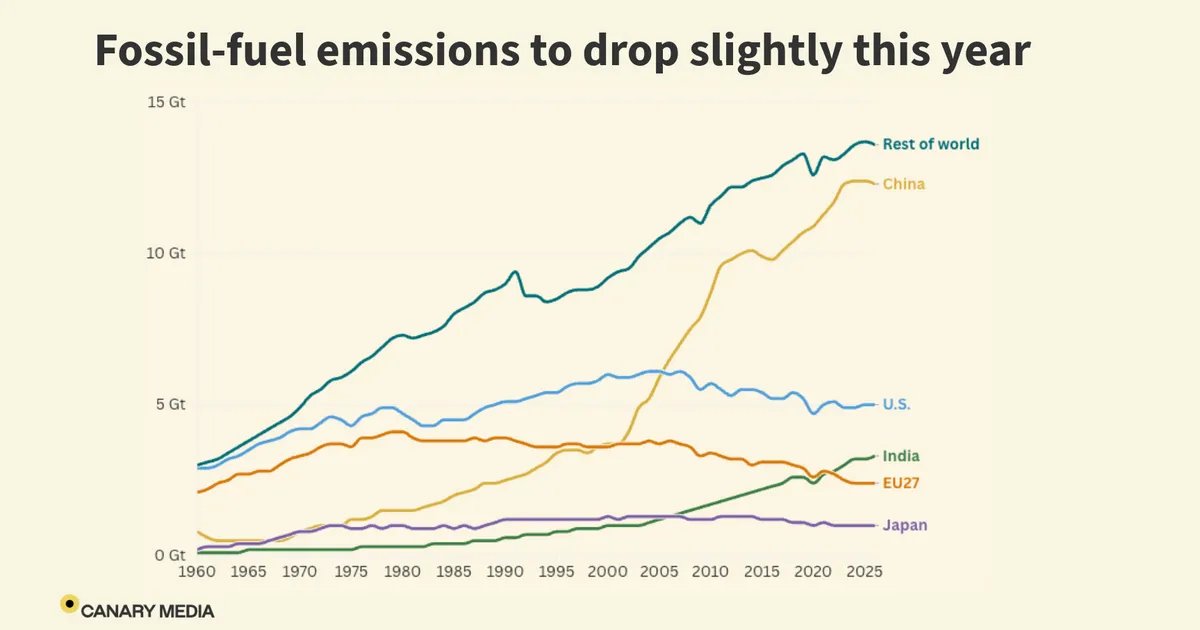
WASHINGTON — Planet-warming emissions from fossil fuels are projected to decline in 2026 for the first time since the COVID-19 pandemic, as the escalating conflict involving Iran disrupts international hydrocarbon flows and forces a contraction in global fuel consumption, according to data from the Global Carbon Project reported by Canary Media.
The unexpected contraction represents a critical inflection point for multinational energy markets, industrial supply chains, and sovereign decarbonization agendas. While economists and climate analysts had initially anticipated that worldwide greenhouse gas output would expand throughout the year, military hostilities and resultant fuel price shocks have triggered sharp demand reductions in petroleum and gas, accelerating structural capital deployment toward clean technologies while reshaping macro-energy risk calculations across global boardrooms.
Disruption at Hormuz and Geopolitical Supply Shocks
Unlike the systemic emissions decline recorded in 2020, which was precipitated by public health lockdowns and widespread industrial paralysis, the current retreat stems directly from geopolitical conflict. Hostilities expanded after initial U.S.-Israeli strikes against Iranian targets, leading Tehran to halt commercial transit through the Strait of Hormuz. The strategic chokepoint historically accommodates roughly 25 percent of worldwide crude oil shipments and nearly 19 percent of global liquefied natural gas deliveries.
The sudden interruption of those critical volumes precipitated acute price volatility across global commodity exchanges. Importers confronted severe supply constraints and unsustainable cost spikes, compelling utilities, commercial fleet operators, and industrial enterprises to curtail consumption immediately.
“This time it was not plague but war driving the decline. The Iran war has caused brutal increases in oil and natural gas prices, leading many countries to cut their consumption of the fossil fuels and seek alternatives,” Canary Media reported.
Canary Media senior editor Dan McCarthy highlighted that the conflict immediately altered global energy consumption dynamics. Although several economies initially attempted to safeguard grid reliability by increasing coal consumption, the sheer volume of lost petroleum usage counterbalanced that retreat into carbon-intensive alternatives.
Economic Realities and Asymmetric Consumption Metrics
Despite the historic nature of the reversal, published metrics indicate that the aggregate contraction remains modest. According to datasets compiled by the Global Carbon Project, fossil-fuel-related carbon emissions will decline by less than half a percent in 2026 compared to 2025 baseline levels. That minor reduction, however, decisively overturns consensus economic projections that had modeled sustained year-over-year emissions growth.
The statistical divergence underscores an asymmetric market response. In an effort to shield balance sheets from runaway oil benchmarks, commercial logistics firms and private consumers expedited the utilization of electric transport platforms and distributed renewable generation assets. These structural mitigations effectively neutralized the emissions footprint created by regional surges in thermal coal burning.
Energy analysts observe that the economic friction of sustaining operations under maritime blockades has forced heavy industry to rethink operational efficiencies. Factory operating schedules have been adjusted, corporate travel reduced, and alternative maritime shipping routes adopted, all contributing to an aggregate reduction in daily barrels consumed across major importing jurisdictions.
Strategic Outlook and Structural Cleantech Adoption
The overarching policy and investment question facing institutional energy markets is whether the 2026 emissions decline marks the beginning of a permanent secular peak or merely an ephemeral disruption. Global market strategists remain divided over the durability of the current market rebalancing.
One school of market analysts asserts that global hydrocarbon consumption will rebound sharply once diplomatic resolutions or military de-escalation reopen shipping lanes in the Persian Gulf. In that scenario, suppressed industrial demand and depleted regional strategic reserves would trigger a secondary surge in oil and liquefied natural gas imports, causing carbon trajectories to resume their upward curve.
Conversely, clean energy advocates and technology strategists argue that the crisis has served as an irreversible catalyst for zero-carbon capital expenditure. Sovereign subsidies, national energy security mandates, and long-term enterprise procurement contracts for wind, solar, storage, and electrified mobility have compressed multi-year adoption timelines into a matter of months.
As international regulatory bodies prepare updated carbon compliance standards and financial institutions reassess fossil asset valuations under high-volatility scenarios, the 2026 downturn underscores how geopolitical volatility can rapidly alter planetary emissions trajectories, transforming crisis-driven austerity into long-term technological transition.


