Indie Hardware Movement Challenges Big Tech's Homogeneous AI Vision
As corporate tech converges on monolithic AI ecosystems, independent technologists are deploying custom, tactile hardware to reclaim consumer agency.
EXECUTIVE BRIEF // KEY TAKEAWAYS
As corporate tech converges on monolithic AI ecosystems, independent technologists are deploying custom, tactile hardware to reclaim consumer agency.
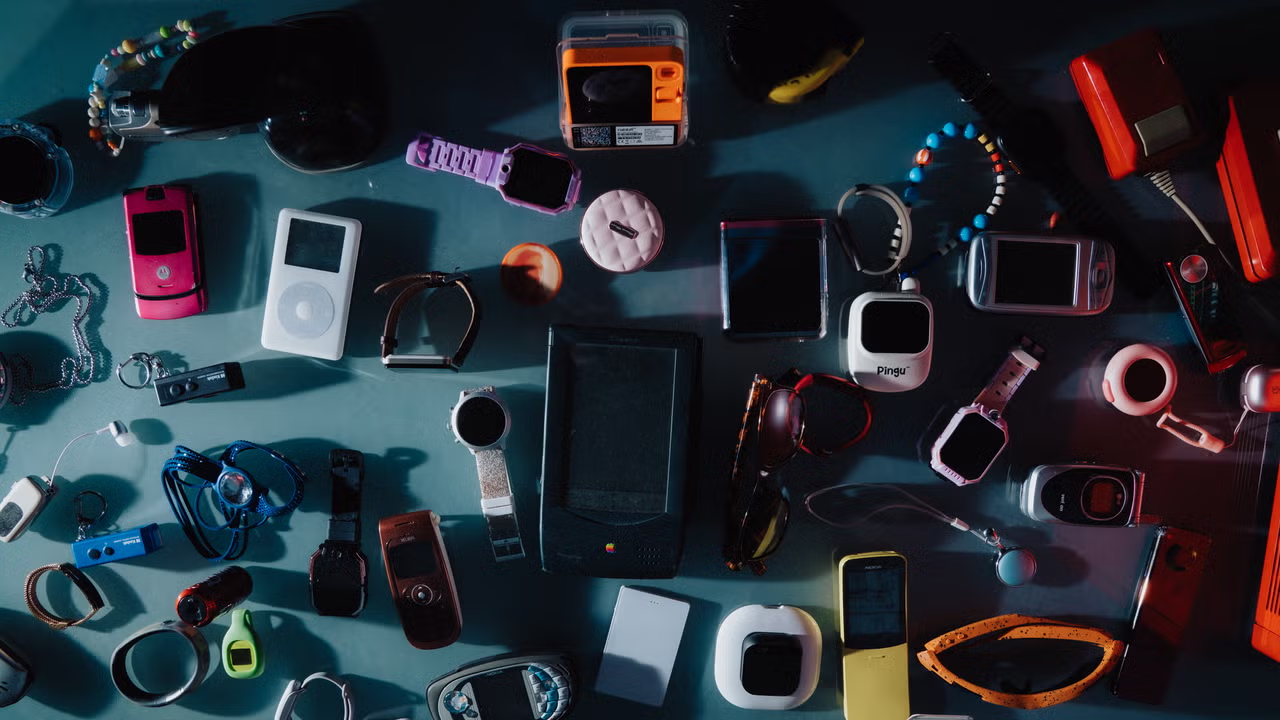
SAN FRANCISCO — Inside a former Union Square eyewear boutique, a nascent coalition of independent technologists, engineers, and digital designers is mounting a deliberate counter-offensive against the standardized screen-and-app paradigm of Silicon Valley. Operating under the banner of "playful computing" and bespoke hardware at the Intersection of Art and Technology gallery’s "Every Thing Computer" exhibition, these creators are developing tangible, single-purpose computing devices ranging from open-source AI cores to poetic cameras and wearable data storage. As reported by Fast Company, this grassroots resurgence marks an ideological pivot away from Big Tech’s closed ecosystems, seeking to restore individual agency and aesthetic diversity to consumer electronics.
For global enterprise leaders and technology investors, the emergence of this decentralized hardware movement signals a broader structural shift in product design and consumer sentiment. As trillion-dollar technology conglomerates pour billions into hyper-centralized artificial intelligence models and homogeneous devices, widespread consumer fatigue and professional dislocation among software engineers are fueling demand for localized, sovereign alternatives. By leveraging rapid prototyping, open-source microelectronics, and AI-assisted code generation, independent developers are significantly compressing the capital expenditure traditionally required to bring physical computing hardware to commercial markets.
Contextual Background and Certified Voices
The ideological foundation of the movement lies in a shared rejection of the walled-garden distribution models that have dominated computing since the advent of mobile app stores. Liz Dorman, co-founder of San Francisco-based startup Era, which sponsored the TIAT exhibition, framed the collective endeavor as an urgent cultural correction against monopolistic product design.
“We like to call this the rebel alliance of creatives that are trying to go out and have better ideas for what the future can be,” Dorman told Fast Company. “We’ve had so much lock-in and walled-garden effects because of the App Store and because of how hard it is to make hardware. That now is finally changing.”
Dorman, an Apple alumnus who later worked at Humane—the startup that raised more than $230 million before its proprietary AI Pin struggled commercially—noted that corporate hardware strategies frequently force rigid software personalities onto users without customization options. That frustration catalyzed Era’s pursuit of "couture technology," an architectural philosophy that allows consumers to assemble, modify, or commission modular devices tailored to explicit, bounded workflows rather than perpetual digital engagement.
Academic institutions and arts nonprofits have emerged as critical incubators for this philosophy, including Carnegie Mellon’s Human-Computer Interaction Institute, New York University’s Interactive Telecommunications Program, and the Massachusetts Institute of Technology. Marcelo Coelho, director of MIT’s Design Intelligence Lab, observed that rising disaffection with conventional computing interfaces is actively driving novel system architectures.
“There are a lot of students who are kind of tired of computers,” Coelho said. “In many ways, their response is to invent their own computer.”
Operational Economics and the AI Prototyping Dividend
The economic feasibility of independent hardware development has been radically reshaped by recent technological convergences. Historically, hardware development cycles entailed severe capital barriers, lengthy supply chain negotiations, and steep tooling costs. Today, the synthesis of consumer-grade 3D printers, accessible printed circuit boards from suppliers like Raspberry Pi and Arduino, and AI-driven "vibe coding" has lowered entry friction across the board.
Barry Threw, executive director of the San Francisco art-and-technology nonprofit Gray Area, noted that widespread automation in software engineering has paradoxically redirected talent toward physical fabrication. With approximately 75 percent of the public harboring apprehension over the trajectory of corporate AI systems, engineers facing corporate automation are seeking autonomy in physical devices.
“Across the technology spectrum, people are searching for where meaning and value and creativity lie when it’s not possible just to be a software engineer anymore because that stuff’s getting automated,” Threw told Fast Company. “As the creativity around software development has been taken over by these AI tools, hardware is kind of the next frontier.”
Commercial viability is already materializing across several early ventures. Era has secured over $11 million in venture financing to manufacture an open-source, puck-style computational core capable of interfacing with more than 15 diverse AI models. Elsewhere in the San Francisco Bay Area, Tenderworld—a physical product studio founded by former Twitter product designer Kelin Zhang following a weekend prototyping sprint with Ryan Mather in January 2023—has transitioned its $349 Poetry Camera into full commercial production. The device, which prints thermal-paper verse derived from visual scene analysis, captured immediate industry attention, including a bulk acquisition by artificial intelligence research lab Anthropic.
Similarly, hardware studio Noware, led by Sebastian Bidegain and Harry Isaac, leveraged presale funding to manufacture "Puff," a 128-gigabyte jewelry-encased storage device produced through specialized manufacturing partnerships in China. Wearable startup Sandbar, led by founder Mina Fahmi, is developing "Stream," a tactile ring equipped with a sensitive microphone designed specifically for whispered dictation and personal reflection, deliberately rejecting the continuous ambient recording models popularized by larger competitors.
Strategic Outlook: Monoliths Versus Fragmented Niches
The emerging indie hardware ecosystem arrives at a pivotal juncture for consumer technology. Just blocks away from experimental galleries in San Francisco, former Apple design chief Jony Ive’s firm LoveFrom and OpenAI are developing high-profile consumer AI hardware, following OpenAI’s 2025 acquisition of Ive’s startup Io. While Silicon Valley’s venture capital establishment continues to hunt for the singular, ubiquitous hardware successor to the smartphone, independent technologists argue that the future of computing will be decidedly pluralistic.
Ken Kocienda, a former principal software engineer at Apple who created the original iPhone autocorrect software and later headed product engineering at Humane, emphasized that new hardware form factors will augment rather than erase legacy systems.
“I think the more personal we make technology, the more willing people are going to be to integrate it into their lives,” Kocienda remarked, noting that historical computing paradigms persist alongside successive iterations. “Computing paradigms don’t go away. Even mainframes are still in use today.”
Rather than betting on a winner-take-all hardware monopoly, the creative technology movement is positioning itself across highly targeted vertical domains where tactile feedback, deliberate usage limits, and user sovereignty supersede algorithmic addiction. If modular platforms like Era succeed in scaling flexible micro-hardware frameworks, the next wave of consumer computing may look less like a uniform black glass rectangle and more like a distributed ecosystem of purpose-built, user-owned instruments.