IEEE Program Empowers Educators in AI and Semiconductor Tech
The IEEE TryEngineering initiative equips 54 global educators with specialized curricula in artificial intelligence and semiconductor manufacturing.
EXECUTIVE BRIEF // KEY TAKEAWAYS
The IEEE TryEngineering initiative equips 54 global educators with specialized curricula in artificial intelligence and semiconductor manufacturing.
In an effort to bridge the widening gap between advanced technological innovation and foundational classroom instruction, the IEEE TryEngineering initiative has successfully completed its third year of specialized professional development workshops. According to reporting from IEEE Spectrum, the program administered by IEEE Educational Activities focused its latest sessions heavily on artificial intelligence and semiconductor technology, directly preparing preuniversity educators to tackle these critical disciplines in their respective classrooms.
During the current program cycle, a total of 54 educators participated across four distinct regional sessions—three hosted in the United States and one international workshop held in Cairo, Egypt. By immersing teachers in the engineering design process, the initiative aims to cascade complex technological literacy down to younger student demographics, ensuring that the future workforce remains competitive in rapidly evolving global capital and technology markets.
Global University Networks Drive Hands-On STEM Training
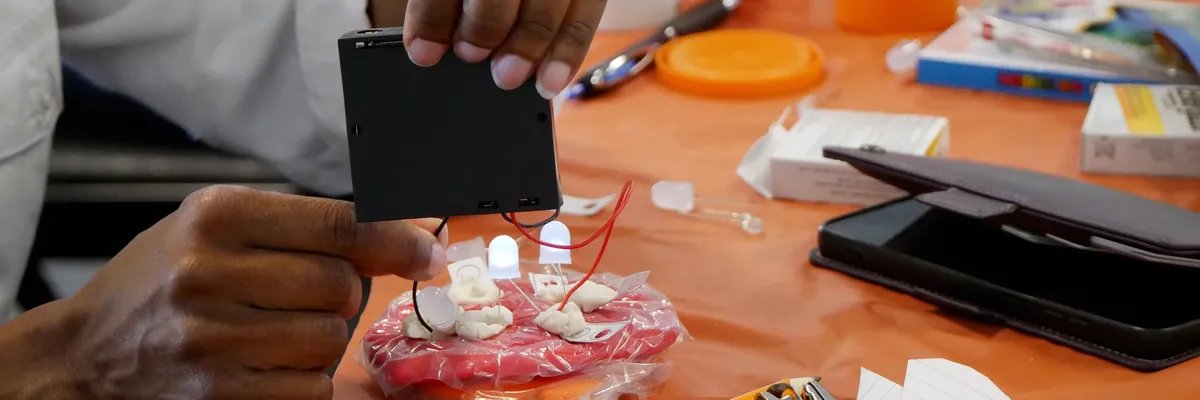
Central to the operational success of the TryEngineering educator sessions is a collaborative network of higher education institutions. Host campuses open their advanced research facilities to participating teachers, allowing faculty members to provide contextual background on emerging technologies alongside concrete pathways for student engineering careers. This year's participants engaged directly in practical, hands-on projects designed by experienced engineering educators working closely with TryEngineering staff.
In Cairo, 16 teachers from nine schools gathered at GEMS International School facilities under the facilitation of IEEE member Marwa Soudi and Senior Member Stamatis Dragoumanos, the past chair of the IEEE preuniversity coordinating committee. Participants reviewed practical modules such as the Working With Wind Energy and Tall Tower Challenge lesson plans. Meanwhile, in the United States, educators gathered at the University of Florida's Florida Semiconductor Institute, headquartered in Gainesville, alongside its NeoCity high-tech manufacturing campus near Orlando. Hosted by FSI workforce development specialists Roseanne Perez and Sophia Watson, the two-day experience featured guided tours of a SkyWater Technology chip manufacturing facility and hands-on demonstrations facilitated by engineering instructor Mary Acken for 15 attending teachers.
Additional domestic sessions expanded the program's reach to Arizona and Minnesota. At Arizona State University, faculty members Michael Kozicki and Stefan Myhajlenko welcomed 11 Arizona teachers to the Tempe campus, where facilitator Janet Hartkopf emphasized collaborative learning and diverse perspectives in engineering before leading a tour of the university's NanoFab facility. Concurrently, 16 STEM educators convened at the University of Minnesota's International Institute for Biosensing in Minneapolis. Directed by Patricia Khashayar and supported by Nano Center Director Sarah Swisher—both IEEE members—the Minnesota cohort explored advanced microelectronics and photonics experiments using equipment from the university's Supercomputing Institute and Nano Center.
Economic Impact and Scaling Workforce Development Initiatives
The strategic imperative behind the IEEE TryEngineering program lies in addressing acute semiconductor and artificial intelligence talent shortages through early educational intervention. By exposing teachers to industrial environments such as the SkyWater facility and university cleanrooms, the program translates abstract industrial requirements into actionable, classroom-ready curricula like the 'Making of a Microchip' and 'Train Your Tree' lesson plans.
Reflecting on the operational outcomes, participants reported immediate utility for these instructional materials. "This training was amazing! I loved the hands-on lessons and e-books, which I will definitely be using with my students," noted one participating elementary after-school STEM club leader in Arizona. Another Minnesota participant confirmed that the immersion inspired plans for student field trips back to the Nano Center during the upcoming academic year.
This year’s operational footprint builds directly upon foundational momentum established last year, when financial backing from Onsemi’s Giving Now program enabled nearly 80 teachers across five U.S. states and Mexico to participate. Driven by persistent high demand, the IEEE Educational Activities Board has sustained its backing, allowing the initiative to cement its current achievements.
Strategic Outlook and International Expansion
Looking ahead, IEEE Educational Activities plans to broaden the international footprint of the TryEngineering educator sessions. Additional workshops are officially scheduled later this year in Greece and Guatemala, signaling a concerted effort to scale standardized preuniversity engineering pedagogy across diverse geopolitical jurisdictions.
As regulatory frameworks surrounding artificial intelligence and domestic semiconductor manufacturing—such as the U.S. CHIPS Act and equivalent European initiatives—continue to roll out, building a sustainable talent pipeline from the preuniversity level is viewed by industry analysts as an essential long-term investment. By empowering teachers with direct institutional access and certified instructional tools, IEEE is attempting to de-risk future workforce bottlenecks. Program administrators encourage interested educators and stakeholders to coordinate further development opportunities directly through the TryEngineering administrative desk.


