IEEE Expands Preuniversity Educator Training in AI and Chips
Now in its third year, IEEE TryEngineering equips preuniversity teachers across the U.S. and Egypt with hands-on AI and semiconductor curricula.
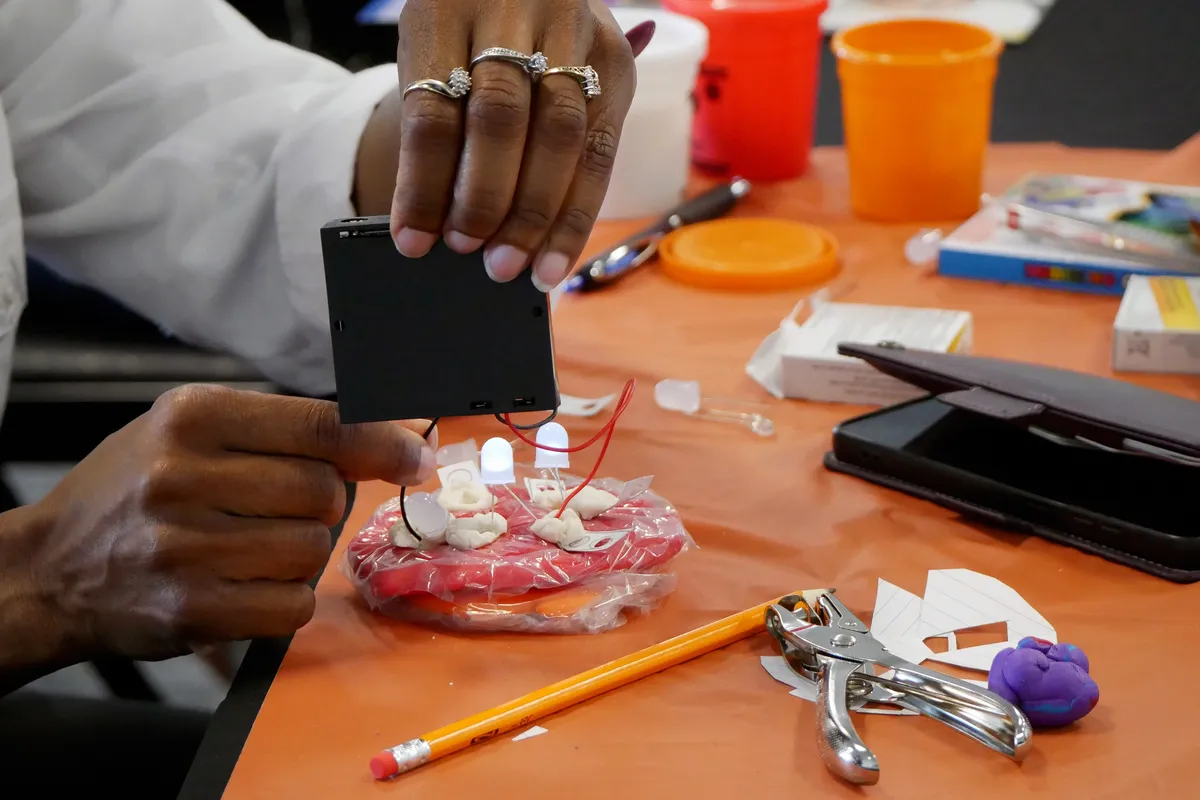
The Institute of Electrical and Electronics Engineers (IEEE), through its Educational Activities division, has completed a new wave of its TryEngineering educator sessions, equipping 54 preuniversity teachers across the United States and Egypt with specialized instructional curricula in artificial intelligence and semiconductor technology, according to a report by IEEE Spectrum. Entering its third year of operations, the professional development initiative pairs classroom-tested lesson plans with direct access to university research laboratories and commercial microelectronics fabrication facilities. By immersing primary and secondary educators in the engineering design process, the program seeks to bridge the gap between advanced technological research and foundational K-12 science, technology, engineering, and mathematics (STEM) instruction.
For the global technology sector and industrial supply chains, early-stage workforce development has emerged as a critical operational bottleneck. As sovereign governments and private semiconductor manufacturers commit substantial capital to expand domestic chip fabrication and artificial intelligence compute infrastructure, the long-term viability of these investments depends heavily on cultivating a sustainable pipeline of domestic engineering talent. By targeting preuniversity educators directly and introducing them to institutional facilities and career pathways, the IEEE TryEngineering framework addresses structural labor shortages at the root of the academic funnel before students select higher education tracks.
University Partnerships and Industrial Facility Immersion
Central to the operational architecture of the TryEngineering program is its network of host universities and research institutes, which open their laboratories to participating educators. At the University of Florida, 15 teachers from across the state convened at the Gainesville-headquartered Florida Semiconductor Institute (FSI) and its NeoCity high-tech manufacturing campus near Orlando. Hosted by Roseanne Perez, an FSI workforce development program specialist, and Sophia Watson, FSI assistant director of workforce development, the two-day session featured hands-on lesson demonstrations facilitated by engineering instructor Mary Acken alongside a guided tour of a SkyWater Technology chip manufacturing facility.
In the American Southwest, Arizona State University welcomed 11 educators to its Tempe campus under the leadership of IEEE member Michael Kozicki and Stefan Myhajlenko from the university's engineering school. Facilitated by Arizona school leader and former program participant Janet Hartkopf, the workshop emphasized collaborative learning, diverse perspectives in engineering education, and practical career trajectories, culminating in a tour of the university's NanoFab microelectronics research facility.
"This training was amazing! I loved the hands-on lessons and e-books, which I will definitely be using with my students. I am excited to explore all the resources on the TryEngineering website. The experts from ASU were great."
Meanwhile, at the University of Minnesota in Minneapolis, 16 STEM educators gathered at the International Institute for Biosensing. Institute director and IEEE member Patricia Khashayar introduced the cohort to the capabilities of the university's Supercomputing Institute and Nano Center. Guided by education and outreach coordinator Claire Dietz and St. Paul College instructor Pam Schumacher—an alumna of last year's cohort—teachers executed classroom-ready lessons, including a photonics experiment utilizing Nano Center instrumentation. Nano Center Director and IEEE Senior Member Sarah Swisher also briefed the educators on semiconductor operations and regional employment trajectories, prompting all 16 participants to plan student field trips to the facility during the upcoming academic year.
Curriculum Deployment and International Footprint
Across the participating cohorts, educators received structured training in the engineering design process and were briefed on specific TryEngineering pedagogical modules, including the "Making of a Microchip" and "Train Your Tree" lesson plans, which translate semiconductor fabrication and machine learning decision trees into accessible classroom exercises. Beyond the United States, the program extended its reach to Cairo, Egypt, where 16 teachers from nine schools participated in a session hosted at the GEMS International School. Facilitated by IEEE member Marwa Soudi and IEEE Senior Member Stamatis Dragoumanos—both past chairs of the IEEE preuniversity coordinating committee—the Cairo workshop utilized the school's STEM facilities to review the "Working With Wind Energy" and "Tall Tower Challenge" curricula.
"I appreciated the time to collaborate with peers on how to implement hands-on lessons."
The current cycle builds directly on institutional momentum established during the previous year, when financial backing from semiconductor supplier Onsemi's Giving Now program enabled nearly 80 educators to attend workshops across five U.S. states and Mexico. Validated by strong educator demand and positive classroom adoption metrics from that cohort, the IEEE Educational Activities Board maintained its institutional backing for the third annual iteration.
Strategic Outlook and Global Expansion
Looking ahead, IEEE Educational Activities is preparing to broaden the international scope of the TryEngineering educator sessions. Additional workshops are already scheduled for later this year in Egypt, alongside newly slated international sessions in Greece and Guatemala. Furthermore, participating teachers from the current U.S. cohorts have initiated plans for follow-up engagements with university faculty and organized campus tours for their students. As technical disciplines such as photonics, microelectronics, and artificial intelligence become increasingly foundational to global economic competitiveness, sustained collaboration between professional engineering bodies, university fabrication labs, and preuniversity school systems will remain essential to preparing the next generation of technical talent.