Hubble Maps Galactic Bulge to Prepare for Roman Telescope
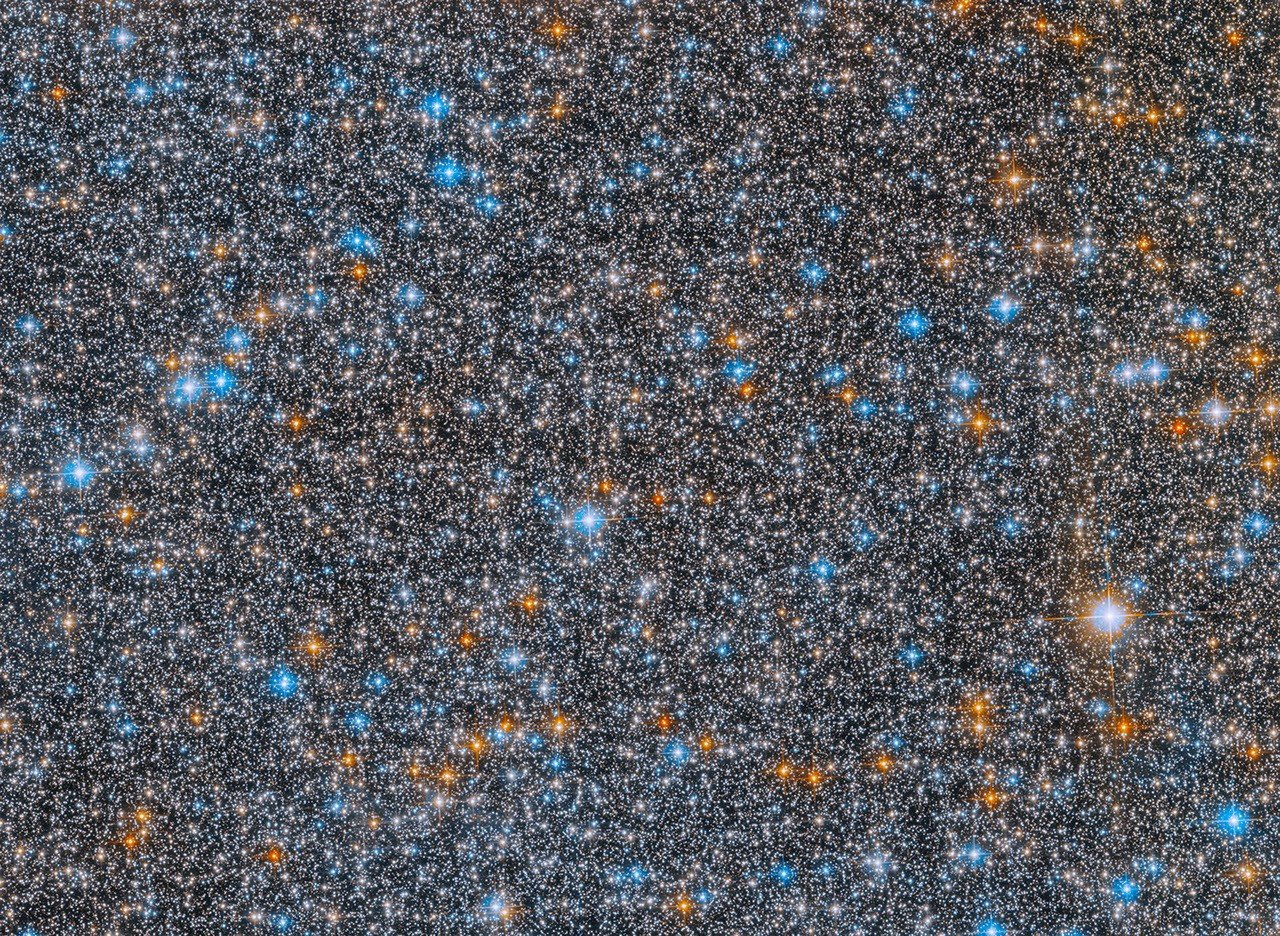
NASA's Hubble Space Telescope surveys a densely packed galactic center, laying crucial technical groundwork for the upcoming Roman Space Telescope.
EXECUTIVE BRIEF // KEY TAKEAWAYS
NASA's Hubble Space Telescope surveys a densely packed galactic center, laying crucial technical groundwork for the upcoming Roman Space Telescope.
WASHINGTON — The Hubble Space Telescope has captured high-resolution imagery of an expansive, multicolored starfield near the center of the Milky Way, serving as a critical observational precursor for the forthcoming Nancy Grace Roman Space Telescope. Disclosed by NASA, the observations target the galactic bulge—a densely packed, spherical concentration of stars surrounding the core of the galaxy's disk. According to NASA news releases, the survey is intentionally designed to help researchers calibrate and better interpret upcoming data streams from the Roman mission as scientists intensify their search for exoplanets and attempt to characterize stellar populations in one of the most crowded regions of the galaxy.
By capturing this dense stellar neighborhood, the Hubble survey addresses a foundational challenge in observational astronomy. While external galaxies display the collective glow of similar central bulges, their extreme stellar density and vast distances typically prevent telescopes from resolving individual stars. The Milky Way’s proximity offers a rare laboratory where astronomers can examine a galactic core in granular detail, providing empirical insights into how galaxies form, evolve, and interact over billions of years. According to disclosing documents, the galactic bulge accounts for nearly a quarter of the entire stellar mass of the Milky Way, making it a prime target for high-priority astrophysical research.
Aligning Optical Wavelengths for Cross-Mission Analysis
To ensure seamless integration with future mission parameters, Hubble targeted the galactic bulge using specific spectral bands. While Hubble operates primarily across ultraviolet, visible, and near-infrared light, the Roman Space Telescope is engineered to collect data predominantly in near-infrared wavelengths alongside a portion of the visible spectrum. To bridge observational datasets between the two instruments, researchers utilized Hubble to image the region in overlapping wavelengths situated at the red end of the visible spectrum and the near-infrared spectrum.
This methodological alignment allows scientists to compare current Hubble archives with future Roman operations directly. S. Terry of the University of Maryland and G. Kober of NASA and the Catholic University of America processed the detailed imagery, which highlights the distinct brightness, relative ages, chemical composition, and proper motion of individual stars. These metrics provide foundational baselines for tracking stellar behavior and isolating anomalies within the galactic core.
Operational Impact on Exoplanet Discovery and Microlensing
The strategic deployment of Hubble's high-resolution instruments directly supports the primary scientific objectives of the Roman Space Telescope, most notably the detection of exoplanets via gravitational microlensing. Microlensing occurs when the gravitational field of a foreground star acts as a natural lens, magnifying and distorting the light of a more distant background star positioned along the same line of sight. Analyzing the specific distortions in the background starlight yields precise clues regarding the mass of the foreground star and the presence of any orbiting planetary bodies.
According to NASA, Hubble’s pre-event observations are vital for characterizing the foreground stars before they undergo a microlensing event. When the Roman Space Telescope detects these transient lensing events months or years down the line, researchers will possess comprehensive baseline data from Hubble. This comparative framework significantly simplifies data interpretation, allowing astrophysicists to confirm planetary discoveries and refine models concerning the distribution of dark matter and hidden black holes within the galactic environment.
Strategic Implications for Space Science and Capital Instruments
The preparatory survey underscores a broader institutional strategy within modern space exploration: maximizing the scientific yield of flagship missions through coordinated, multi-generational telescope deployments. As international space agencies invest billions of dollars in next-generation hardware like the Roman Space Telescope, risk mitigation relies heavily on precursor data gathered by mature assets such as Hubble.
Looking forward, the integration of Hubble’s archival depth with Roman’s wide-field survey capabilities will establish a new benchmark for astrometric precision. As regulatory frameworks and mission timelines evolve for upcoming orbital observatories, the ability to cross-reference high-resolution stellar kinematics across multiple spectral instruments will remain essential for unlocking the mechanical secrets of galactic evolution and detecting terrestrial analogs across deep space.


