Hubble Maps Early Galactic Evolution via Messier 30 Star Cluster
NASA's Hubble Space Telescope captures new high-resolution imagery of globular cluster Messier 30, offering vital data on early galactic formation and stellar evolution.
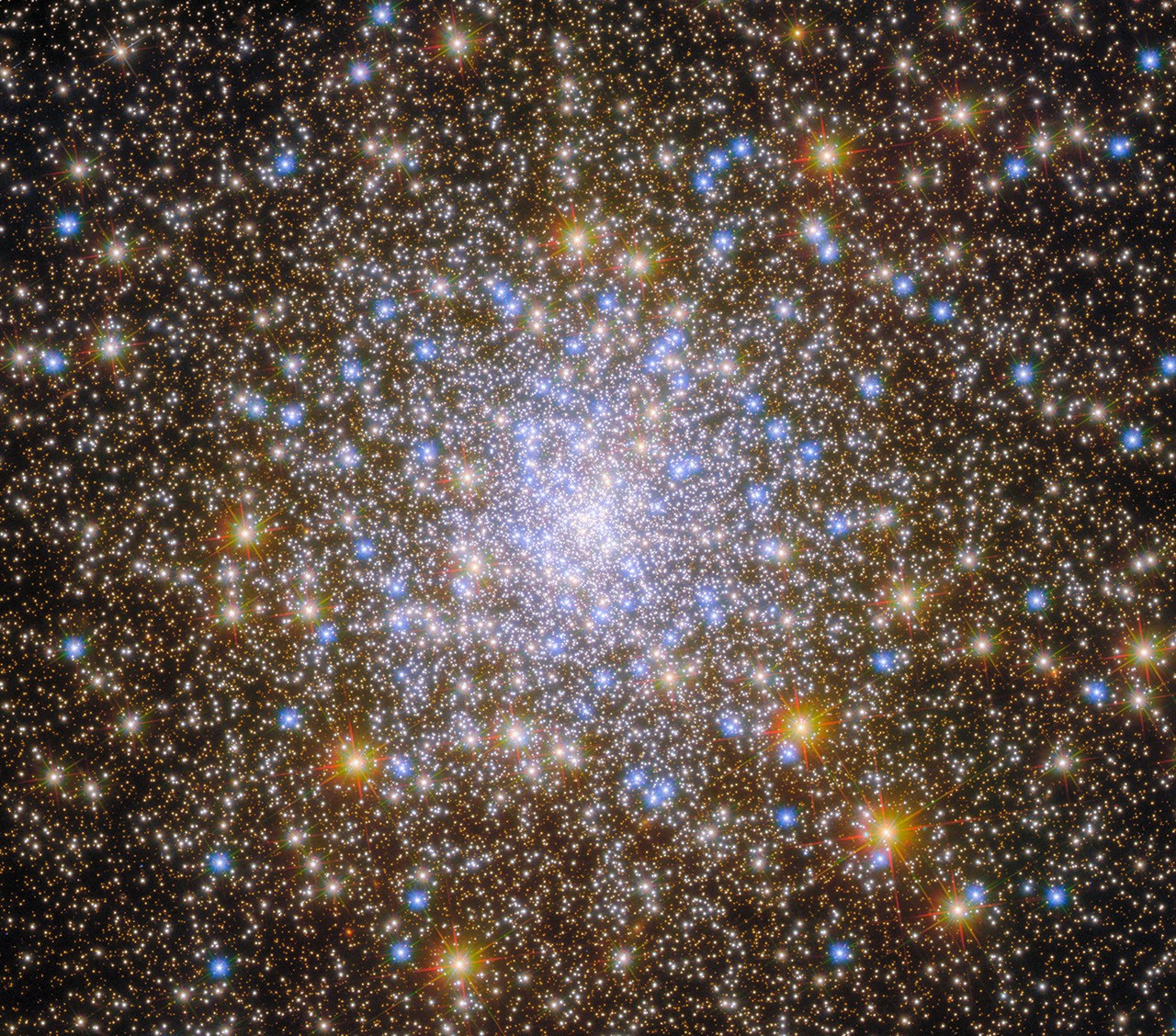
WASHINGTON — The Hubble Space Telescope has delivered new high-resolution astronomical observations of the globular cluster Messier 30, cataloged formally as NGC 7099, providing astrophysicists with critical observational data to reconstruct the early structural history of the Milky Way. According to disclosures released by NASA News Releases, the orbital observatory focused its imaging instruments on this dense concentration of ancient stars to examine how gravitational interactions and stellar aging shape galactic evolution over billions of years.
For the international space science community and orbital instrumentation planners, continued high-precision output from the Hubble Space Telescope underscores the enduring scientific return of legacy orbital assets. Deep-space imaging of globular clusters such as Messier 30 serves as a foundational benchmark for calibrating next-generation space telescopes, refining stellar population models, and understanding the high-density gravitational environments that govern long-term cosmic architecture.
Chronicles of Ancient Stellar Populations
Globular clusters like Messier 30 function as natural astrophysical laboratories, preserving some of the oldest known stellar populations in the universe. Because the stars within NGC 7099 formed from the same primordial cloud of gas and dust at roughly the same cosmic epoch, variations in their current luminosity, temperature, and spatial distribution allow researchers to test theoretical models of stellar lifecycles under uniform initial conditions.
According to NASA News Releases, examining the sparkling collection of stars within Messier 30 enables astronomers to trace the dynamical history of our galaxy from its formative stages to the present era. Unlike open star clusters found within the galactic disk, which disperse relatively quickly due to galactic tidal forces, globular clusters maintain sufficient gravitational binding energy to survive intact for over ten billion years. By resolving individual stars even within the tightly packed central region of NGC 7099, Hubble provides empirical measurements that ground-based observatories often struggle to achieve due to atmospheric distortion.
Gravitational Dynamics and Instrumentation Performance
The operational significance of capturing dense stellar fields lies in the ability to observe complex dynamical processes such as mass segregation and core collapse. Within densely populated environments like Messier 30, frequent gravitational encounters over cosmic timescales cause more massive stars to sink toward the cluster core while lighter stars migrate toward the periphery. High-resolution optical and ultraviolet observations allow scientists to identify exotic stellar remnants and rejuvenated stars, often referred to as blue stragglers, that result from stellar collisions or binary mass transfer in crowded galactic neighborhoods.
From an engineering and observational standpoint, maintaining precise pointing stability and optical resolution is essential for separating light sources separated by fractions of an arcsecond. The data gathered from NGC 7099 feeds directly into public astronomical archives, where computational astrophysics teams apply automated photometry and astrometry pipelines. These datasets reduce uncertainties in galactic age estimates and establish baseline reference frames used by international space agencies to coordinate multi-wavelength sky surveys across optical, infrared, and X-ray spectrums.
Strategic Outlook for Deep-Space Astrometry
Looking ahead, the analytical frameworks refined through Hubble's observations of Messier 30 will directly inform target selection and calibration protocols for upcoming flagship space observatories. As space agencies transition toward wide-field infrared surveys and next-generation ultraviolet-optical telescopes, cross-referencing archival Hubble imagery of NGC 7099 with new multi-epoch measurements will enable unprecedented three-dimensional mapping of internal cluster kinematics.
Sustaining long-baseline observational campaigns remains a priority for orbital mission directors seeking to maximize the scientific lifecycle of existing space infrastructure. By combining Hubble's sharp optical resolution with wide-area astrometric catalogs, researchers are positioned to resolve long-standing questions regarding dark matter distribution in the galactic halo and the merger events that assembled the Milky Way billions of years ago.