Hubble Captures Stellar History Within Globular Cluster Messier 30
A newly released NASA and ESA Hubble Space Telescope observation of Messier 30 offers a high-resolution benchmark for studying ancient galactic evolution.
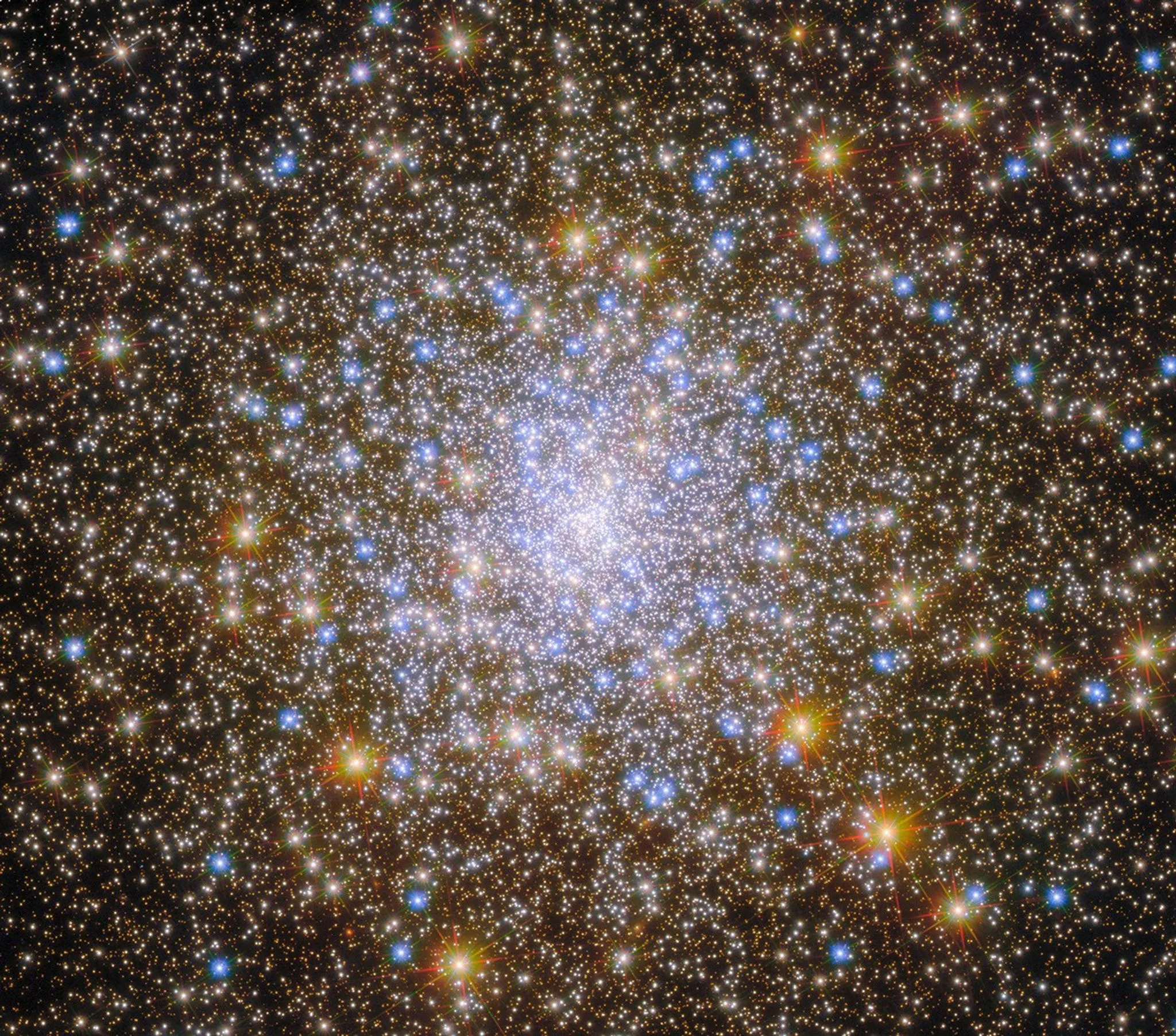
The National Aeronautics and Space Administration (NASA) and the European Space Agency (ESA) released a detailed observation of the globular cluster Messier 30 (M30) on Nov. 5, 2026, captured by the Hubble Space Telescope. As documented in NASA News Releases, the high-resolution image highlights a dense, sparkling concentration of ancient stars that serves as a structural record of early galactic history. Originally cataloged in the 18th century by the French astronomer Charles Messier to help observers distinguish stationary diffuse objects from transient comets, M30 continues to serve modern astrophysics as a vital laboratory for stellar dynamics and deep-space optical calibration.
For the global space science sector, orbital observatory operators, and astronomical data infrastructures, continued high-precision imaging from the Hubble Space Telescope demonstrates the enduring operational value of legacy flagship missions. As space agencies and commercial aerospace contractors design next-generation space telescopes and optical sensor payloads, long-baseline archival datasets of dense stellar fields like Messier 30 provide essential astrometric and photometric reference standards. These datasets directly support instrument calibration, automated star-tracking algorithms, and machine-learning pipelines used across international space research institutions.
Historical Cataloging and Modern Orbital Observation
According to NASA News Releases, the object takes its designation from Charles Messier, who systematically recorded M30 alongside dozens of other nebulous and diffuse sky phenomena. Operating with the refractive and reflective telescopes available during the 1700s, Messier compiled his landmark catalog specifically to prevent fellow astronomers from mistaking permanent deep-sky clusters, nebulae, and galaxies for newly arriving comets. What appeared in early ground-based optical instruments as an indistinct, fuzzy patch of light is resolved by the Hubble Space Telescope into thousands of individual stars bound together by mutual gravitational attraction.
The sparkling collection of stars is named Messier 30 (M30) after the French astronomer, Charles Messier, who cataloged M30 and other diffuse objects that might be mistaken for comets in the early telescopes of Messier's time.
The transition from 18th-century visual cataloging to diffraction-limited space-based imaging illustrates the technological trajectory of observational astronomy. Free from atmospheric distortion, thermal turbulence, and terrestrial light pollution, the NASA/ESA orbital observatory isolates individual stellar populations within crowded cluster cores that remain challenging for ground-based facilities to separate without advanced adaptive optics.
Technical Significance of Globular Cluster Imaging
Globular clusters such as Messier 30 are among the oldest bound stellar structures associated with galactic halos, making them critical benchmarks for modeling how galaxies assemble and evolve over cosmic timescales. Because the stars within a globular cluster generally formed during the same cosmological epoch from a shared reservoir of primordial gas, analyzing their luminosity distribution and spectral characteristics allows researchers to test stellar evolution models under uniform age and chemical composition constraints.
From an engineering and data-processing standpoint, imaging dense globular clusters places stringent demands on spacecraft pointing stability, detector dynamic range, and point-spread function (PSF) reconstruction. Capturing both faint main-sequence stars and luminous red giants within the same exposure field without sensor saturation requires precise exposure scheduling and multi-wavelength filter integration. The resulting telemetry enriches public astronomical archives managed by NASA and ESA, enabling researchers worldwide to perform comparative analyses across optical, ultraviolet, and near-infrared spectra.
Furthermore, dense stellar fields cataloged by flagship observatories routinely serve as geometric calibration targets for newer space-based survey missions and commercial satellite attitude-determination systems. By measuring subtle shifts in stellar positions over decades of Hubble observations, astrometric teams refine kinematic models of internal cluster dynamics, including core collapse processes and gravitational interactions among closely packed stars.
Strategic Outlook for Deep-Space Observatory Operations
The Nov. 5, 2026 release of the Messier 30 observation underscores the ongoing scientific productivity of the joint NASA/ESA Hubble program alongside newer orbital assets. Maintaining continuous multi-decade coverage of foundational Messier objects ensures that astronomical databases retain unbroken observational baselines as international agencies prepare future ultraviolet, optical, and infrared flagship observatories.
Looking ahead, research teams will continue integrating high-resolution optical frames from the Hubble Space Telescope with multi-spectral measurements from complementary space and ground observatories. As automated data-reduction pipelines and archival synthesis tools advance, systematic observations of historic targets like M30 will remain central to verifying cosmological timelines, refining stellar population models, and validating optical hardware performance in deep-space environments.