How One ER Doctor Became Boston Children's Clinical AI Pioneer
As prompt engineering fades, hospitals are turning clinicians into system architects to integrate generative AI safely into clinical workflows.
EXECUTIVE BRIEF // KEY TAKEAWAYS
As prompt engineering fades, hospitals are turning clinicians into system architects to integrate generative AI safely into clinical workflows.
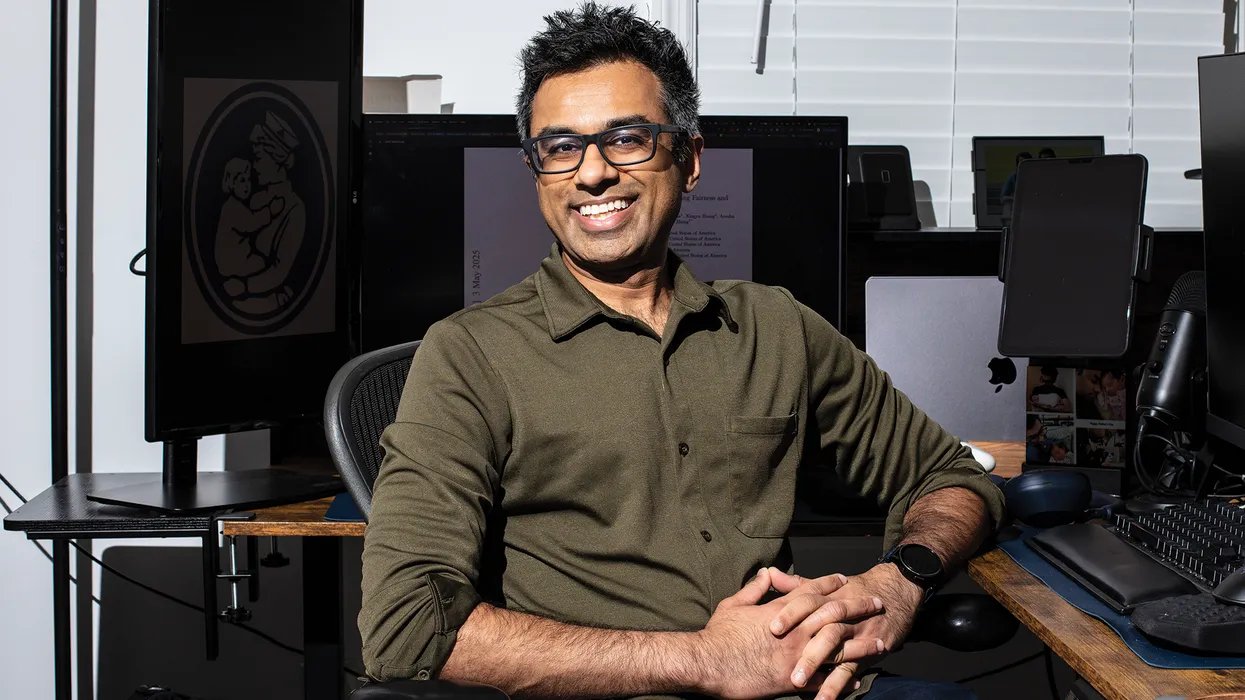
When Boston Children’s Hospital advertised an opening for a prompt engineer in 2023, emergency physician Dr. Dinesh Rai submitted an application despite low expectations of securing the role. At a time when generative artificial intelligence was generating intense commercial hype, prompt engineering was widely championed as a lucrative new vocation. Enterprises across sectors sought specialists capable of extracting optimal performance from large language models through precise phrasing, contextual grounding, and tailored personas. For a medical institution, creating such a position was highly unconventional, yet Rai brought a dual background that bridged acute patient care with software development.
According to IEEE Spectrum, Rai completed an undergraduate degree in supply-chain management and marketing sciences at the Rutgers Business School before earning his Doctor of Medicine from the Albert Einstein College of Medicine. Self-taught in computer programming since 2014—the year he commenced medical training—he subsequently completed a clinical informatics fellowship concentrating on the convergence of patient care and information technology. Following a stint at health care AI firm Pieces leading large language model-based medical summarization projects, Rai joined Boston Children’s in August 2023. Three years into his tenure, however, the fundamental responsibilities of his position have undergone a radical transformation, mirroring the rapid maturation of foundational artificial intelligence models.
The Shift Beyond Basic Prompting
The initial rush to hire prompt specialists has given way to more complex infrastructural challenges as models have grown increasingly sophisticated. John Brownstein, chief innovation officer at Boston Children’s Hospital, noted that while the organization initially required specialized internal knowledge to navigate early AI adoption, elaborate prompt structuring has since receded in operational importance. The primary obstacle facing modern health care systems is no longer how to query a model, but rather how to securely embed artificial intelligence into daily operational routines and evaluate whether system outputs merit clinical trust.
“Knowing how to prompt AI properly was going to be the job function of the future,” says John Brownstein, chief innovation officer at Boston Children’s. “How do you embed these tools in your day-to-day operations? How do you build agents to manage literally everything that you do?”
For Rai, this operational pivot necessitated expanding his professional scope far beyond the initial job description. Operating formally as a clinical AI engineer, Rai divides his time equally between technical engineering tasks—such as collaborating with developers, writing underlying code, and advancing software projects—and direct consultations with medical staff to identify genuine clinical needs.
Operational Impact and Clinical Doppelgangers
This hybrid professional identity has allowed Rai’s team to tackle sophisticated technological initiatives tailored to specialized pediatric care. One prominent development is the 'clinical doppelgangers' project, engineered to assist physicians managing complex cases by surfacing historical patient data with relevant diagnostic similarities. Because conventional medical guidelines rely predominantly on broad population averages, individual pediatric patients presenting with rare conditions frequently fall outside published parameters. The system enables clinicians to review past trajectories and therapeutic outcomes of similar historical cases, providing an auxiliary layer of evidence when formal literature offers sparse guidance.
Such deployments demand deep familiarity with both underlying health records and clinical reasoning to prevent critical analytical errors. During a recent collaborative initiative involving medical and development teams, engineers and clinicians debated the optimal volume of historical patient data to feed into an AI model for outcome prediction. While developers assumed exhaustive data ingestion would maximize utility and clinicians assumed the model would naturally filter out irrelevant variables, Rai identified critical flaws in both premises. Unstructured large language models frequently synthesize plausible explanations for clinical anomalies even when supporting evidence is absent, risking diagnostic hallucination.
“That’s where the dual perspective has been valuable,” Rai observes, “not just translating between teams, but recognizing when an approach that looks reasonable from either perspective rests on assumptions we shouldn’t make.”
Strategic Outlook for Health Tech Careers
As health care institutions accelerate AI deployment, validating model outputs against underlying patient records and mitigating risks of clinician over-reliance remain paramount. To ensure safety, Rai’s teams systematically incorporate human-in-the-loop validation, requiring frontline specialists—such as cardiac intensive care nurses—to review generated clinical documentation prior to finalization. Although institutional skepticism persists, leadership views cautious adoption as a healthy mechanism for building sustainable trust.
Looking ahead, industry experts emphasize that future career pathways in clinical artificial intelligence will prioritize domain expertise over specific software mastery. While foundational programming and machine learning proficiency remain valuable for hands-on engineering roles, the most durable asset is a comprehensive understanding of medical workflows, electronic health record architectures, and systemic failure points. As Rai notes, the true value lies not merely in eliciting a response from an algorithmic model, but in understanding the contextual parameters required to validate its clinical reliability.


