Engineering Overhead Power Lines to Survive Severe Ice and Wind Loads
New engineering research details how messenger-supported spacer cables and corridor-level load analysis strengthen grid resilience against winter storms.
EXECUTIVE BRIEF // KEY TAKEAWAYS
New engineering research details how messenger-supported spacer cables and corridor-level load analysis strengthen grid resilience against winter storms.
Electric utilities and grid engineers are reassessing overhead distribution line design standards to address the compounding mechanical failures caused by simultaneous freezing rain, wind loading, and vegetation contact, according to technical documentation published via IEEE Spectrum and Wiley Knowledge Hub. Rather than evaluating weather hazards in isolation, updated engineering frameworks examine how ice accretion alters conductor aerodynamics while multiplying structural tension across poles, brackets, and foundations.
The push for stronger overhead distribution infrastructure comes as power grid operators face rising electricity demand from industrial electrification and high-density computing infrastructure. When severe winter weather disables distribution circuits, prolonged outages disrupt commercial operations and force utilities into costly emergency restoration cycles. By evaluating complete mechanical load paths and comparing alternative cable architectures at the corridor level, grid planners can identify structural bottlenecks before cascading failures occur.
Compounding Weather Mechanics and Historical Grid Vulnerability
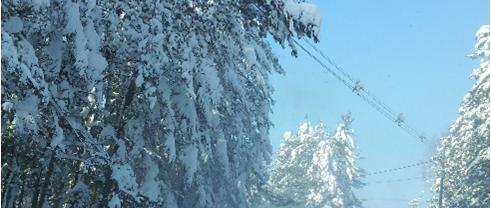
According to the technical white paper, winter precipitation affects overhead lines through distinct physical mechanisms depending on atmospheric conditions. Freezing rain, rime ice, and wet snow each add significant dead weight to overhead conductors while simultaneously altering their cross-sectional profile. Once an ice sleeve forms around a line, even a moderate breeze can govern structural design limits by exerting amplified drag and lift forces on the enlarged surface area.
These aerodynamic shifts frequently trigger conductor galloping—a low-frequency, high-amplitude mechanical oscillation that stresses hardware attachments and brings phase conductors into contact, causing flashovers and circuit lockouts. Concurrently, ice-laden tree limbs overhanging distribution rights-of-way often snap or sag into energized spans, creating simultaneous mechanical and electrical faults.
"A moderate wind on a heavily iced line can govern design, while galloping and vegetation contact create cascading outages across vulnerable distribution corridors."
Historical utility performance data underscores the operational toll of these compound events. Utility records analyzed from the December 2008 Northeast ice storm demonstrate sharp disparities in circuit availability and restoration timelines across different overhead construction standards, highlighting how conventional bare-wire configurations struggle under concurrent ice and tree-contact stresses.
Comparing Bare, Covered, and Spacer Cable Architectures
To mitigate storm-driven outages, the research compares three primary overhead distribution configurations: traditional bare conductors, standard covered conductors, and messenger-supported spacer cable systems. Monitored severe-weather test data tracking real-time tension changes reveals critical mechanical differences among the three options when subjected to heavy ice and wind loads.
In a messenger-supported spacer cable system, the electrical function of the covered phase conductors is physically separated from the primary mechanical load path. A high-strength messenger wire situated above the phase bundle carries the tensile load and absorbs the physical impact of falling branches, while polymeric spacers maintain consistent phase-to-phase clearances in compact corridors. Covered conductors prevent immediate short circuits during brief tree contact, and the supporting messenger prevents the conductors from snapping under combined ice and wind tension.
However, upgrading conductor strength requires a holistic structural review. Engineers must verify the complete load path across utility poles, mounting brackets, guying assemblies, and soil foundations. Reinforcing the wire without validating pole and foundation capacity can shift the point of failure from the conductor to the supporting timber or steel structure during extreme loading events.
Corridor-Level Assessment and Operational Safety Outlook
Moving forward, distribution planners are shifting from component-by-component replacements toward corridor-level resilience modeling. By analyzing terrain exposure, tree canopy density, and historical outage records along an entire feeder path, engineers can selectively deploy messenger-supported spacer cables in high-risk wooded segments while maintaining conventional spans in lower-risk zones.
Implementing these hardened overhead systems also requires strict adherence to energized-line safety rules and updated maintenance protocols. Because covered conductors retain surface voltage potential and require specialized grounding and live-line handling procedures, utility field crews must integrate mechanical load-path verification with rigorous operational safety standards as grid modernization accelerates.


