Engineering Overhead Lines to Withstand Severe Weather
New IEEE Spectrum white paper details how engineers can assess overhead distribution grids to withstand ice, wind, and freezing rain.
EXECUTIVE BRIEF // KEY TAKEAWAYS
New IEEE Spectrum white paper details how engineers can assess overhead distribution grids to withstand ice, wind, and freezing rain.
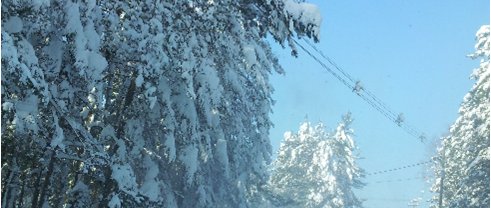
A new engineering white paper published via IEEE Spectrum and sourced through Wiley addresses the compounding mechanical stresses that severe weather places on overhead distribution lines. According to the disclosing publication, environmental factors such as ice, wind, and vegetation frequently load electrical lines simultaneously, presenting complex structural challenges for power grid operators. The technical literature outlines how freezing rain, rime ice, and wet snow increase the weight load on conductors while simultaneously altering their aerodynamic shape when exposed to wind. By examining complete utility corridors rather than isolated components, transmission and distribution engineers gain actionable frameworks to evaluate mechanical resilience options and mitigate cascading grid failures during extreme meteorological events.
For global capital markets and technology-driven utilities, the structural integrity of electrical distribution networks is a paramount economic driver. As extreme weather events increase in frequency, grid reliability directly influences industrial productivity, commercial continuity, and capital expenditure allocations. Traditional grid engineering models often underestimate the combined vector forces of simultaneous ice accumulation and high winds. Understanding these multi-variable load paths allows utility executives and asset managers to optimize infrastructure investments, reduce costly downtime, and deploy advanced materials that protect long-term corporate valuation against climate-related operational risks.
Evaluating Multi-Variable Stress Factors and Conductor Dynamics
The technical documentation emphasizes that moderate winds blowing against a heavily iced conductor can easily govern structural design requirements, surpassing the nominal wind-load parameters typically used in basic engineering formulas. Furthermore, the publication highlights how phenomena such as conductor galloping and unintended vegetation contact are primary catalysts for unexpected grid outages. When wind interacts with asymmetric ice formations on power lines, it induces low-frequency, high-amplitude mechanical oscillations known as galloping, which can severely fatigue hardware, snap lines, and trigger phase-to-phase short circuits.
To combat these mechanical vulnerabilities, the white paper instructs engineers on the implementation of specialized infrastructure designs, such as messenger-supported spacer cable systems. These advanced configurations effectively separate the electrical function of covered conductors from the primary mechanical load path, providing superior physical protection against tree branches and wind-induced clashing. According to the source material, utility engineers can leverage monitored severe-weather test data to accurately compare tension changes across bare conductor systems, traditional covered lines, and modern spacer cable arrays under identical stress conditions.
Corridor-Level Assessment and Historical Storm Data
Operational strategies detailed in the publication stress the necessity of evaluating entire utility corridors rather than focusing exclusively on individual spans. Engineers must thoroughly check the full mechanical load path—encompassing poles, mounting brackets, and subterranean or surface foundations—to ensure uniform structural resilience. The white paper incorporates critical lessons drawn from historical utility records, specifically analyzing the performance of circuits during the devastating December 2008 Northeast ice storm. These empirical datasets provide vital benchmarks regarding circuit availability, failure modes, and restoration timelines under catastrophic icing scenarios.
In addition to structural and mechanical assessments, the publication outlines stringent safety protocols for maintenance crews operating near stressed assets, emphasizing compliance with energized-line safety rules. By synthesizing historical storm data with rigorous mechanical evaluations, utilities can better anticipate vulnerabilities across their sprawling transmission footprints.
Strategic Implications for Grid Modernization and Regulation
Looking ahead, the strategic implications of these engineering findings extend deeply into regulatory compliance and long-term grid modernization initiatives. As regulatory bodies enforce stricter reliability standards and mandate higher penalties for extended power outages, utility operators must adopt sophisticated infrastructure assessment tools. The integration of messenger-supported spacer cables and comprehensive corridor-level stress analysis represents a fundamental shift in how power companies defend critical energy infrastructure against intensifying weather patterns.
Future capital allocation strategies will increasingly depend on empirical test data and historical storm performance metrics to justify grid-hardening expenditures before utility commissions. Adopting these advanced engineering frameworks enables energy providers to proactively address regulatory hurdles, enhance public safety, and ensure uninterrupted power delivery for modern enterprise economies.


