Engineering NASA's Europa Clipper for Jovian Radiation
NASA's Europa Clipper mission leverages innovative trajectory design and radiation-hardened electronics to search for life near Jupiter.
EXECUTIVE BRIEF // KEY TAKEAWAYS
NASA's Europa Clipper mission leverages innovative trajectory design and radiation-hardened electronics to search for life near Jupiter.
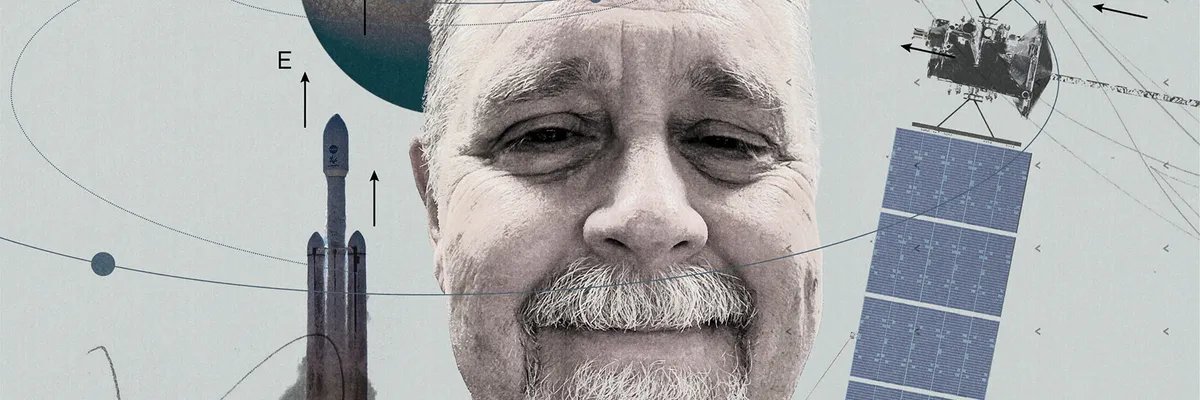
On Dec. 3, 2026, a massive 30.5-meter-wide space probe is scheduled to execute a critical gravity assist past Earth, securing the necessary velocity vector to rendezvous with Jupiter by 2030. According to disclosures provided to IEEE Spectrum, the NASA spacecraft known as the Europa Clipper is engineered to investigate Jupiter’s enigmatic moon Europa, specifically examining subsurface environments within the global ocean hidden beneath a thick crust of ice. Tim Larson, project manager for the mission at the Jet Propulsion Laboratory (JPL) in Pasadena, California, with more than 35 years of tenure at the facility, detailed the intricate engineering undertakings required to design, construct, and fly the interplanetary probe. The mission profile marries aerospace propulsion mechanics, advanced radiation-hardening strategies, and long-term knowledge preservation techniques to ensure operational survivability across a multi-year timeline in the harsh Jovian system.
As deep-space exploration pivots toward astrobiological discovery in the outer solar system, the architectural paradigms governing planetary missions are shifting. Interplanetary architecture must now account for extreme thermal dynamics, severe radiation belts, and complex multi-body gravitational mechanics. The meticulous balancing act of maximizing payload utility while mitigating systemic hardware degradation offers crucial blueprints for future commercial space enterprise, high-reliability robotics, and capital-intensive remote sensing infrastructure deployed in hostile environments.
Trajectory Mechanics and the Falcon Heavy Launch Profile
The intricate routing required to deliver the Europa Clipper to the Jovian system stems from the initial parameters established by its launch vehicle. As Tim Larson explained to IEEE Spectrum, the mission trajectory relies entirely on the energy imparted by a Falcon Heavy rocket, which established what mission planners designate as a MEGA trajectory—standing for Mars-Earth Gravity Assist. Approximately four months following launch, the probe executed a flyby of Mars to harness gravitational momentum before swinging back toward Earth for the upcoming December 2026 maneuver.
"That’s all driven by the energy that we got from our launch vehicle, the Falcon Heavy," Larson told IEEE Spectrum, detailing the celestial mechanics that bypass the need for direct, high-energy chemical propulsion phases. This roundabout orbital mechanics approach circumvents the severe mass constraints typically associated with outer planet exploration, allowing the spacecraft to carry a comprehensive suite of remote-sensing instrumentation without exceeding launch payload capacities.
Overcoming Jovian Radiation via Synchronized Flybys and Solar Arrays
Operating a spacecraft in the immediate vicinity of Jupiter presents formidable environmental challenges, chief among them being the planet's immense radiation belts. A direct, continuous orbit around Europa would expose sensitive instrumentation and avionics to radiation levels that would cause catastrophic electronic failure in short order. To circumvent this operational bottleneck, mission designers at JPL devised a series of approximately 50 targeted flybys rather than a direct lunar orbit.
"The big challenge is the radiation environment," Larson noted. "It is so intense that any spacecraft orbiting Europa wouldn’t last very long. So the mission designers came through with this concept of the flybys." The spacecraft will maintain a three-week orbit around Jupiter, dynamically synchronized so that every orbital loop brings the probe into close proximity with Europa. This configuration ensures that the spacecraft spends minimal time lingering in high-radiation zones while dedicating the vast majority of its orbital period to benign regions where accumulated telemetry can be safely downlinked to Earth.
Furthermore, while traditional outer-planet probes frequently rely on compact radioisotope thermoelectric generators (RTGs), the Europa Clipper utilizes large solar arrays. Larson emphasized that national policy restricts RTG utilization to cases of absolute necessity. Because the flyby architecture prevents the spacecraft from lingering perpetually in the shadow of Jupiter, engineers successfully established the feasibility of photovoltaic power generation.
Avionics Hardening and Long-Term Knowledge Management
Protecting the probe's internal electronics required unprecedented levels of radiation tolerance across all primary components. Housed within the main avionics module—referred to by the engineering team as "the vault"—internal systems are engineered to withstand a baseline exposure of 150 kilorads, equivalent to 1,500 sieverts. To maintain a rigorous engineering safety factor of two, mission planners procured commercial and specialized parts rated up to 300 kilorads.
This procurement strategy introduced secondary engineering hurdles, as components possessing high radiation tolerance do not always match standard functional specifications or physical form factors, requiring bespoke circuit modifications. Additionally, preserving fine-grained technical expertise over a mission lifespan spanning decades requires robust documentation protocols. Larson noted that the team systematically captures spacecraft idiosyncrasies in centralized databases while actively studying how artificial intelligence can ingest and parse multi-format datasets to streamline engineering personnel transitions.
Strategic Implications for Deep Space Operations
The operational methodologies pioneered during the development of the Europa Clipper establish a rigorous baseline for future interplanetary enterprises. By demonstrating that solar power remains viable through optimized trajectory synchronization, and by setting new benchmarks for component-level radiation hardening, the mission expands the technical envelope for deep-space robotics. As aerospace engineers confront increasingly stringent regulatory and fiscal demands, the synthesis of advanced trajectory planning, redundant avionics protection, and AI-driven knowledge retention will serve as a foundational paradigm for commercial and institutional space exploration well into the next decade.


