The Death of 'El Padrino' Closes the Era of Centralized Narco-Capitalism as Fragmented Cartels Threaten U.S.-Mexico Nearshoring
The passing of Guadalajara cartel founder Miguel Ángel Félix Gallardo marks the formal end of Latin America’s unified narcotics monopoly, illuminating how decentralized crime syndicates now complicate North American trade corridors and manufacturing security.
EXECUTIVE BRIEF // KEY TAKEAWAYS
The passing of Guadalajara cartel founder Miguel Ángel Félix Gallardo marks the formal end of Latin America’s unified narcotics monopoly, illuminating how decentralized crime syndicates now complicate North American trade corridors and manufacturing security.
GUADALAJARA, Mexico — The death on Sunday of 80-year-old Miguel Ángel Félix Gallardo inside a specialized medical facility in Jalisco formally brings to a close the foundational chapter of modern cross-border illicit enterprise. Known throughout the 1980s as El Padrino (“The Godfather”) and El Jefe de Jefes, the former federal judicial police officer turned contraband pioneer constructed the Guadalajara Cartel—the first unified logistics federation that industrialized the transit of South American cocaine into North American consumer markets.
According to formal communiqués issued by the Jalisco State Security Secretariat, Félix Gallardo succumbed to progressive multi-organ and respiratory failure following years of acute medical degradation while serving a 40-year sentence for orchestrating the 1985 kidnapping, torture, and assassination of U.S. Drug Enforcement Administration (DEA) special agent Enrique “Kiki” Camarena.
Yet for international trade economists, corporate risk directors, and manufacturing conglomerates navigating the modern U.S.-Mexico border, the demise of Latin America’s original syndicate architect arrives at a pivotal structural inflection point. The centralized monopoly model pioneered by Félix Gallardo has long since fractured into an anarchic constellation of predatory, multi-commodity syndicates that directly threaten the hundreds of billions of dollars currently flowing into North American industrial nearshoring.
From Corporate Monopoly to Guerilla Market Fragmentation
In the late 1970s and 1980s, Félix Gallardo operated less like a street-level gang chieftain and more like the chief executive of an unsanctioned transnational transport conglomerate. By establishing formal alliances with Colombia’s Medellín and Cali cartels, he transformed Mexico from a secondary producer of low-grade marijuana and black-tar heroin into the indispensable maritime and overland transit turnstile for global cocaine distribution.
Crucially, Félix Gallardo maintained territorial stability through institutional co-optation and an internal federation structure, parceling out border transit plazas—Tijuana, Ciudad Juárez, Matamoros, and Sonora—to regional lieutenants under a unified code of non-interference. His dramatic arrest in April 1989 shattered this fragile equilibrium.
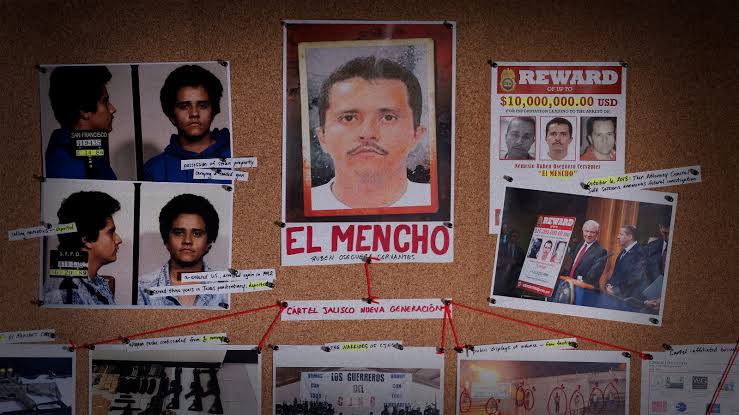
Deprived of centralized executive coordination, the Guadalajara syndicate splintered into rival dynasties: the Sinaloa Cartel under Joaquín “El Chapo” Guzmán, the Tijuana Cartel controlled by the Arellano Félix brothers, the Juárez Cartel led by Amado Carrillo Fuentes, and ultimately the militarized vanguard of the Cártel Jalisco Nueva Generación (CJNG). Over the ensuing three decades, competition evolved from market-sharing agreements into hyper-violent territorial warfare characterized by drone warfare, advanced telemetry surveillance, and heavy ballistic interdiction.
The Nearshoring Collision: Cross-Border Supply Chains Under Siege
The contemporary consequence of this structural devolution is increasingly felt on corporate balance sheets in Detroit, Austin, and Monterrey. Under the United States-Mexico-Canada Agreement (USMCA) and broader Western efforts to de-risk critical manufacturing dependencies away from East Asia, Mexico has emerged as the premier beneficiary of industrial nearshoring, absorbing historic capital inflows across automotive assembly, semiconductor packaging, medical devices, and clean energy components.
However, modern fragmented syndicates have aggressively diversified their revenue models beyond narcotics trafficking into predatory economic extortion. Industrial parks, overland freight carriers, and commercial rail links along critical north-south arterial highways—such as Federal Highway 57 connecting Mexico City to the Texas border—increasingly face systematic logistics hijacking, fuel theft (huachicol), and commercial cargo looting.
“Félix Gallardo operated an illicit monopoly that insulated formal commerce from street-level predation because systemic disruption drew federal and cross-border heat,” explained Arthur Pendelton, senior markets and sovereign risk strategist at The OmniWire. “Today’s third-generation cartels operate with zero central governance. They treat legitimate corporate supply chains as extraction targets. For multinational manufacturers building billion-dollar facilities in northern Mexico, physical transport security has evolved from an incidental operating cost into a major threat to just-in-time inventory models.”
Corporate Insurance Premiums and the Security Premium
According to industrial transport metrics compiled by Mexican carrier associations and global risk consultancies, cargo theft and logistics extortion have inflated private corporate security budgets by 18 to 25 percent across border-state manufacturing corridors over the past three fiscal years. Multinationals routinely mandate armored convoy escorts, satellite-guided engine interlocks, and dedicated telemetry response centers simply to move finished automotive sub-assemblies to ports of entry in Laredo and El Paso.
While the physical passing of El Padrino closes the personal chronology of Mexico’s first narco-oligarch, the institutional vacuum created by his legacy remains the preeminent geopolitical vulnerability hovering over North American economic integration. As Washington and Mexico City prepare for the mandatory six-year review of the USMCA, the security of industrial freight arteries will share equal billing with labor standards and rule-of-origin tariffs.
In the final analysis, Félix Gallardo demonstrated the devastating power of centralized transnational logistics; the fragmented inheritors of his empire now illustrate the enduring economic friction of their collapse.