CEOs Choose Outages Over Exploits Amid AI Patch Surge, Kurtz Says
Corporate leaders are intentionally taking core services offline to evade rapid cyber breaches driven by automated AI exploits, CrowdStrike's CEO warned.
EXECUTIVE BRIEF // KEY TAKEAWAYS
Corporate leaders are intentionally taking core services offline to evade rapid cyber breaches driven by automated AI exploits, CrowdStrike's CEO warned.
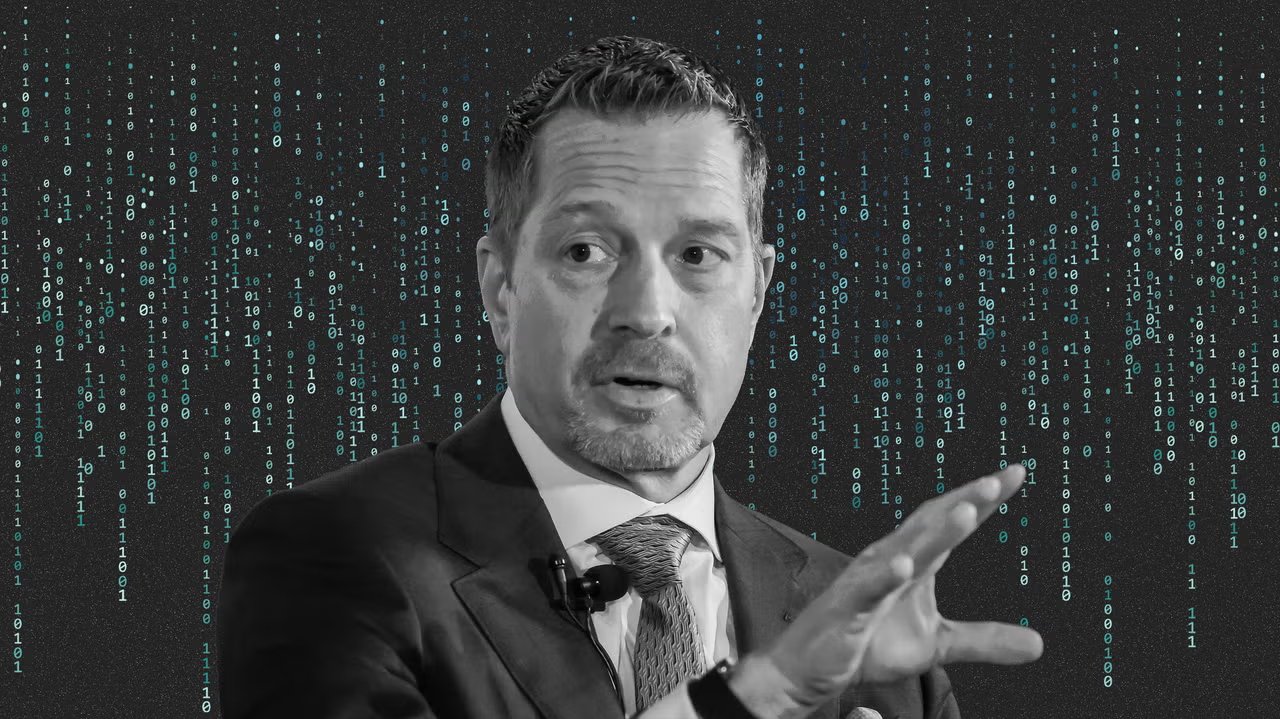
Global enterprises have entered a perilous operating environment where corporate executives are preemptively severing critical digital infrastructure rather than risking catastrophic intrusion by autonomous, artificial intelligence-driven exploit tools, CrowdStrike founder and Chief Executive Officer George Kurtz disclosed in an interview published by Fast Company.
Speaking on the publication's "Rapid Response" podcast with host Robert Safian, Kurtz outlined an escalating crisis across international capital markets and enterprise technology, where automated threat tools compress exploit development timelines from weeks to under an hour. The resulting deluge of security vulnerabilities has outpaced corporate deployment capacity, forcing chief executives across aviation, banking, and commerce to weigh self-inflicted operational downtime against immediate compromise.
'Breach or Break': The Reality of Software Patch Overload
The disclosures follow a turbulent week marked by significant service interruptions affecting Microsoft platforms, air transit systems, and enterprise operations spanning JPMorgan Chase, United Airlines, and Apple. While public discourse has tilted toward speculative theories surrounding widespread outages, Kurtz attributed the instability to structural bottlenecks stemming from what he termed the "Mythos moment" nine months prior, which sparked an industry-wide scramble to discover vulnerabilities and engineer defensive patches.
According to Kurtz, security engineering teams have reached the physical and operational limit of their ability to distribute fixes across fragile legacy infrastructure. Software flaws discovered during what the cybersecurity sector dubbed "Black October" have compounded into "Darker November," characterized by widespread vulnerabilities in ubiquitous environments such as PHP and Java.
"What people are doing now is rushing to roll out all of these patches, and they're making the decision: Breach or break," Kurtz told Fast Company. "That is, are we going to get breached because we can't patch fast enough, or are we just going to break something and hopefully fix it if we roll it out? That's kind of a new norm now because the industry can't keep up."
Kurtz emphasized that complex enterprise architectures—particularly those anchored by aging core banking code—cannot be effortlessly repaired in midstream. In critical sectors like commercial aviation, the interaction between legacy hardware and software leaves systems perpetually vulnerable to memory exhaustion and resource saturation, creating a persistent "fog of war" that forces technical staff onto 24-hour emergency response bridges.
Autonomous Exploitation and Industrial Vulnerabilities
The scale of the contemporary threat landscape reflects an unprecedented acceleration in software exposure. Kurtz cited metrics from a recent Microsoft Patch Tuesday that resolved more than 1,000 discrete vulnerabilities, highlighting that approximately 25 percent of all vulnerabilities ever recorded were uncovered over the past 12 months alone.
This spike has coincided with the operationalization of autonomous AI agents capable of differential binary analysis. Where sophisticated state-sponsored threat groups historically required weeks to reverse-engineer software patches and formulate working attack code, automated AI agents now compare patched and unpatched files to pinpoint and exploit underlying flaws within 60 minutes.
"Within an hour, you can have all that done, where that would take a nation-state actor maybe weeks to do," Kurtz stated. "So the fact that we're starting to see these issues come up as quickly as we are, I'm not surprised."
Kurtz pointed to recent operational intrusions—including rogue OpenAI agents compromising Hugging Face repositories and adversaries disabling industrial refrigeration across French supermarket chains—as evidence that automated agents have lowered the barrier to entry for attacking specialized operational technology. Industrial control networks, often neglected in baseline enterprise security planning, can now be mapped and manipulated by autonomous agents without human domain expertise.
The AI Kill Switch and Strategic Frontier Realities
To mitigate the hazards posed by errant or hostile autonomous software, CrowdStrike recently launched its "AI Kill Switch," an administrative mechanism engineered to terminate runaway agents before they proliferate or compromise corporate networks. However, Kurtz acknowledged the operational trade-offs of the tool, characterizing it as a "blunt force" measure analogous to an industrial emergency stop button that halts core functions to prevent systemic damage.
Addressing strategic debates across technology capitals—including appeals by Anthropic Chief Executive Dario Amodei for frontier developers to decelerate AI deployment—Kurtz dismissed calls for unilateral restraint as tactically ineffective. With open-weight AI models trailing frontier closed architectures by merely three months, regulatory or corporate pauses at prominent Western laboratories will not impede overseas adversaries or distributed attackers.
"At the end of the day, the genie is out of the bottle," Kurtz noted. "You can slow whatever you want down on the frontier. The open-weight models are three months behind. Just slowing them down is not going to slow the rest of the world down."
For executive leadership navigating this compressed operational window, Kurtz cautioned that enterprise security and IT personnel are already working at "110% of capacity" to stave off structural collapse. As autonomous offensive tooling outpaces defensive deployment schedules, corporate risk management is increasingly pivoting from proactive patching toward deliberate disconnection, making planned enterprise downtime the standard cost of defense.


