Rock Weathering Carbon Capture Threatens Crop Yields, Studies Find
Spreading alkaline rock to capture carbon could depress agricultural yields, slashing the climate strategy's projected capacity, a CarbonPlan study warns.
EXECUTIVE BRIEF // KEY TAKEAWAYS
Spreading alkaline rock to capture carbon could depress agricultural yields, slashing the climate strategy's projected capacity, a CarbonPlan study warns.
A cornerstone carbon dioxide removal strategy heavily financed by global technology conglomerates faces profound operational limitations after scientific research revealed that spreading crushed alkaline rocks across agricultural soils could ultimately diminish food crop yields, according to a pair of preprint studies reported exclusively by MIT Technology Review.
The revelation directly challenges the risk modeling and capital allocation strategies underpinning hundreds of millions of dollars in corporate decarbonization contracts signed by industry titans, including Alphabet Inc.'s Google and Microsoft Corp. While enhanced rock weathering had been positioned by climate tech developers as a dual-benefit climate solution capable of permanently locking away gigatons of atmospheric carbon while simultaneously enriching soil quality, the emergence of agricultural productivity risks threatens to compress the total viable scale of the sector and trigger contractual liabilities across voluntary carbon markets.
Scientific Foundations and Scalability Doubts
Enhanced rock weathering, commonly abbreviated as ERW, seeks to artificially accelerate the planet's slow geochemical carbon cycle. Under baseline natural conditions, atmospheric precipitation absorbs carbon dioxide as it falls, producing a mild carbonic acid. When that precipitation makes contact with exposed silicate minerals, the weak acid chemically dissolves the rocks, generating dissolved calcium, magnesium, and bicarbonate. These geochemical compounds are subsequently transported through local watersheds, creeks, and rivers toward the oceans. Over extended geological periods, marine calcifying organisms including mollusks and corals integrate these chemical constituents into calcium carbonate shells, which ultimately settle onto the ocean floor to form stable limestone rock.
Commercial carbon removal startups seek to compress this millennial process into human timescales by crushing volcanic silicate rocks, such as basalt or olivine, into high-surface-area particulates and dispersing them over expansive agricultural acreage. Because the method utilizes standard farm spreading equipment and avoids the massive electrical power footprints and specialized industrial infrastructure required by direct-air-capture facilities, it rapidly emerged as a favored vehicle for enterprise carbon credit procurement.
However, the new analytical evaluations led by researchers at CarbonPlan, a San Francisco-based nonprofit research institution celebrated for its technical vetting of carbon removal claims, demonstrate that repetitive, high-volume soil amendments can induce detrimental agronomic thresholds that threaten harvest productivity.
“There’s still a heck of a lot we need to learn about ERW,” said Tyler Kukla, a research scientist at CarbonPlan and lead author of the new reports. “But a real tension, to me, exists between this massive amount of uncertainty and the big questions we have about whether or not this works, sitting alongside tremendous efforts to scale it up really quickly.”
Economic Pressures and Capacity Reductions
The agronomic ceiling identified by CarbonPlan substantially degrades the commercial projections that catalyzed corporate investment into the methodology. Influential scientific models had widely projected that planetary deployment of enhanced rock weathering could sequester between 3 billion and 8 billion metric tons of atmospheric carbon dioxide annually, framing the approach as a critical mechanism for planetary climate stabilization.
According to the CarbonPlan researchers, curtailing mineral application density to preserve soil fertility and protect farmer livelihoods will force an immediate, dramatic contraction in the aggregate carbon removal capacity of the sector. When constrained to levels that prevent agricultural damage, the global carbon removal potential of the technique is expected to be capped at under 1 billion metric tons per year, representing a steep reduction from prior climate modeling estimates.
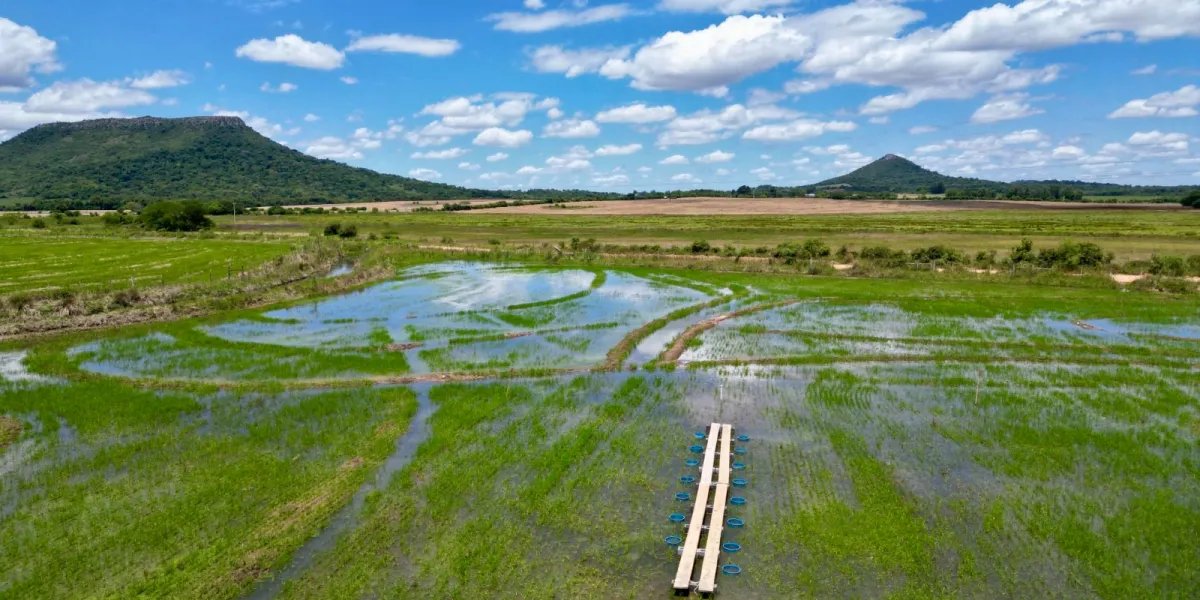
This severe operational recalculation coincides with commercial deployments already underway across multiple continents. Both Google and Microsoft have deployed hundreds of millions of dollars to contract startups deploying ERW, such as an initiative where startup Terradot agreed to spread crushed volcanic rocks across rice fields in southern Brazil under a procurement contract with Google. Such commercial arrangements have been marketed on the premise that mineral spreading provides symbiotic mutualism: atmospheric carbon removal paired with enhanced crop health for participating farmers.
The prospective drag on agricultural yields amplifies pre-existing scientific concerns regarding measurement, reporting, and verification standards within the rock weathering arena. Independent scientists and CarbonPlan researchers have repeatedly cautioned that verifying precise net carbon sequestration remains highly uncertain, warning that current commercial crediting programs may risk overstating real-world carbon removal volumes.
Strategic Implications for Carbon Accounting and Enterprise Net-Zero
For corporate sustainability executives and climate fund allocators, the prospective downscaling of enhanced rock weathering creates an immediate strategic complication. With global carbon removal capacity potentially restricted to a fraction of modeled targets, the availability of durable, cost-effective carbon credits will tighten substantially, escalating credit prices and leaving significant corporate balance-sheet emissions unhedged.
Moreover, the prospect of diminished crop yields introduces acute reputational and governance risks for corporate buyers operating under environmental, social, and governance frameworks. Carbon credit procurement programs that inadvertently impair regional food supplies could face intense regulatory blowback and litigation from agricultural authorities and farming cooperatives.
As commercial standards bodies and voluntary market registries recalibrate their scientific criteria in response to the CarbonPlan preprints, market participants will face demands for intensive empirical testing, long-term soil monitoring, and conservative crediting methodologies before enhanced rock weathering can be safely integrated into global net-zero accounting.


