Canceled Tesla Cybertruck Emerges as America's Fastest-Selling Used Truck
Analysis of October sales reveals the stainless-steel EV spends just 39.1 days on the market, defying its turbulent initial production history.
EXECUTIVE BRIEF // KEY TAKEAWAYS
Analysis of October sales reveals the stainless-steel EV spends just 39.1 days on the market, defying its turbulent initial production history.
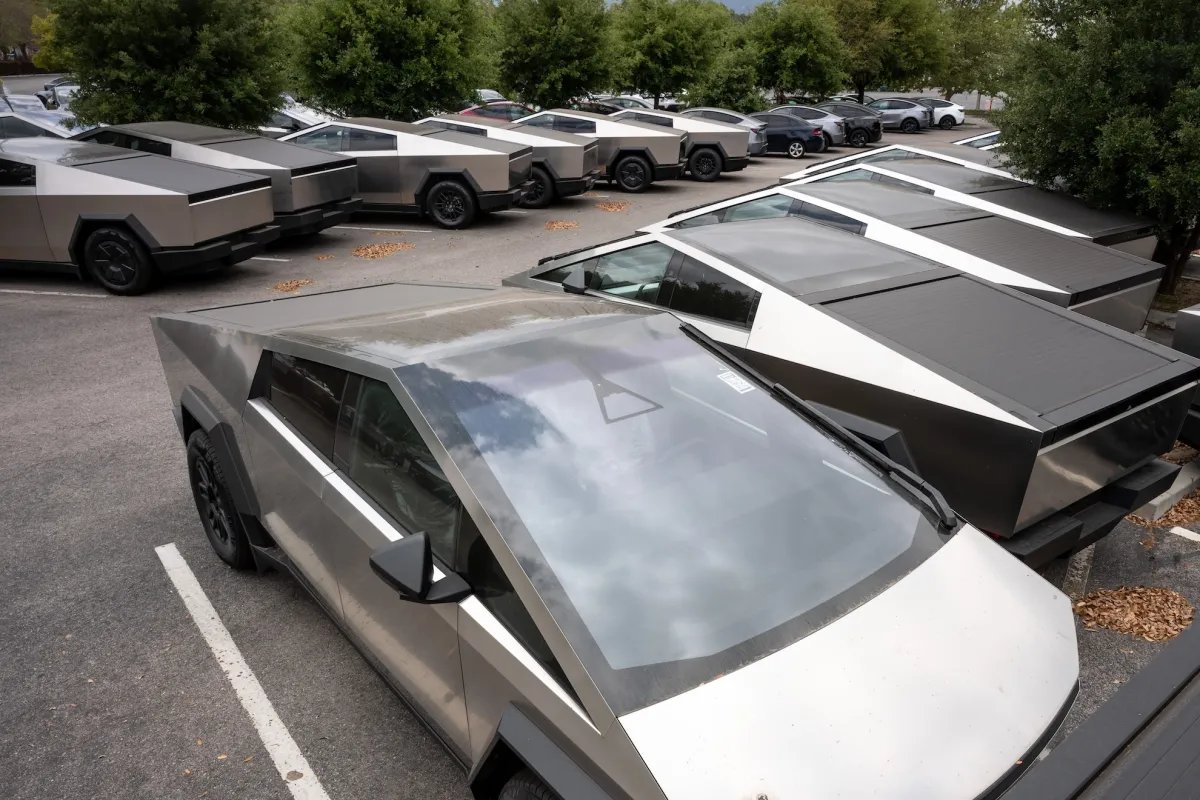
The Tesla Cybertruck has captured an unexpected market position following its initial production hurdles, emerging as the fastest-selling used truck in the United States. According to an industry analysis published by TechCrunch and compiled by automotive research platform iSeeCars.com, the polarizing electric pickup averaged just 39.1 days on the used market in October 2026, significantly outperforming the broader truck segment average of 65.5 days.
This performance underscores a shifting dynamic within the secondary automotive market, where battery electric vehicles are increasingly capturing consumer interest amid broader macroeconomic and energy shifts. While the futuristic vehicle failed to reach the initial volume projections outlined by Chief Executive Officer Elon Musk during its launch phase, its secondary market velocity highlights persistent underlying demand driven by relative scarcity and changing consumer calculations regarding fuel economics.
Secondary Market Dynamics and Segment Velocity
The iSeeCars.com study evaluated more than 1.1 million sales of one- to five-year-old used vehicles during October 2026, measuring inventory velocity across various powertrains and vehicle classifications. The data indicates that the Cybertruck outpaced all competing trucks, securing the top position ahead of the Ford Maverick Hybrid in second place and the Rivian R1T in third. This strong showing contributes to a broader sectoral trend identified in the research, which revealed that 16 of the 25 fastest-selling used vehicles were fully electric.
According to the empirical findings, used battery electric vehicles averaged 45.6 days on the market, outperforming hybrid models at 54.5 days and traditional internal combustion engine vehicles at 61 days. However, market adoption remains bifurcated; while certain models like the Cybertruck experience rapid inventory turnover, others face prolonged holding periods. For instance, the study noted that the Cadillac Escalade IQ registered as the slowest-selling vehicle evaluated, averaging 134.3 days on the market—more than double the national industry average.
Macroeconomic Factors and Executive Insights
Industry analysts attribute the acceleration of secondary market EV sales to sustained macroeconomic pressures, specifically elevated fuel costs that have altered consumer purchasing behavior since March 2026. Karl Brauer, executive analyst at iSeeCars.com, noted in the source publication that persistent gasoline prices have incentivized buyers to transition away from traditional internal combustion engines toward electrified alternatives.
“The Cybertruck has only been out for a few years, so you have a lot of used ones coming off lease and entering the used car market for the first time,” Brauer told TechCrunch, highlighting that these secondary units are trading at price points significantly lower than their original manufacturer's suggested retail price.
Crucially, the analyzed October sales figures preceded the subsequent corporate announcement by Tesla indicating that manufacturing of the Cybertruck is slated to cease permanently in 2027. Brauer observed that even prior to the cancellation disclosure, the combination of high energy costs and the inherent rarity of the vehicle dictated robust market demand.
Strategic Implications and Production Outlook
The impending termination of factory output is anticipated to exert further upward pressure on used market valuations and turnover rates, though transaction pacing may experience short-term fluctuations over the coming year. The realization that factory supply will eventually dry up has catalyzed consumer awareness regarding the finite nature of the model's availability.
“The canceling of the new Cybertruck is making people kind of aware—it’s like, oh wow, these things aren’t going to be coming anymore,” Brauer stated, emphasizing that future supply constraints will permanently cap the total population of the vehicle. Industry analysts project that as the final production milestone approaches in the summer of 2027, secondary market transaction volumes and pricing metrics will likely experience a secondary wave of heightened activity.


