Biotech Milestones and Battery Deals Spotlight Tech Capital Shifts
As Australian researchers keep a donor liver alive for seven weeks, multibillion-dollar clean tech deals and mounting AI hype test market realities.
EXECUTIVE BRIEF // KEY TAKEAWAYS
As Australian researchers keep a donor liver alive for seven weeks, multibillion-dollar clean tech deals and mounting AI hype test market realities.
CAMBRIDGE, Mass. — Medical and industrial technology reached critical inflection points this week as Australian scientists sustained a human liver on machine life support outside the body for an unprecedented seven weeks, coinciding with a landmark billion-dollar battery commercialization pact and mounting scrutiny across global enterprise regarding artificial intelligence deployment, according to disclosures compiled by MIT Technology Review.
The convergence of these disparate technical milestones underscores a broader realignment across capital markets, where tangible engineering breakthroughs in bioengineering and energy storage are increasingly measured against the speculative premiums of generative software. As institutional investors and enterprise operators reevaluate the return on investment across research pipelines, the ability to deliver verifiable physical outcomes—from drastically expanding the donor organ supply to securing domestic electric vehicle component supply chains—is establishing a rigorous benchmark for technological viability in a market fatigued by unverified algorithmic promises.
Contextual Milestones and Organ Perfusion Breakthroughs
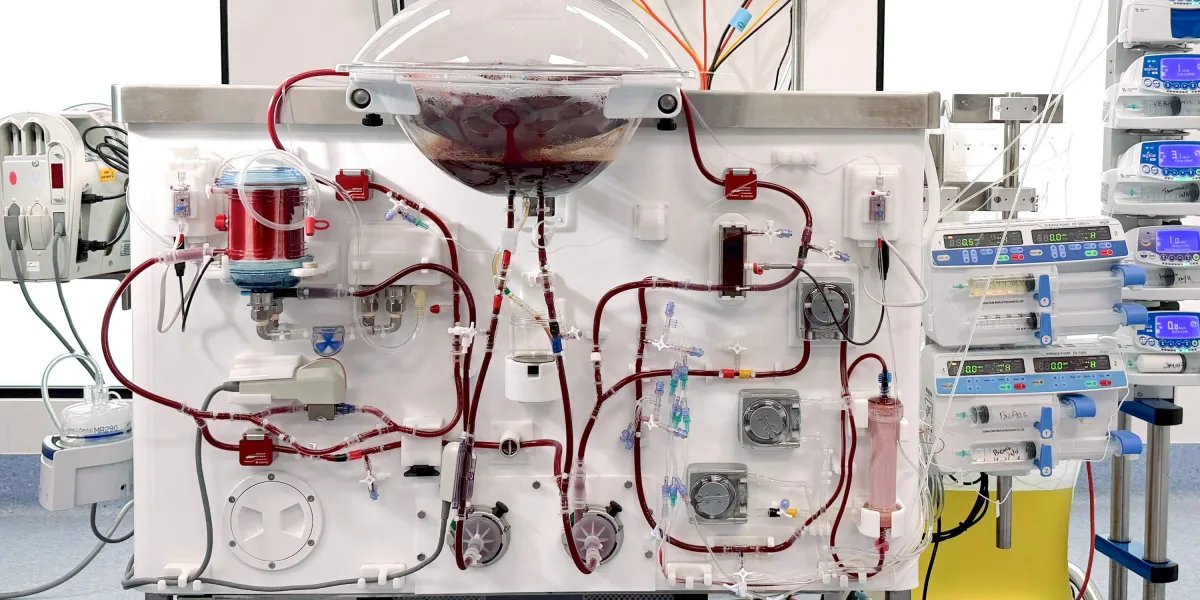
The biomedical benchmark reported by MIT Technology Review represents an order-of-magnitude advance in ex situ normothermic machine perfusion. Under conventional clinical protocols, donor organs preserved via hypothermic static storage begin experiencing irreversible cellular degradation within roughly 12 hours, severely constricting logistical windows and contributing to high discard rates among potentially life-saving donor tissues. By maintaining metabolic homeostasis, temperature, and nutrient circulation over a continuous 49-day span, researchers in Australia have shattered previous operational ceilings.
The publication documented the achievement within its flagship technology briefing, highlighting both the procedural fidelity of the perfusion apparatus and the broader significance for surgical intervention pipelines:
“Researchers in Australia claim they’ve kept a human liver alive on life support outside the body for a record seven weeks,” MIT Technology Review reported, underscoring a breakthrough that challenges long-standing clinical boundaries.
Medical technologists emphasize that extended ex vivo viability does not merely lengthen transport timetables; it transforms the ex situ apparatus into an active biomedical incubator. Clinicians can leverage extended perfusion windows to assess organ function dynamically, deliver targeted gene or cellular therapies, and potentially rehabilitate marginal or damaged tissues that would otherwise fail pre-transplant clearance standards.
Industrial Battery Capital and the Calibration of AI Valuation
Parallel to the biological milestone, industrial manufacturing and energy infrastructure marked significant commercial momentum through a transformative agreement secured by advanced materials developer Sila Nanotechnologies. The billion-dollar scale transaction to supply proprietary silicon-carbon anode materials directly addresses deep-seated energy density and charging constraints across the electric vehicle and grid battery sectors. Unlike speculative venture narratives, the agreement reflects binding industrial commitments to retool core manufacturing infrastructure, solidifying supply chains within North American and allied markets.
This capital deployment into physical manufacturing stands in stark contrast to the emerging macroeconomic sentiment surrounding enterprise artificial intelligence. Across executive suites and capital markets, corporate leadership is actively interrogating the divergence between unprecedented infrastructure capital expenditures and measurable enterprise productivity gains. While venture syndicates and hyperscalers have channeled tens of billions of dollars into compute capacity, automated development tooling, and large-scale model architectures, end-market adoption faces persistent friction. As analyzed by MIT Technology Review, enterprise buyers are increasingly demanding verifiable operational cost reductions rather than novelty features, subjecting artificial intelligence integrations to conventional return-on-equity hurdles.
Strategic Outlook and Regulatory Horizons
The simultaneous acceleration of bio-perfusion platforms, next-generation energy storage, and critical AI recalibration signals a transitional period for global technology governance. In the biomedical domain, clinical translation of seven-week organ perfusion will require comprehensive validation trials and rigorous regulatory clearance from international health oversight bodies before ex situ therapy can be integrated into standard transplant lists. Institutional review boards must establish standardized biological markers to verify tissue integrity throughout extended mechanical maintenance.
Concurrently, energy regulators and commercial buyers will monitor whether advanced materials providers can scale synthetic silicon anode manufacturing from pilot volumes to gigawatt-hour requirements without margin degradation. In enterprise technology, the recalibration away from ungrounded algorithmic hype toward rigorous unit economics is expected to compress private market valuations while rewarding companies that embed machine learning into defensible, high-value workflows. As technical engineering once again demands rigorous physical validation, the boundaries between speculative promises and industrial utility are being firmly redrawn.