Artemis III Astronaut Inspections Underscore Lunar Propulsion Readiness
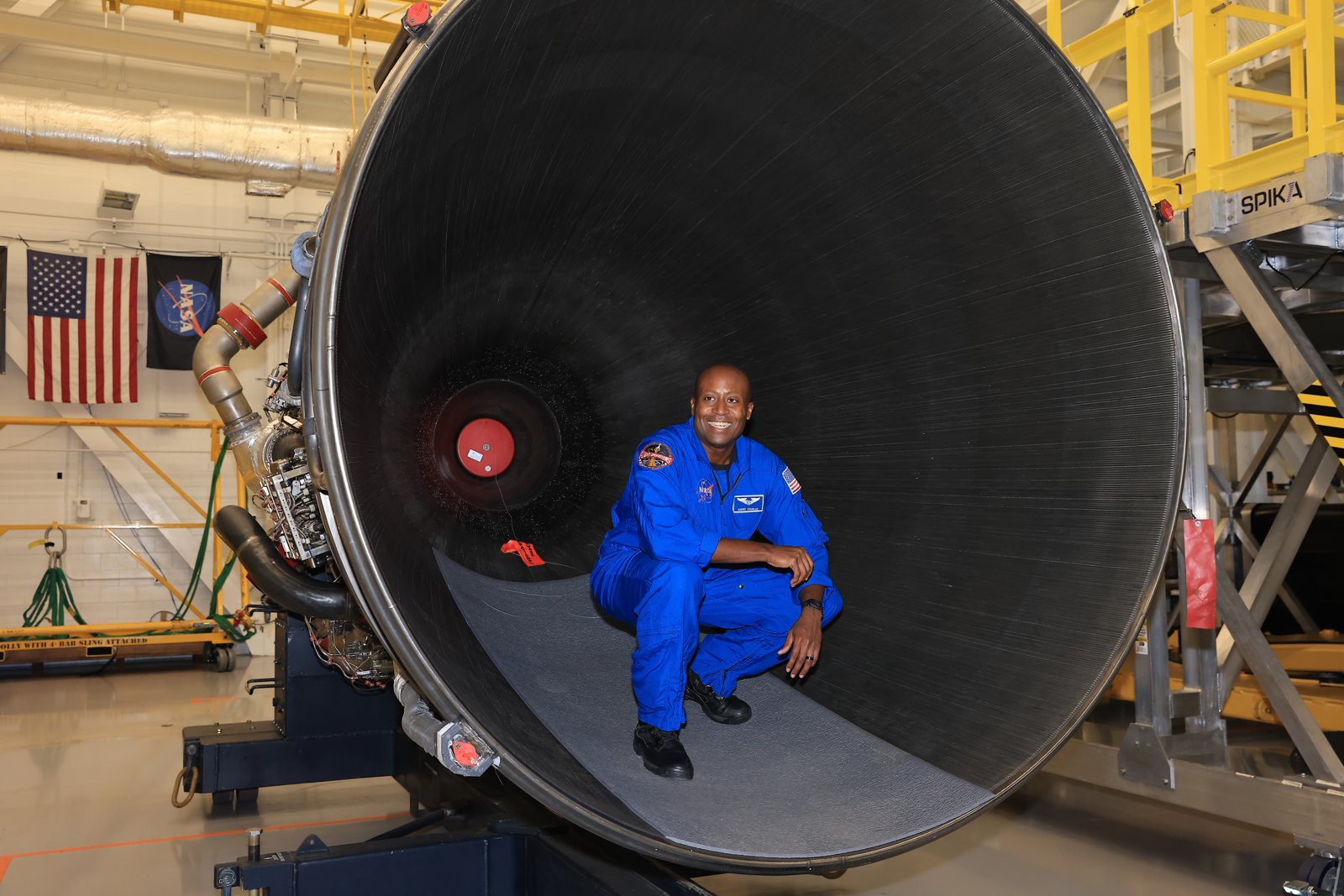
NASA astronaut Andre Douglas evaluates RS-25 engine hardware at Kennedy Space Center ahead of critical orbital rendezvous and docking tests.
EXECUTIVE BRIEF // KEY TAKEAWAYS
NASA astronaut Andre Douglas evaluates RS-25 engine hardware at Kennedy Space Center ahead of critical orbital rendezvous and docking tests.
WASHINGTON — NASA astronaut and Artemis III mission specialist Andre Douglas conducted a hands-on technical evaluation of flight-critical hardware inside the Vehicle Assembly Building at NASA’s Kennedy Space Center in Florida, according to an official release published by NASA News Releases on Tuesday, Nov. 17, 2026. During his inspection of an RS-25 engine test article, Douglas reviewed the core propulsion architecture designated to power the Space Launch System (SLS) rocket core stage during the forthcoming lunar mission. The high-profile facility visit highlights the accelerating operational tempo within America's heavy-lift exploration program as technical teams prepare integrated systems for flight readiness, rigorous vehicle stacking procedures, and subsequent pre-launch processing milestones.
As global aerospace supply chains, commercial launch providers, and sovereign space agencies intensify their focus on sustainable lunar architecture, the structural and technical maturation of the SLS rocket core stage remains a critical variable for deep-space capital allocation and mission scheduling. The Artemis III campaign represents a foundational milestone for the international space economy, bridging low Earth orbit operations with long-term infrastructure development on the lunar surface. By subjecting core flight hardware to rigorous ground inspections and technical evaluations, NASA and its prime aerospace contractors are working to mitigate technical risks, optimize launch cadence, and secure the reliability required for multi-billion-dollar human spaceflight assets.
Propulsion Architecture and Flight Objectives
According to mission specifications released by NASA News Releases, the upcoming Artemis III flight will rely on a cluster of four high-performance RS-25 engines to deliver the necessary thrust for the SLS rocket core stage. These liquid-propellant engines must operate under extreme thermal and mechanical loads to successfully propel the Orion spacecraft out of Earth's atmosphere and into the proper trajectory for mission operations. Unlike subsequent landing iterations, the Artemis III mission profile directs the Orion spacecraft to conduct critical rendezvous and docking tests with advanced lunar lander systems while remaining in low Earth orbit. These orbital validation exercises are designed to rigorously test life support systems, navigation protocols, and docking mechanisms before NASA authorizes missions to touch down on the lunar surface during Artemis IV.
Technical specialists note that the integration of the RS-25 propulsion system within the Vehicle Assembly Building demands absolute precision. Each engine undergoes extensive structural and electrical checks to ensure seamless telemetry transmission and flawless hydraulic vectoring during the high-stress dynamic pressures of ascent. The firsthand evaluations conducted by astronauts like Douglas serve to bridge the gap between engineering design and pilot perspective, ensuring that human factors are fully accounted for within the physical layout of the launch vehicle systems.
Operational Impact and Technical Integration
The operational cadence at Kennedy Space Center's Vehicle Assembly Building has accelerated significantly as technicians prepare for the physical stacking and integration of the SLS rocket elements. The logistical coordination required to move massive core stages, solid rocket boosters, and Orion capsule assemblies demands exacting project management and advanced manufacturing oversight. Economists and aerospace analysts closely monitor these technical milestones, as any schedule adjustments within NASA's heavy-lift program directly impact commercial service providers, payload manifests, and the broader aerospace industrial base.
Furthermore, the data gathered from the low Earth orbit rendezvous and docking tests will provide essential engineering metrics for future deep-space transportation systems. By validating lander performance and orbital mating procedures close to home, NASA aims to derisk the more complex descent and ascent phases scheduled for subsequent Artemis deployments. The rigorous physical inspections performed by flight crews reaffirm the agency's commitment to safety and systems redundancy, establishing a resilient operational framework for future interplanetary exploration.
Strategic Outlook and Future Milestones
Looking ahead, the strategic implications of the Artemis III campaign extend far beyond immediate flight test objectives. The successful execution of orbital rendezvous protocols will validate the interoperability of government and commercial systems, setting a technical precedent for future lunar infrastructure and commercial space station development. Regulatory bodies, international partners, and aerospace stakeholders will closely observe the performance of the RS-25 engines and Orion docking architecture during the flight window.
As NASA and its industrial partners advance toward the final verification phases, upcoming milestones will include integrated wet dress rehearsals, comprehensive avionics checks, and final crew ingress simulations. The insights gained from Andre Douglas’s visit to the Vehicle Assembly Building contribute directly to this cumulative readiness review process, reinforcing the structural and operational integrity of the nation's premier deep-space exploration vehicle.


